


Age dependent brain subcortical white and gray matter disruptions in patients with posttraumatic stress disorder
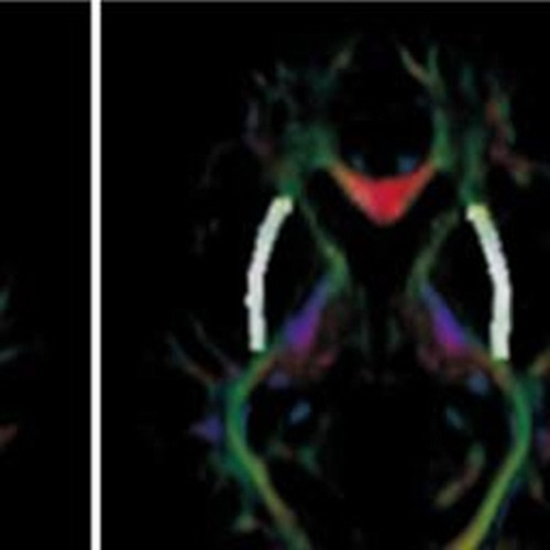
Posttraumatic stress disorder (PTSD) is a psychiatric condition that can develop after experiencing a traumatic event, and it is associated with a range of functional and structural brain abnormalities. This study aimed to investigate age-related differences in subcortical gray and white matter in veterans with PTSD. This study recruited 44 patients with PTSD and 48 healthy controls. Participants were divided into two age groups to evaluate structural magnetic resonance imaging analysis. The results showed that individuals with PTSD had significantly smaller subcortical gray matter volumes, including the bilateral thalamus, hippocampus, amygdala, left pallidum, and right accumbens-area (P<0.05). Diffusion tensor imaging analyses revealed lower fractional anisotropy in several white matter structures, including the anterior limb of the internal capsule, anterior corona radiata, and cingulum in both hemispheres (P<0.05). Additionally, the mean diffusivity was higher in the anterior limb of the internal capsule, anterior corona radiata and the right external capsule (P<0.05). A comparative analysis between two age groups, over 50 and under 50 years old, showed that younger PTSD patients had a reduction in volume and abnormality in the corresponding white matter in more regions compared to the control group. These findings suggest that PTSD is associated with significant structural alterations in the brain, which may contribute to the pathophysiology of the disorder. So, patient age is an effective factor in exposure to traumatic events and an older age is continuously associated with a worsening traumatic brain injury outcome


comment