Advanced Diagnostic & Interventional Radiology Research Center | Assessment of LI-RADS efficacy in classification of hepatocellul

Advanced Diagnostic & Interventional Radiology Research Center | Assessment of LI-RADS efficacy in classification of hepatocellul
| Jan 5 2026
logo

Advanced Diagnostic & Interventional Radiology Research Center

COVID-19 pandemic 

During the COVID-19 pandemic, the Radiology Research Center at Tehran University of Medical Sciences continued its research activities despite the challenges posed by the increased demand for CT scans of COVID-19 patients and the necessity of adhering to strict health protocols. This center played a crucial role in improving medical imaging techniques, optimizing diagnostic protocols, and advancing technologies related to CT scan image analysis.

Faculty members, researchers, and staff remained committed to ensuring the safety and well-being of healthcare professionals and patients while actively engaging in imaging data analysis, developing artificial intelligence algorithms for faster disease detection, publishing scientific articles, and presenting their findings at international conferences. These efforts aimed to enhance diagnostic accuracy, improve treatment processes, and alleviate pressure on healthcare systems.


Key achievements of the Radiology Research Center during the COVID-19 pandemic include:


✔️ Development and optimization of lung imaging protocols for faster and more accurate COVID-19 diagnosis
✔️ Implementation of artificial intelligence technologies for automated CT scan analysis and reduced diagnosis time
✔️ Publication of high-impact research articles on innovative imaging methods for COVID-19 patients
✔️ Participation in national and international projects focused on COVID-19 diagnosis and patient management

The center remains dedicated to advancing research in medical imaging and continues to contribute as a leading scientific institution in improving the quality of diagnostic and therapeutic services.


Some of the center's significant achievements during the pandemic include:


  • Release Date : Feb 26 2025 - 08:42
  • : 105
  • Study time : 1 minute(s)

Assessment of LI RADS efficacy in classification of hepatocellular carcinoma and benign liver nodules using DCE MRI features and machine learning
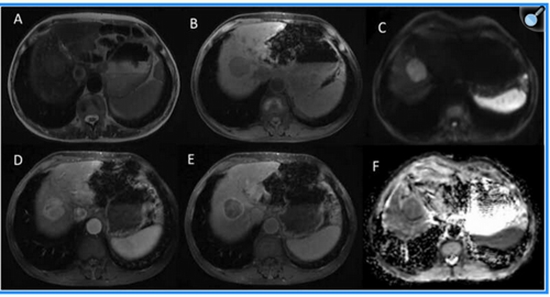
Assessment of LI-RADS efficacy in classification of hepatocellular carcinoma {faces}

Purpose

The current study aimed to evaluate the efficiency of dynamic contrast-enhanced (DCE) MRI visual features in classifying benign liver nodules and hepatocellular carcinoma (HCC) using a machine learning model.

Methods

115 LI-RADS3, 137 LI-RADS4, and 140 LI-RADS5 nodules were included (392 nodules from 245 patients), which were evaluated by follow-up imaging for LR-3 and pathology results for LR-4 and LR-5 nodules. Data was collected retrospectively from 3 T and 1.5 T MRI scanners. All the lesions were categorized into 124 benign and 268 HCC lesions. Visual features included tumor size, arterial-phase hyper-enhancement (APHE), washout, lesion segment, mass/mass-like, and capsule presence. Gini-importance method extracted the most important features to prevent over-fitting. Final dataset was split into training(70%), validation(10%), and test dataset(20%). The SVM model was used to train the classifying algorithm. For model validation, 5-fold cross-validation was utilized, and the test data set was used to assess the final accuracy. The area under the curve and receiver operating characteristic curves were used to assess the performance of the classifier model.

Results

For test dataset, the accuracy, sensitivity, and specificity values for classifying benign and HCC lesions were 82%,84%, and 81%, respectively. APHE, washout, tumor size, and mass/mass-like features significantly differentiated benign and HCC lesions with p-value < .001.

Conclusions

The developed classification model employing DCE-MRI features showed significant performance of visual features in classifying benign and HCC lesions. Our study also highlighted the significance of mass and mass-like features in addition to LI-RADS categorization. For future work, this study suggests developing a deep-learning algorithm for automatic lesion segmentation and feature assessment to reduce lesion categorization errors.

  • Article_DOI : 10.1016/j.ejro.2023.100535
  • Author(s) : arvin arian,maryam fotouhi
  • News Group : research,research article,AI
  • News Code : 293413
مدیر سیستم
Author:

مدیر سیستم

0 Comments for this article

comment

Post your comment:

متن درون تصویر را در جعبه متن زیر وارد نمائید *
Enter your desired term to search
Theme settings