Advanced Diagnostic & Interventional Radiology Research Center | Chest CT Imaging Characteristics of COVID 19 Pneumonia in Surviving and Non Surviving Hospitalized Patients: A Retrospective Study in a Referral Center in Tehran, Iran
Advanced Diagnostic & Interventional Radiology Research Center | Chest CT Imaging Characteristics of COVID 19 Pneumonia in Surviving and Non Surviving Hospitalized Patients: A Retrospective Study in a Referral Center in Tehran, Iran
| Jan 3 2026
logo

Advanced Diagnostic & Interventional Radiology Research Center

COVID-19 pandemic 

During the COVID-19 pandemic, the Radiology Research Center at Tehran University of Medical Sciences continued its research activities despite the challenges posed by the increased demand for CT scans of COVID-19 patients and the necessity of adhering to strict health protocols. This center played a crucial role in improving medical imaging techniques, optimizing diagnostic protocols, and advancing technologies related to CT scan image analysis.

Faculty members, researchers, and staff remained committed to ensuring the safety and well-being of healthcare professionals and patients while actively engaging in imaging data analysis, developing artificial intelligence algorithms for faster disease detection, publishing scientific articles, and presenting their findings at international conferences. These efforts aimed to enhance diagnostic accuracy, improve treatment processes, and alleviate pressure on healthcare systems.


Key achievements of the Radiology Research Center during the COVID-19 pandemic include:


✔️ Development and optimization of lung imaging protocols for faster and more accurate COVID-19 diagnosis
✔️ Implementation of artificial intelligence technologies for automated CT scan analysis and reduced diagnosis time
✔️ Publication of high-impact research articles on innovative imaging methods for COVID-19 patients
✔️ Participation in national and international projects focused on COVID-19 diagnosis and patient management

The center remains dedicated to advancing research in medical imaging and continues to contribute as a leading scientific institution in improving the quality of diagnostic and therapeutic services.


Some of the center's significant achievements during the pandemic include:


  • Release Date : Jul 9 2024 - 08:58
  • : 150
  • Study time : 2 minute(s)

Chest CT Imaging Characteristics of COVID 19 Pneumonia in Surviving and Non Surviving Hospitalized Patients: A Retrospective Study in a Referral Center in Tehran, Iran

Chest CT Imaging Characteristics of COVID-19 {faces}

Background:

 Coronavirus disease 2019 (COVID-19) has several chest computed tomography (CT) characteristics, which are important for the early management of this disease, because viral detection via RT-PCR can be time-consuming, resulting in a delayed pneumonia diagnosis. The Radiological Society of North America (RSNA) proposed a reporting language for CT findings related to COVID-19 and defined four CT categories: typical, indeterminate, atypical, and negative.

Objectives:

 To retrospectively evaluate the chest CT characteristics of patients with COVID-19 pneumonia.

Patients and Methods:

 A total of 115 hospitalized laboratory-verified COVID-19 cases, underdoing chest CT scan, were included in this study from April 30 to May 15, 2020. Of 115 cases, 53 were discharged from the hospital, and 62 expired. The initial clinical features and chest CT scans were assessed for the type, pattern, distribution, and frequency of lesions. Moreover, the findings were compared between ward-hospitalized, intensive care unit (ICU)-admitted, and non-surviving (expired) patients.

Results:

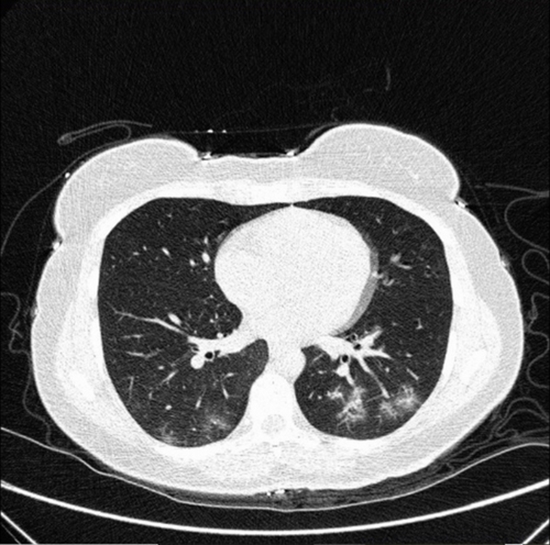
 Of four CT categories, typical CT findings for COVID-19 were more frequent in the expired group (77.4%), compared to the ward-admitted (44.8%) and ICU-admitted (70.8%) groups (P = 0.017). However, no significant difference was observed in the prevalence of intermediate or atypical CT findings between the groups. Negative CT scans for the diagnosis of COVID-19 were significantly fewer in the expired group (0%) as compared to the ward-admitted (10.3%) and ICU-admitted (8.3%) groups (P = 0.0180). Also, the mean number of involved lung lobes and segments was significantly higher in the expired group compared to the other two groups (P = 0.032 and 0.010, respectively). The right upper lobe involvement, right middle lobe involvement, bilateral involvement, central lesion, air bronchogram, and pleural effusion were among CT scan findings with a significantly higher prevalence in non-surviving cases (P < 0.0001, 0.047, 0.01, 0.036, 0.038, and 0.047, respectively).

Conclusion:

 The increased number of involved lung lobes and segments, bilateral and central distribution patterns, air bronchogram, and severe pleural effusion in the initial chest CT scan can be related to the increased severity and poor prognosis of COVID-19
 
  • Article_DOI : doi.org/10.5812/iranjradiol.106339
  • Author(s) : sara besharat,fatemehsadat rahimi,iamak afaghi
  • News Group : research,research article,covid 19,covid
  • News Code : 278248
مدیر سایت
Author:

مدیر سایت

Enter your desired term to search
Theme settings