Advanced Diagnostic & Interventional Radiology Research Center | Clinical and laboratory findings following transplantation of allogeneic adipose derived mesenchymal stromal cells in knee osteoarthritis, a brief report
Advanced Diagnostic & Interventional Radiology Research Center | Clinical and laboratory findings following transplantation of allogeneic adipose derived mesenchymal stromal cells in knee osteoarthritis, a brief report
| Dec 10 2025
logo

Advanced Diagnostic & Interventional Radiology Research Center

COVID-19 pandemic 

During the COVID-19 pandemic, the Radiology Research Center at Tehran University of Medical Sciences continued its research activities despite the challenges posed by the increased demand for CT scans of COVID-19 patients and the necessity of adhering to strict health protocols. This center played a crucial role in improving medical imaging techniques, optimizing diagnostic protocols, and advancing technologies related to CT scan image analysis.

Faculty members, researchers, and staff remained committed to ensuring the safety and well-being of healthcare professionals and patients while actively engaging in imaging data analysis, developing artificial intelligence algorithms for faster disease detection, publishing scientific articles, and presenting their findings at international conferences. These efforts aimed to enhance diagnostic accuracy, improve treatment processes, and alleviate pressure on healthcare systems.


Key achievements of the Radiology Research Center during the COVID-19 pandemic include:


✔️ Development and optimization of lung imaging protocols for faster and more accurate COVID-19 diagnosis
✔️ Implementation of artificial intelligence technologies for automated CT scan analysis and reduced diagnosis time
✔️ Publication of high-impact research articles on innovative imaging methods for COVID-19 patients
✔️ Participation in national and international projects focused on COVID-19 diagnosis and patient management

The center remains dedicated to advancing research in medical imaging and continues to contribute as a leading scientific institution in improving the quality of diagnostic and therapeutic services.


Some of the center's significant achievements during the pandemic include:


  • Release Date : Jul 20 2024 - 12:45
  • : 115
  • Study time : 1 minute(s)

Clinical and laboratory findings following transplantation of allogeneic adipose derived mesenchymal stromal cells in knee osteoarthritis, a brief report

allogeneic adipose-derived mesenchymal stromal cells in knee osteoarthritis {faces}

Background: Mesenchymal stromal cells (MSCs) injection has been proposed as an innovative treatment for knee osteoarthritis (KOA). Since, allogeneic MSCs can be available as off-the-shelf products, they are preferable in regenerative medicine. Among different sources for MSCs, adipose-derived MSCs (AD-MSCs) appear to be more available.

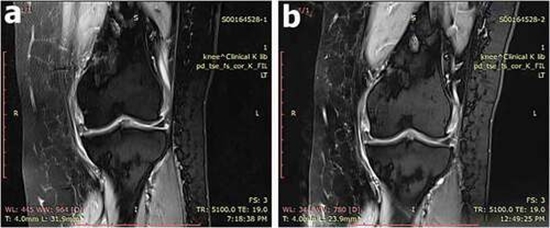
Methods: Three patients with KOA were enrolled in this study. A total number of 100 × 106 AD-MSCs was injected intra-articularly, per affected knee. They were followed up for 6 months by the assessment of clinical outcomes, magnetic resonance imaging (MRI), and serum inflammatory biomarkers.

Results: The primary outcome of this study was safety and feasibility of allogeneic AD-MSCs injection during the 6 months follow-up. Fortunately, no serious adverse events (SAEs) were reported. Assessment of secondary outcomes of visual analogue scale (VAS), Western Ontario and McMaster Universities Osteoarthritis Index (WOMAC), and knee osteoarthritis outcome score (KOOS) indicated improvement in all patients. Comparison between baseline and endpoint findings of MRI demonstrated a slight improvement in two patients. In addition, decrease in serum cartilage oligomeric matrix protein (COMP) and hyaluronic acid (HA) indicated the possibility of reduced cartilage degeneration. Moreover, quantification of serum interleukin-10 (IL-10) and interleukin-6 (IL-6) levels indicated that the host immune system immunomodulated after infusion of AD-MSCs.

Conclusion: Intra-articular injection of AD-MSCs is safe and could be effective in cartilage regeneration in KOA. Preliminary assessment after six-month follow-up suggests the potential efficacy of this intervention which would need to be confirmed in randomized controlled trials on a larger population.

  • Article_DOI : 10.1080/03008207.2022.2074841
  • Author(s) : bahareh sadri
  • News Group : research,research article
  • News Code : 277954
مدیر سایت
Author:

مدیر سایت

0 Comments for this article

comment

Post your comment:

متن درون تصویر را در جعبه متن زیر وارد نمائید *
Enter your desired term to search
Theme settings