Advanced Diagnostic & Interventional Radiology Research Center | anterior-posterior versus posterior-only approaches for lumbosac

Advanced Diagnostic & Interventional Radiology Research Center | anterior-posterior versus posterior-only approaches for lumbosac
| Aug 3 2026
logo

Advanced Diagnostic & Interventional Radiology Research Center

COVID-19 pandemic 

During the COVID-19 pandemic, the Radiology Research Center at Tehran University of Medical Sciences continued its research activities despite the challenges posed by the increased demand for CT scans of COVID-19 patients and the necessity of adhering to strict health protocols. This center played a crucial role in improving medical imaging techniques, optimizing diagnostic protocols, and advancing technologies related to CT scan image analysis.

Faculty members, researchers, and staff remained committed to ensuring the safety and well-being of healthcare professionals and patients while actively engaging in imaging data analysis, developing artificial intelligence algorithms for faster disease detection, publishing scientific articles, and presenting their findings at international conferences. These efforts aimed to enhance diagnostic accuracy, improve treatment processes, and alleviate pressure on healthcare systems.


Key achievements of the Radiology Research Center during the COVID-19 pandemic include:


✔️ Development and optimization of lung imaging protocols for faster and more accurate COVID-19 diagnosis
✔️ Implementation of artificial intelligence technologies for automated CT scan analysis and reduced diagnosis time
✔️ Publication of high-impact research articles on innovative imaging methods for COVID-19 patients
✔️ Participation in national and international projects focused on COVID-19 diagnosis and patient management

The center remains dedicated to advancing research in medical imaging and continues to contribute as a leading scientific institution in improving the quality of diagnostic and therapeutic services.


Some of the center's significant achievements during the pandemic include:


  • Release Date : Jun 17 2026 - 12:08
  • : 7
  • Study time : 1 minute(s)

Comparative outcomes of anterior-posterior versus posterior-only approaches for lumbosacral chordoma: A meta-analysis of recurrence, survival, and complications
anterior-posterior versus posterior-only approaches for lumbosacral chordoma {faces}

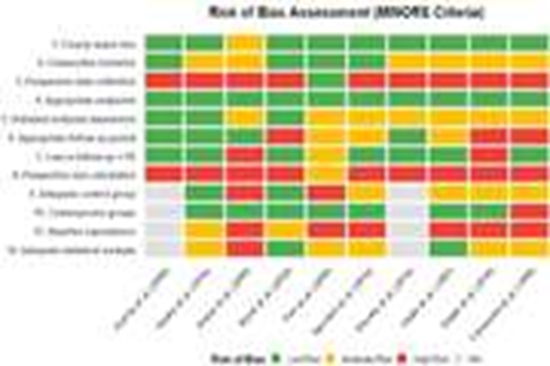
To systematically evaluate the oncologic and functional outcomes of combined anterior–posterior (AP) versus posterior-only (P) surgical approaches for the management of lumbosacral chordomas. A systematic review and meta-analysis was conducted according to PRISMA guidelines, searching PubMed, Embase, and Scopus through July 2025. Comparative studies reporting resection margins, local recurrence, survival, and complications were included. Data were pooled using random-effects models to calculate odds ratios (OR) and incidence rate ratios (IRR). Ten retrospective studies comprising 134 patients (71 AP, 63 P) were included. The AP cohort contained a significantly higher proportion of complex, high-level (S1–S2) tumors (p = 0.008). There were no statistically significant differences in 3-, 5-, or 10-year overall survival between approaches. However, the AP approach was associated with significantly higher odds of local recurrence (OR 3.50, 95% CI 1.63–7.55; p = 0.001) and a trend toward higher rates of contaminated margins (p = 0.059). Additionally, the AP approach demonstrated a significantly higher risk of total postoperative complications (IRR 2.27, 95% CI 1.42–3.64). Posterior-only resection is associated with lower local recurrence rates and a more favorable safety profile compared to combined approaches. However, the higher recurrence rate in the AP cohort is likely attributable to confounding by indication, as AP strategies were preferentially utilized for extensive high-sacral lesions. Despite disparate recurrence rates, long-term survival remains comparable, suggesting that surgical selection should be individualized based on tumor topography and the necessity for ventral release.

  • Article_DOI : 10.1007/s10143-025-04090-z
  • Author(s) : behnam amini,seyed amir asef agah
  • News Group : research,research article
  • News Code : 323797
نفیسه سادات قوامی
Author:

نفیسه سادات قوامی

0 Comments for this article

comment

Post your comment:

متن درون تصویر را در جعبه متن زیر وارد نمائید *
Enter your desired term to search
Theme settings