Advanced Diagnostic & Interventional Radiology Research Center | CT Angiography in Assessment of Arterial Cut-Off and Run-Off i

Advanced Diagnostic & Interventional Radiology Research Center | CT Angiography in Assessment of Arterial Cut-Off and Run-Off i
| Jan 3 2026
logo

Advanced Diagnostic & Interventional Radiology Research Center

COVID-19 pandemic 

During the COVID-19 pandemic, the Radiology Research Center at Tehran University of Medical Sciences continued its research activities despite the challenges posed by the increased demand for CT scans of COVID-19 patients and the necessity of adhering to strict health protocols. This center played a crucial role in improving medical imaging techniques, optimizing diagnostic protocols, and advancing technologies related to CT scan image analysis.

Faculty members, researchers, and staff remained committed to ensuring the safety and well-being of healthcare professionals and patients while actively engaging in imaging data analysis, developing artificial intelligence algorithms for faster disease detection, publishing scientific articles, and presenting their findings at international conferences. These efforts aimed to enhance diagnostic accuracy, improve treatment processes, and alleviate pressure on healthcare systems.


Key achievements of the Radiology Research Center during the COVID-19 pandemic include:


✔️ Development and optimization of lung imaging protocols for faster and more accurate COVID-19 diagnosis
✔️ Implementation of artificial intelligence technologies for automated CT scan analysis and reduced diagnosis time
✔️ Publication of high-impact research articles on innovative imaging methods for COVID-19 patients
✔️ Participation in national and international projects focused on COVID-19 diagnosis and patient management

The center remains dedicated to advancing research in medical imaging and continues to contribute as a leading scientific institution in improving the quality of diagnostic and therapeutic services.


Some of the center's significant achievements during the pandemic include:


  • Release Date : Dec 20 2023 - 10:49
  • : 29
  • Study time : 1 minute(s)

Diagnostic Accuracy of Sixty Four Multi-Slice CT Angiography in Assessment of Arterial Cut-Off and Run-Off in Comparison with Surgical Findings

We aimed to determine the diagnostic value of 64-multislice CT angiography (MSCTA) in run-off and cut-off sites of arterial disease.
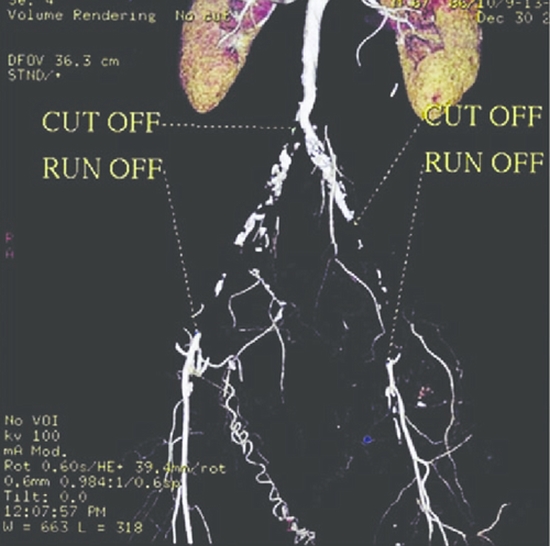
Arterial Cut-Off and Run-Off in Comparison with Surgical Findings {faces}

Background/objective: The accurate anatomic mapping and determination of the severity of arterial disease, an important health problem of the elderly, is of great significance. We aimed to determine the diagnostic value of 64-multislice CT angiography (MSCTA) in run-off and cut-off sites of arterial disease.

Patients and methods: Throughout the study, MSCTA followed by an operative intervention was carried out on a total of 38 patients with clinical signs and symptoms suggestive of arterial disease (AD) all of whom had the indication for vascular surgery. The mean age of patients was 34±15.86 (range, 23 to 93) years. MSCTA was executed using a 64-slice CT scanner, during the arterial phase of injecting the nonionic, contrast medium with a power injector at the rate of 5 ml/sec into the antecubital vein and exploration and revascularization of peripheral arterial disease was performed intraoperatively.

Results: Atherosclerosis and arterial disease, the most common causes of vascular occlusion, were more common in the lower extremities. According to MSCTA findings, the most frequent site of stenosis was the superficial femoral artery. Spearman's correlation coefficient showed a high degree of agreement amongst the raters. The sensitivity, specificity, positive predictive value (PPV), negative predictive value (NPV) and the accuracy of MSCTA compared to surgery were 83.8%, 96%, 96.8%, 81.3% and 89%, respectively. MSCTA findings were compared with surgery as a standard of reference, which showed concordance in the majority of cases (81.6%). Cut-off sites were correctly identified by MSCTA in 97.3% of the patients and the most common sites of discordance were the run-off sites (18.2%).

Conclusion: MSCTA angiography as a novel diagnostic modality may be a suitable alternative and a viable choice for routine clinical diagnosis.

Keywords: Arterial Disease; Cut-Off; Diagnostic Accuracy; Run-Off Site; Sixty Four Multi-Slice CT Angiography; Surgery.

  • Article_DOI :
  • Author(s) : m noaparast
  • News Group : research,research article
  • News Code : 278569
مدیر سایت
Author:

مدیر سایت

Enter your desired term to search
Theme settings