Advanced Diagnostic & Interventional Radiology Research Center | Gadolinium MR-angiography Results in Peripheral Arterial Disease

Advanced Diagnostic & Interventional Radiology Research Center | Gadolinium MR-angiography Results in Peripheral Arterial Disease
| Jan 1 2026
logo

Advanced Diagnostic & Interventional Radiology Research Center

COVID-19 pandemic 

During the COVID-19 pandemic, the Radiology Research Center at Tehran University of Medical Sciences continued its research activities despite the challenges posed by the increased demand for CT scans of COVID-19 patients and the necessity of adhering to strict health protocols. This center played a crucial role in improving medical imaging techniques, optimizing diagnostic protocols, and advancing technologies related to CT scan image analysis.

Faculty members, researchers, and staff remained committed to ensuring the safety and well-being of healthcare professionals and patients while actively engaging in imaging data analysis, developing artificial intelligence algorithms for faster disease detection, publishing scientific articles, and presenting their findings at international conferences. These efforts aimed to enhance diagnostic accuracy, improve treatment processes, and alleviate pressure on healthcare systems.


Key achievements of the Radiology Research Center during the COVID-19 pandemic include:


✔️ Development and optimization of lung imaging protocols for faster and more accurate COVID-19 diagnosis
✔️ Implementation of artificial intelligence technologies for automated CT scan analysis and reduced diagnosis time
✔️ Publication of high-impact research articles on innovative imaging methods for COVID-19 patients
✔️ Participation in national and international projects focused on COVID-19 diagnosis and patient management

The center remains dedicated to advancing research in medical imaging and continues to contribute as a leading scientific institution in improving the quality of diagnostic and therapeutic services.


Some of the center's significant achievements during the pandemic include:


  • Release Date : Feb 27 2024 - 12:21
  • : 15
  • Study time : 1 minute(s)

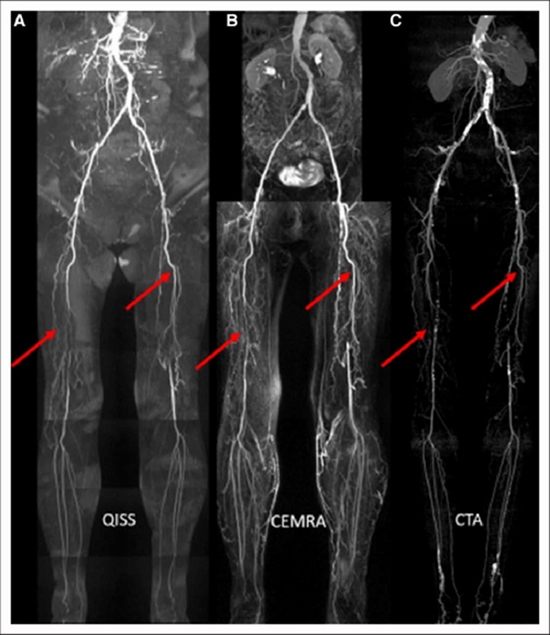
Gadolinium Enhanced MR-angiography Results in Patients With Peripheral Arterial Disease: Positive Predictive Value Compared to Surgery

According to our findings MR-angiography is an appropriate alternative imaging modality for patients suspected to have peripheral arterial disease and it facilitates the early diagnosis proposed by the clinical findings. Also beneficial characteristics of this method such as low exposure to ionizing radiation, repeatability, and low risk of contrast agent-induced nephropathy make it a modality of choice in patients with renal impairment.
 {faces}

Abstract

Background: Peripheral arterial disease (PAD) represents systematic atherosclerosis of great vessels. PAD affects approximately 10-20 % of patients older than 60 years and is associated with high mortality and morbidity rate debilitating individuals' life.

Objectives: To compare the results of Gadolinium enhanced MR-Angiography and surgery in patients suspected to have peripheral arterial disease.

Materials and methods: In this prospective cohort study, 30 consecutive patients matching the inclusion criteria were enrolled and MR-Angiography was performed prior to surgery for each one.

Results: 22 patients were male (73.3%) and the mean age was 60.3 ± 10.6 years in our study group. The most common artery for cut off and run off was superior femoral artery in both assessments. Proximal section of each artery was the most common anatomical section for cut off and run off. There was a same report of cut off artery by MR-Angiography and surgery (kappa coefficient of agreement was 0.96, P value < 0.001) and positive predictive value was 0.97 (95% CI: 0.83-0.99).

Conclusions: According to our findings MR-angiography is an appropriate alternative imaging modality for patients suspected to have peripheral arterial disease and it facilitates the early diagnosis proposed by the clinical findings. Also beneficial characteristics of this method such as low exposure to ionizing radiation, repeatability, and low risk of contrast agent-induced nephropathy make it a modality of choice in patients with renal impairment.


  • Article_DOI : 10.5812/ircmj.26033
  • Author(s) : hossein ghanaati,seyed rasool mirsharifi
  • News Group : research,research article
  • News Code : 278490
مدیر سایت
Author:

مدیر سایت

Enter your desired term to search
Theme settings