Advanced Diagnostic & Interventional Radiology Research Center | bone marrow mesenchymal stromal cells ameliorates cisplatin-indu

Advanced Diagnostic & Interventional Radiology Research Center | bone marrow mesenchymal stromal cells ameliorates cisplatin-indu
| Jan 2 2026
logo

Advanced Diagnostic & Interventional Radiology Research Center

COVID-19 pandemic 

During the COVID-19 pandemic, the Radiology Research Center at Tehran University of Medical Sciences continued its research activities despite the challenges posed by the increased demand for CT scans of COVID-19 patients and the necessity of adhering to strict health protocols. This center played a crucial role in improving medical imaging techniques, optimizing diagnostic protocols, and advancing technologies related to CT scan image analysis.

Faculty members, researchers, and staff remained committed to ensuring the safety and well-being of healthcare professionals and patients while actively engaging in imaging data analysis, developing artificial intelligence algorithms for faster disease detection, publishing scientific articles, and presenting their findings at international conferences. These efforts aimed to enhance diagnostic accuracy, improve treatment processes, and alleviate pressure on healthcare systems.


Key achievements of the Radiology Research Center during the COVID-19 pandemic include:


✔️ Development and optimization of lung imaging protocols for faster and more accurate COVID-19 diagnosis
✔️ Implementation of artificial intelligence technologies for automated CT scan analysis and reduced diagnosis time
✔️ Publication of high-impact research articles on innovative imaging methods for COVID-19 patients
✔️ Participation in national and international projects focused on COVID-19 diagnosis and patient management

The center remains dedicated to advancing research in medical imaging and continues to contribute as a leading scientific institution in improving the quality of diagnostic and therapeutic services.


Some of the center's significant achievements during the pandemic include:


  • Release Date : Feb 28 2024 - 11:01
  • : 21
  • Study time : 1 minute(s)

Intra-renal arterial injection of autologous bone marrow mesenchymal stromal cells ameliorates cisplatin-induced acute kidney injury in a rhesus Macaque mulatta monkey model

This study aims to assess the effect of autologous rhesus Macaque mulatta monkey BM-MSC transplantation in cisplatin-induced AKI
 bone marrow mesenchymal stromal cells ameliorates cisplatin-induced acute kidney injury {faces}

Background: Clinically, acute kidney injury (AKI) is a potentially devastating condition for which no specific therapy improves efficacy of the repair process. Bone marrow mesenchymal stromal cells (BM-MSCs) are proven to be beneficial for the renal repair process after AKI in different experimental rodent models, but their efficacy in large animals and humans remains unknown. This study aims to assess the effect of autologous rhesus Macaque mulatta monkey BM-MSC transplantation in cisplatin-induced AKI.

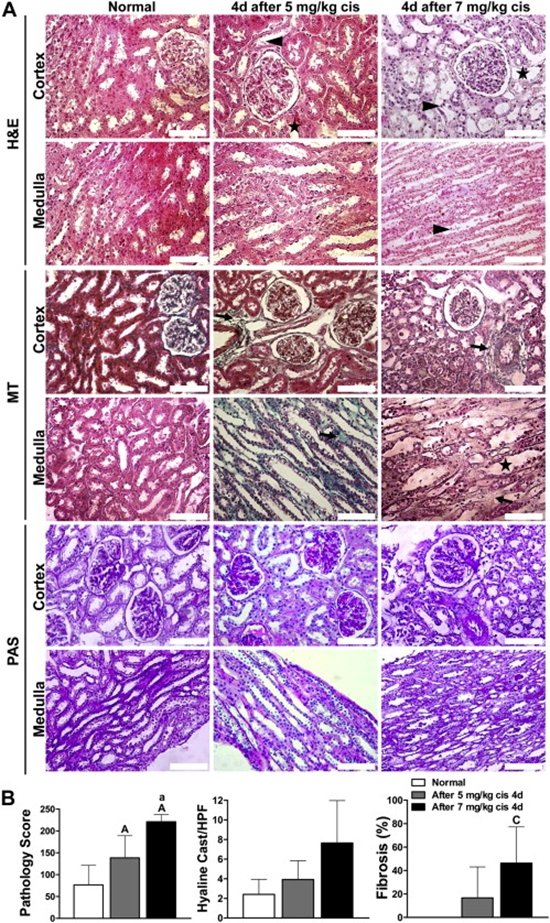
Methods: We chose a model of AKI induced by intravenous administration of 5 mg/kg cisplatin. BM-MSCs were transplanted through intra-arterial injection. The animals were followed for survival, biochemistry analysis and pathology.

Results: Transplantation of 5 × 10(6) cells/kg ameliorated renal function during the first week, as shown by significantly lower serum creatinine and urea values and higher urine creatinine and urea clearance without hyponatremia, hyperkalemia, proteinuria and polyuria up to 84 d compared with the vehicle and control groups. The superparamagnetic iron oxide nanoparticle-labeled cells were found in both the glomeruli and tubules. BM-MSCs markedly accelerated Foxp3+ T-regulatory cells in response to cisplatin-induced damage, as revealed by higher numbers of Foxp3+ cells within the tubuli of these monkeys compared with cisplatin-treated monkeys in the control and vehicle groups.

Conclusions: These data demonstrate that BM-MSCs in this unique large-animal model of cisplatin-induced AKI exhibited recovery and protective properties.


  • Article_DOI : 10.1016/j.jcyt.2014.01.004
  • Author(s) : reza moghadasali ,nasser aghdami
  • News Group : research,research article
  • News Code : 278484
مدیر سایت
Author:

مدیر سایت

Enter your desired term to search
Theme settings