Advanced Diagnostic & Interventional Radiology Research Center | Microcalcification Detection in Mammograms Using Deep Learning

Advanced Diagnostic & Interventional Radiology Research Center | Microcalcification Detection in Mammograms Using Deep Learning
| Dec 14 2025
logo

Advanced Diagnostic & Interventional Radiology Research Center

COVID-19 pandemic 

During the COVID-19 pandemic, the Radiology Research Center at Tehran University of Medical Sciences continued its research activities despite the challenges posed by the increased demand for CT scans of COVID-19 patients and the necessity of adhering to strict health protocols. This center played a crucial role in improving medical imaging techniques, optimizing diagnostic protocols, and advancing technologies related to CT scan image analysis.

Faculty members, researchers, and staff remained committed to ensuring the safety and well-being of healthcare professionals and patients while actively engaging in imaging data analysis, developing artificial intelligence algorithms for faster disease detection, publishing scientific articles, and presenting their findings at international conferences. These efforts aimed to enhance diagnostic accuracy, improve treatment processes, and alleviate pressure on healthcare systems.


Key achievements of the Radiology Research Center during the COVID-19 pandemic include:


✔️ Development and optimization of lung imaging protocols for faster and more accurate COVID-19 diagnosis
✔️ Implementation of artificial intelligence technologies for automated CT scan analysis and reduced diagnosis time
✔️ Publication of high-impact research articles on innovative imaging methods for COVID-19 patients
✔️ Participation in national and international projects focused on COVID-19 diagnosis and patient management

The center remains dedicated to advancing research in medical imaging and continues to contribute as a leading scientific institution in improving the quality of diagnostic and therapeutic services.


Some of the center's significant achievements during the pandemic include:


  • Release Date : Jul 24 2024 - 09:15
  • : 157
  • Study time : 1 minute(s)

Microcalcification Detection in Mammograms Using Deep Learning
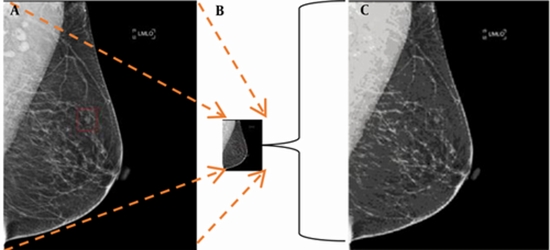
Microcalcification Detection in Mammograms Using Deep Learning {faces}

Background:

Mammography is the most reliable and popular method in the clinical diagnosis of breast cancer. Calcifications are subtle lesions in mammograms that can be cancerous and difficult to detect for radiologists. Computer-aided detection (CAD) can help radiologists identify malignant lesions.

Objectives:

This study aimed to propose a deep learning based CAD system for detecting calcifications in mammograms.

Patients and Methods:

A total of 815 in-house mammograms were collected from 204 women undergoing screening mammography. Calcifications in the mammograms were annotated by specialists. Each mammogram was divided into patches of fixed size, and then, patches containing calcifications were extracted, along with the same number of normal patches. A ResNet-50 Convolutional Neural Network (CNN) was trained for classification of patches into normal and calcification groups using training data and then the performance of the trained CNN was tested with new test data.

Results:

The proposed patch learning approach (PLA) showed a classification accuracy of 96.7% in the binary classification of patches. Therefore, it could detect calcification regions in a given mammogram. The PLA achieved sensitivity and specificity of 96.7% and 96.7%, respectively, with an area under the curve of 98.8%.

Conclusion:

The present results highlighted the efficacy of the proposed PLA, especially for limited training data. Direct comparison with previous studies is not possible due to differences in datasets. Nevertheless, the PLA accuracy in detecting calcifications was higher than that of deep learning based CAD systems in previous studies. The effective performance of PLA may be attributed to the manual removal of uninformative patches, as they were not used in the training set.
 
 
  • Article_DOI : https://doi.org/10.5812/iranjradiol-120758
  • Author(s) : mahmoud shiri kahnouei,masoumeh giti,mohammad ali akhaee,ali ameri
  • News Group : research,articles,research article,AI,AI articles
  • News Code : 277926
مدیر سایت
Author:

مدیر سایت

0 Comments for this article

comment

Post your comment:

متن درون تصویر را در جعبه متن زیر وارد نمائید *
Enter your desired term to search
Theme settings