Advanced Diagnostic & Interventional Radiology Research Center | Non-invasive treatment of advanced atherosclerotic stenosis in t

Advanced Diagnostic & Interventional Radiology Research Center | Non-invasive treatment of advanced atherosclerotic stenosis in t
| Jan 2 2026
logo

Advanced Diagnostic & Interventional Radiology Research Center

COVID-19 pandemic 

During the COVID-19 pandemic, the Radiology Research Center at Tehran University of Medical Sciences continued its research activities despite the challenges posed by the increased demand for CT scans of COVID-19 patients and the necessity of adhering to strict health protocols. This center played a crucial role in improving medical imaging techniques, optimizing diagnostic protocols, and advancing technologies related to CT scan image analysis.

Faculty members, researchers, and staff remained committed to ensuring the safety and well-being of healthcare professionals and patients while actively engaging in imaging data analysis, developing artificial intelligence algorithms for faster disease detection, publishing scientific articles, and presenting their findings at international conferences. These efforts aimed to enhance diagnostic accuracy, improve treatment processes, and alleviate pressure on healthcare systems.


Key achievements of the Radiology Research Center during the COVID-19 pandemic include:


✔️ Development and optimization of lung imaging protocols for faster and more accurate COVID-19 diagnosis
✔️ Implementation of artificial intelligence technologies for automated CT scan analysis and reduced diagnosis time
✔️ Publication of high-impact research articles on innovative imaging methods for COVID-19 patients
✔️ Participation in national and international projects focused on COVID-19 diagnosis and patient management

The center remains dedicated to advancing research in medical imaging and continues to contribute as a leading scientific institution in improving the quality of diagnostic and therapeutic services.


Some of the center's significant achievements during the pandemic include:


  • Release Date : Mar 3 2024 - 08:52
  • : 21
  • Study time : 1 minute(s)

Non-invasive treatment of advanced atherosclerotic stenosis in the rabbit carotid artery using low-level combined dual- frequency ultrasonication
Non-invasive treatment of advanced atherosclerotic stenosis {faces}

Background:

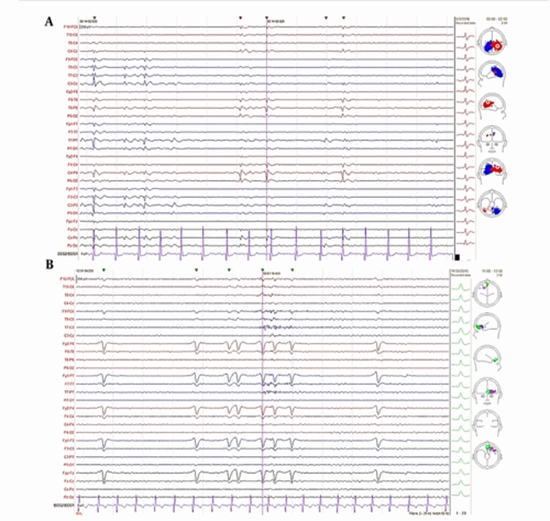
 Preliminary studies have shown that electrical source imaging (ESI) has numerous advantages for the pre-surgical evaluation of epileptic patients. However, the role of ESI for children with non-lesional drug resistance in focal epilepsy has been poorly characterized.

Objectives:

 This study aimed to investigate this issue according to interictal epileptiform discharges (IEDs) and constraints in developing countries.

Methods:

 The present study used long-term video electroencephalography (EEG) monitoring (LTM) data that were recorded using the standard 19 scalp electrodes (10 - 20 system) and 3 tesla T1 image data. Accordingly, first, IEDs were clustered and then assessed by an epileptologist. Afterward, some operations were conducted that included EEG inverse problem solving with three known methods, namely brain electrical source analysis (BESA) with the individual head model, cortical classical LORETA analysis recursively analysis (CLARA) with the individual head model, and BESA with the age template head model. Seven children were processed in this project.

Results:

 In most cases (n = 5, 71%), the seizure onset zone (SOZ) was the same in the LTM report and the present proposed methodology. Moreover, this study succeeded in localizing the region of the predicted SOZ.

Conclusions:

 According to limitations in a developing country, for the configuration of multi-modal studies (e.g., 3T magnetic resonance imaging, LTM, and ESI) with a specific and valuable protocol, this investigation defined a pilot study with a 7 data sample for the first step. These findings, based on the small sample size, suggest that ESI based on combining ensemble methods improves information for children with focal drug-resistant epilepsy. It is hoped that future studies with large sample sizes show the role of ESI in developing countries more than before.
  • Article_DOI :
  • Author(s) : mehrad h,mokhtari-dizaji m
  • News Group : research,research article
  • News Code : 278475
مدیر سایت
Author:

مدیر سایت

Enter your desired term to search
Theme settings