Advanced Diagnostic & Interventional Radiology Research Center | Predictive factors of health-related quality of life in liver ca

Advanced Diagnostic & Interventional Radiology Research Center | Predictive factors of health-related quality of life in liver ca
| Dec 12 2025
logo

Advanced Diagnostic & Interventional Radiology Research Center

COVID-19 pandemic 

During the COVID-19 pandemic, the Radiology Research Center at Tehran University of Medical Sciences continued its research activities despite the challenges posed by the increased demand for CT scans of COVID-19 patients and the necessity of adhering to strict health protocols. This center played a crucial role in improving medical imaging techniques, optimizing diagnostic protocols, and advancing technologies related to CT scan image analysis.

Faculty members, researchers, and staff remained committed to ensuring the safety and well-being of healthcare professionals and patients while actively engaging in imaging data analysis, developing artificial intelligence algorithms for faster disease detection, publishing scientific articles, and presenting their findings at international conferences. These efforts aimed to enhance diagnostic accuracy, improve treatment processes, and alleviate pressure on healthcare systems.


Key achievements of the Radiology Research Center during the COVID-19 pandemic include:


✔️ Development and optimization of lung imaging protocols for faster and more accurate COVID-19 diagnosis
✔️ Implementation of artificial intelligence technologies for automated CT scan analysis and reduced diagnosis time
✔️ Publication of high-impact research articles on innovative imaging methods for COVID-19 patients
✔️ Participation in national and international projects focused on COVID-19 diagnosis and patient management

The center remains dedicated to advancing research in medical imaging and continues to contribute as a leading scientific institution in improving the quality of diagnostic and therapeutic services.


Some of the center's significant achievements during the pandemic include:


  • Release Date : Jun 19 2024 - 07:58
  • : 21
  • Study time : 1 minute(s)

Predictive factors of health-related quality of life in patients with liver cancer
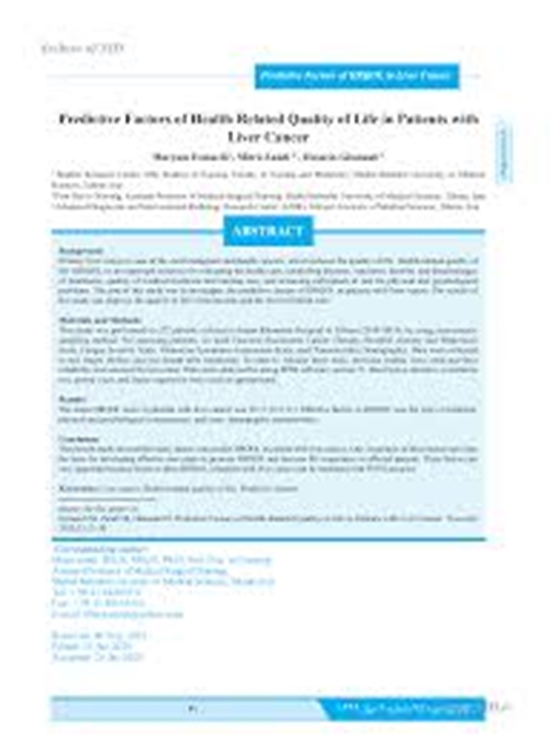
health-related quality of life in patients with liver cancer {faces}

Background:

Primary liver cancer is one of the most malignant and deadly cancers, which reduces the quality of life. Health-related quality of life (HRQOL) is an important criterion for evaluating the health care, controlling diseases, outcomes, benefits, and disadvantages of treatments, quality of medical treatment and nursing care, and screening individuals at risk for physical and psychological problems. The aim of this study was to investigate the predictive factors of HRQOL in patients with liver cancer. The results of this study can improve the quality of life of the patients and the level of health care.

Materials and Methods:

 This study was performed on 272 patients referred to Imam Khomeini Hospital in Tehran (2018-2019), by using convenience sampling method. For assessing patients, we used Function Assessment Cancer Therapy, Hospital Anxiety and Depression Scale, Fatigue Severity Scale, Edmonton Symptoms Assessment Scale, and Characteristics Demographic. Data were collected in two stages (before and one month after treatment). In order to validate these tools, previous studies were cited and their reliability was assessed by test-retest. Data were analyzed by using SPSS software version 21. Descriptive statistics, correlation test, paired t test, and linear regression were used as appropriated.

Results:

The mean HRQOL score in patients with liver cancer was 58.11 (±17.31). Effective factors in HRQOL was the type of treatment, physical and psychological consequences, and some  demographic characteristics.

Conclusion:

The present study showed that many factors can predict HRQOL in patient with liver cancer. Also, awareness of these factors provides the basis for developing effective care plans to promote HRQOL and increase life expectancy in affected patients. These factors are very important because based on them HRQOL of patient with liver cancer can be estimated with 59/8% accuracy


  • Article_DOI :
  • Author(s) : hossein ghanaati,maryam esmaeili
  • News Group : research,research article
  • News Code : 278288
مدیر سایت
Author:

مدیر سایت

Enter your desired term to search
Theme settings