


The added value of apparent diffusion coefficient assessments in O-RADS MRI evaluation for characterizing ovarian masses with solid components
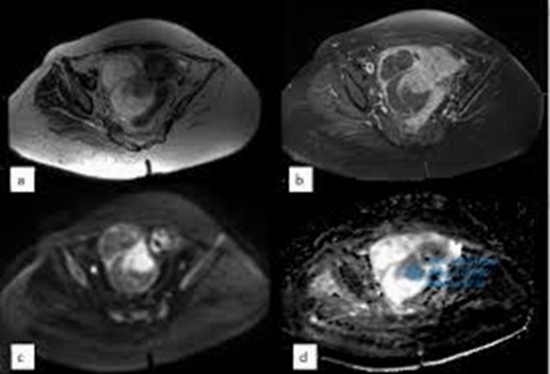
Background: Integrating diffusion-weighted imaging (DWI) and apparent diffusion coefficient (ADC) measurements with existing MR imaging protocols improves the differentiation between benign and malignant adnexal lesions. We aimed to assess the additional value of quantitative ADC in diagnosing adnexal masses classified by the O-RADS-MRI score and evaluate the impact on diagnostic performance.
Methods: This retrospective cohort study analyzed 159 patients with 218 ovarian masses, classified into benign, borderline, and malignant groups via histopathological evaluation. We examined MRI parameters, including solid component size and signal intensity, time-intensity curves (TICs), ADC values and O-RADS categories. Receiver Operating Characteristic (ROC) curve analysis determined optimal ADC cut-off values for differentiating tumor classifications.
Results: The optimal cut-off values for the ADC between O-RADS MRI categories 3-4, and 4-5, were 1.36 × 10⁻³ mm²/sec and 0.99 × 10⁻³ mm²/sec respectively. the introduction of ORADS-ADC classification, utilizing these ADC cut-offs demonstrated superior diagnostic performance compared to traditional O-RADS, with improvements observed across several metrics: in ORADS-ADC 3-4 sensitivity increases from 69.2 to 94.12%, specificity from 88.4 to 98.36%, and accuracy from 76.0 to 96.84%. Similarly, in ORADS-ADC 4-5 sensitivity increases from 91.8 to 95.12%, specificity from 62.3 to 97.06%, and accuracy from 78.9 to 95.54%.
Conclusion: Incorporating DWI and ADC measurements into the O-RADS MRI classification system significantly improves ovarian tumor classification. The ORADS-ADC model markedly increases diagnostic accuracy, enhancing both sensitivity and specificity compared to traditional O-RADS, which consequently enhances clinical and therapeutic management resulting in better patient outcomes during surgical planning.


comment