Advanced Diagnostic & Interventional Radiology Research Center | Diagnostic Ability of 384-Slice Computed Tomographic Angiography in Prediction of Myocardial Ischemia in Patients with Myocardial Bridging (MB) as Compared to SPECT-MPI Examination
Advanced Diagnostic & Interventional Radiology Research Center | Diagnostic Ability of 384-Slice Computed Tomographic Angiography in Prediction of Myocardial Ischemia in Patients with Myocardial Bridging (MB) as Compared to SPECT-MPI Examination
| Dec 13 2025
logo

Advanced Diagnostic & Interventional Radiology Research Center


Artificial Intelligence of Radiology Research Center


Given the vast amount of image data generated daily, radiology research centers possess immense potential for harnessing artificial intelligence. This technology can significantly improve the accuracy and speed of disease diagnosis, aiding radiologists in making informed clinical decisions. Below are some of the activities undertaken by radiology research centers in the realm of AI:


  1. Developing Automated Disease Detection Algorithms:

  • Tumor Detection: Developing algorithms to automatically detect various tumors in radiology images (such as CT scans, MRIs, and PET scans).
  • Pulmonary Disease Detection: Automatically detecting diseases like pneumonia, COVID-19, and pulmonary fibrosis.
  • Cardiovascular Disease Detection: Early detection of cardiovascular diseases such as aortic aneurysm and coronary artery stenosis.
  •  

2. Optimizing Imaging Processes:


  • Reducing Radiation Dose: Developing algorithms to reduce radiation dose during imaging procedures, especially for children and pregnant women.
  • Improving Image Quality: Using AI to enhance radiology image quality and reduce noise.
  • Facilitating Image Interpretation: Developing tools to assist radiologists in interpreting radiology images, such as highlighting suspicious areas.


3. Analyzing Big Data:


  • Identifying Patterns: Utilizing machine learning algorithms to identify hidden patterns in radiology data and discover new correlations between diseases and risk factors.
  • Predicting Disease Progression: Predicting disease progression in patients with chronic conditions.
  • Evaluating Treatment Effectiveness: Assessing the effectiveness of various treatments based on radiology data.
  •  

4. Developing Diagnostic Assistance Tools:


  • Assisting Radiologists: Developing tools to aid radiologists in disease diagnosis, such as automated measurement tools and automatic lesion classification.
  • Interpreting Radiology Reports: Developing systems for automated interpretation of radiology reports and extraction of key information.
  •  

5. Collaborating with Other Fields:


  • Collaborating with Software Engineers: Developing and implementing AI algorithms.
  • Collaborating with Medical Specialists: Validating AI models and ensuring their effectiveness in clinical settings.
  • Collaborating with Data Scientists: Collecting, processing, and analyzing radiology data.


6. Education and Research:


  • Training Personnel: Conducting training courses to familiarize center staff with AI concepts and applications in radiology.
  • Conducting Fundamental Research: Conducting fundamental research in AI for radiology to develop new algorithms and improve existing methods.
  • Publishing Scientific Articles: Publishing research results in reputable scientific journals.
  •  

In conclusion, given the rapid advancements in artificial intelligence, its role in radiology is expected to become increasingly significant in the future. Radiology research centers can make substantial contributions to medical advancements and improved diagnostic services by investing in this field.


Lists of AI articles:


  • Release Date : Apr 7 2024 - 14:22
  • : 76
  • Study time : 1 minute(s)

Diagnostic Ability of 384-Slice Computed Tomographic Angiography in Prediction of Myocardial Ischemia in Patients with Myocardial Bridging (MB) as Compared to SPECT-MPI Examination

384-Slice CTA in Prediction of Myocardial Ischemia in Myocardial Bridging {faces}

Background:

 During the past decade, coronary computed tomographic angiography (CCTA) has become the primary non-invasive imaging technique for the assessment of myocardial bridging (MB).

Objectivs:

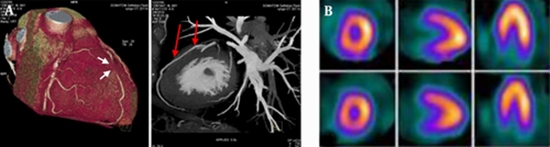
 The aim of this study was to evaluate the ability of CCTA to predict myocardial ischemia in patients with MB.

Patients and Methods:

 A total of 32 MB patients (21 males and 11 females) participated in this study. Eleven MB parameters were measured to assess the ability of CCTA to predict MB patients with ischemia. In order to evaluate ischemia, all the patients underwent single positron emission computed tomography-myocardial perfusion imaging (SPECT-MPI) examination.

Results:

 Ischemia was observed in 17 patients (53.1%), while 15 patients (46.9%) did not show signs of ischemia. Out of the 32 patients, superficial MB was observed in 15 patients while deep MB was identified in 12, and borderline was observed in five patients. All MB examined parameters were found to be significantly different between ischemic and non-ischemic patients, except for the location and tunnel artery diameter in diastole. Moreover, a cut-off value of 0.65 mm was able to discriminate ischemia with a sensitivity of 100%, specificity of 93%, and yield area under the receiver operating characteristic (ROC) curve (AUC) of 0.996. Also, by considering the depth cut-off value of 1.75 mm, ischemia can be distinguished with sensitivity and specificity of 100%. MB length had a lower discrimination power, with a cut off value of 22.5 mm yield, 76% sensitivity, 67% specificity, and AUC = 0.810 in the diagnosis of ischemia.
 

Conclusion:

 CCTA was a reliable modality with high accuracy to depict MB, identify high risk MB, and prevent unnecessary SPECT-MPI examination


  • Article_DOI :
  • Author(s) : majid maleki,ali zahedmehr,bahar galeshi
  • News Group : research,articles,research article,AI,AI articles
  • News Code : 278381
مدیر سایت
Author:

مدیر سایت

Enter your desired term to search
Theme settings