Advanced Diagnostic & Interventional Radiology Research Center | Transcatheter Arterial Chemoembolization in  Unresectable Hepato

Advanced Diagnostic & Interventional Radiology Research Center | Transcatheter Arterial Chemoembolization in  Unresectable Hepato
| Jan 2 2026
logo

Advanced Diagnostic & Interventional Radiology Research Center

COVID-19 pandemic 

During the COVID-19 pandemic, the Radiology Research Center at Tehran University of Medical Sciences continued its research activities despite the challenges posed by the increased demand for CT scans of COVID-19 patients and the necessity of adhering to strict health protocols. This center played a crucial role in improving medical imaging techniques, optimizing diagnostic protocols, and advancing technologies related to CT scan image analysis.

Faculty members, researchers, and staff remained committed to ensuring the safety and well-being of healthcare professionals and patients while actively engaging in imaging data analysis, developing artificial intelligence algorithms for faster disease detection, publishing scientific articles, and presenting their findings at international conferences. These efforts aimed to enhance diagnostic accuracy, improve treatment processes, and alleviate pressure on healthcare systems.


Key achievements of the Radiology Research Center during the COVID-19 pandemic include:


✔️ Development and optimization of lung imaging protocols for faster and more accurate COVID-19 diagnosis
✔️ Implementation of artificial intelligence technologies for automated CT scan analysis and reduced diagnosis time
✔️ Publication of high-impact research articles on innovative imaging methods for COVID-19 patients
✔️ Participation in national and international projects focused on COVID-19 diagnosis and patient management

The center remains dedicated to advancing research in medical imaging and continues to contribute as a leading scientific institution in improving the quality of diagnostic and therapeutic services.


Some of the center's significant achievements during the pandemic include:


  • Release Date : Feb 28 2024 - 09:50
  • : 39
  • Study time : 1 minute(s)

Transcatheter Arterial Chemoembolization Therapy for Patients With Unresectable Hepatocellular Carcinoma

The aim of the study is to investigate the efficacy, complications, and prognostic factors of the TACE in unresectable HCC patients
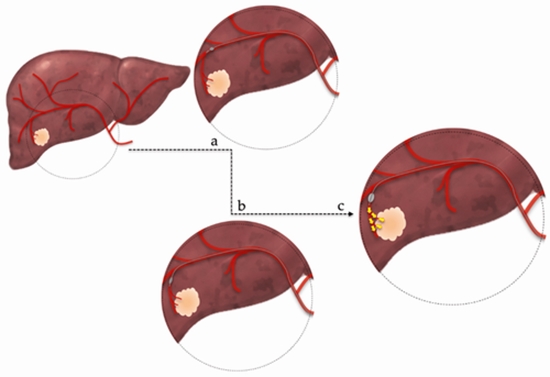
Unresectable Hepatocellular Carcinoma {faces}

Background: Although transcatheter arterial chemoembolization (TACE) has been widely used as a palliative treatment for unresectable hepatocellular carcinoma (HCC), its actual efficacy and prognostic usefulness have not been clarified in past studies.

Objectives: The aim of the study is to investigate the efficacy, complications, and prognostic factors of the TACE in unresectable HCC patients.

Patients and methods: Thirty-two patients with unresectable HCC were treated with TACE. The procedure was performed with a combination of Lipiodol, doxorubicin, and cytomycin followed by gelatin-sponge particles embolization. CT-scan imaging and liver function tests (AST, ALT, ALP, BIL, and PT) were performed before and after the TACE. All patients were followed-up for 6-months.

Results: Of all patients, 1 and 11 patients respectively, exhibited a complete response (CR) and a partial response (PR) (response rate, CR+PR, 44%). Data have shown that tumor size, number of lesions and number of involved segments are significantly reduced after the TACE performance (P < 0.05). No significant clinical adverse effect was observed in patients after the intervention. Also, liver function tests including AST, ALT, ALP, BIL, and PT did not significantly differ before and after the intervention (P > 0.05). The 6-month cumulative survival rates of the 32 patients were 78.1 %, respectively. Univariate analysis showed that survival correlated significantly with the following factors: tumor size; ≥ 8 cm versus < 8 cm (P < 0.010), serum ALP level; < 300 versus ≥ 300 (P < 0.043), and number of liver involved segments; < 2 versus ≥ 2 (P < 0.020).

Conclusions: We showed that in treatment of patients with unresectable hepatocellular carcinoma, TACE significantly improved the disease and the overall survival rate. Also, we introduce the tumor size, serum ALP level, and number of liver involved segments as prognostic factors of the procedure. Finally, TACE can be recommended as the initial treatment for unresectable HCC patients.


  • Article_DOI : 10.5812/hepatmon.25792
  • Author(s) : hossein ghanaati,kavous firouznia
  • News Group : research,research article
  • News Code : 278488
مدیر سایت
Author:

مدیر سایت

Enter your desired term to search
Theme settings