Advanced Diagnostic & Interventional Radiology Research Center | multifocal leukoencephalopathy after liver transplant

Advanced Diagnostic & Interventional Radiology Research Center | multifocal leukoencephalopathy after liver transplant
| Dec 24 2025
logo

Advanced Diagnostic & Interventional Radiology Research Center

COVID-19 pandemic 

During the COVID-19 pandemic, the Radiology Research Center at Tehran University of Medical Sciences continued its research activities despite the challenges posed by the increased demand for CT scans of COVID-19 patients and the necessity of adhering to strict health protocols. This center played a crucial role in improving medical imaging techniques, optimizing diagnostic protocols, and advancing technologies related to CT scan image analysis.

Faculty members, researchers, and staff remained committed to ensuring the safety and well-being of healthcare professionals and patients while actively engaging in imaging data analysis, developing artificial intelligence algorithms for faster disease detection, publishing scientific articles, and presenting their findings at international conferences. These efforts aimed to enhance diagnostic accuracy, improve treatment processes, and alleviate pressure on healthcare systems.


Key achievements of the Radiology Research Center during the COVID-19 pandemic include:


✔️ Development and optimization of lung imaging protocols for faster and more accurate COVID-19 diagnosis
✔️ Implementation of artificial intelligence technologies for automated CT scan analysis and reduced diagnosis time
✔️ Publication of high-impact research articles on innovative imaging methods for COVID-19 patients
✔️ Participation in national and international projects focused on COVID-19 diagnosis and patient management

The center remains dedicated to advancing research in medical imaging and continues to contribute as a leading scientific institution in improving the quality of diagnostic and therapeutic services.


Some of the center's significant achievements during the pandemic include:


  • Release Date : Apr 20 2024 - 11:45
  • : 25
  • Study time : Less than one minute

A 41-year-old female with progressive multifocal leukoencephalopathy after liver transplant
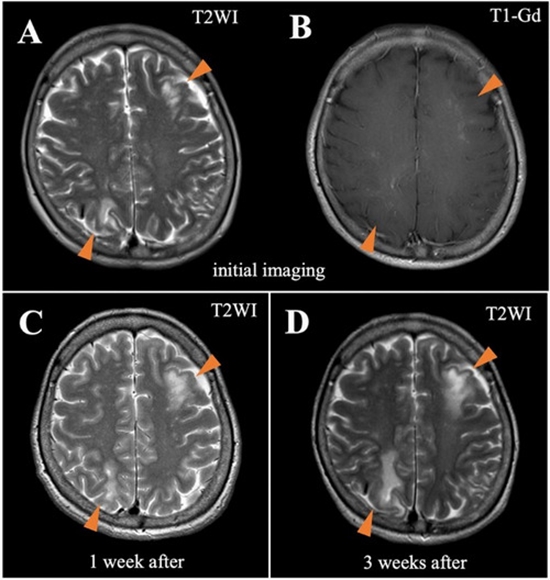
 progressive multifocal leukoencephalopathy after liver transplant {faces}

Progressive multifocal leukoencephalopathy (PML) is a demyelinating disease caused by JC virus reactivation. Its occurrence is very rare after solid organ transplantation, especially liver transplantation. We report a patient who received liver transplantation due to liver failure resulting from autoimmune hepatitis and advanced PML presenting with aphasia. A 41-year-old female with a history of liver transplantation who received a usual immunosuppression regimen was admitted with a stroke attack resulting in right hemiplegia 2 months after liver transplantation. Surprisingly, she gradually developed dysarthria and left central facial paresis. A brain MRI showed an abnormal multifocal area with a high T2/flair signal in the deep subcortical white matter of the left hemisphere as well as the splenium of the corpus callosum. PCR evaluation of CSF for JCV was positive while other PCR results were negative. A liver transplant recipient receiving immunosuppressive treatment for a long time could develop PML due to JCV reactivation. Only eight cases of JCV infection were reported after liver transplantation by the time of reporting this case. Unfortunately, there is no definite treatment for PML.

  • Article_DOI : 10.1007/s13365-019-00742-1
  • Author(s) : zahra ahmadinejad ,fatemeh talebi
  • News Group : research,case report
  • News Code : 278366
مدیر سایت
Author:

مدیر سایت

Enter your desired term to search
Theme settings