Advanced Diagnostic & Interventional Radiology Research Center | A case of fetal sacrococcygeal teratoma

Advanced Diagnostic & Interventional Radiology Research Center | A case of fetal sacrococcygeal teratoma
| Dec 13 2025
logo

Advanced Diagnostic & Interventional Radiology Research Center

COVID-19 pandemic 

During the COVID-19 pandemic, the Radiology Research Center at Tehran University of Medical Sciences continued its research activities despite the challenges posed by the increased demand for CT scans of COVID-19 patients and the necessity of adhering to strict health protocols. This center played a crucial role in improving medical imaging techniques, optimizing diagnostic protocols, and advancing technologies related to CT scan image analysis.

Faculty members, researchers, and staff remained committed to ensuring the safety and well-being of healthcare professionals and patients while actively engaging in imaging data analysis, developing artificial intelligence algorithms for faster disease detection, publishing scientific articles, and presenting their findings at international conferences. These efforts aimed to enhance diagnostic accuracy, improve treatment processes, and alleviate pressure on healthcare systems.


Key achievements of the Radiology Research Center during the COVID-19 pandemic include:


✔️ Development and optimization of lung imaging protocols for faster and more accurate COVID-19 diagnosis
✔️ Implementation of artificial intelligence technologies for automated CT scan analysis and reduced diagnosis time
✔️ Publication of high-impact research articles on innovative imaging methods for COVID-19 patients
✔️ Participation in national and international projects focused on COVID-19 diagnosis and patient management

The center remains dedicated to advancing research in medical imaging and continues to contribute as a leading scientific institution in improving the quality of diagnostic and therapeutic services.


Some of the center's significant achievements during the pandemic include:


  • Release Date : Apr 3 2024 - 13:38
  • : 29
  • Study time : 1 minute(s)

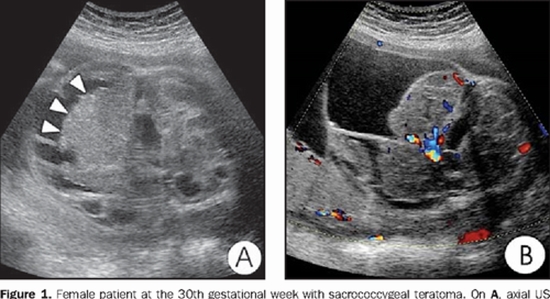
A case of fetal sacrococcygeal teratoma: a comparison between ultrasonography and magnetic resonance imaging findings
A case of fetal sacrococcygeal teratoma {faces}

Sacrococcygeal teratomas are rare germ cell tumours associated with high perinatal and postnatal mortality and morbidity. We present a case of large fast growing (86x63mm) mostly cystic sacrococcygeal teratoma in a 27-year-old woman at 23 weeks of gestation with normal first trimester ultrasound exam. The mass has extended in to the fetal pelvis and displaced bladder anteriorly suggestive for type 2 sacrococcygeal teratoma. The fetus was evaluated by both Magnetic Resonance Imaging (MRI) and ultrasonography. Findings regarding tumour location, size and content were similar for both sonography and MRI, although vascular pattern was detected with higher accuracy and more details by colour Doppler sonography. On the other hand, MRI provide more appropriate information about tumour effects on surrounding tissue and conus location. Because of its mostly cystic components the margin of the intra-pelvic part was clearly visible by sonography but its boundary with adjacent buttock tissue was more vivid in MRI (a bit more clear in FIESTA compared to SS-FSE sequences). The parents chose termination of pregnancy especially based on the mass rapid growth. Based on parent's request karyotype evaluation and gene study was done on fetus, which revealed normal male fetus.

  • Article_DOI : doi.org/10.1002/uog.19867
  • Author(s) :
  • News Group : research,research article
  • News Code : 278398
مدیر سایت
Author:

مدیر سایت

Enter your desired term to search
Theme settings