Advanced Diagnostic & Interventional Radiology Research Center | efficacy of intra-articular ozone (O-2-O-3) injection in patien

Advanced Diagnostic & Interventional Radiology Research Center | efficacy of intra-articular ozone (O-2-O-3) injection in patien
| Dec 13 2025
logo

Advanced Diagnostic & Interventional Radiology Research Center

COVID-19 pandemic 

During the COVID-19 pandemic, the Radiology Research Center at Tehran University of Medical Sciences continued its research activities despite the challenges posed by the increased demand for CT scans of COVID-19 patients and the necessity of adhering to strict health protocols. This center played a crucial role in improving medical imaging techniques, optimizing diagnostic protocols, and advancing technologies related to CT scan image analysis.

Faculty members, researchers, and staff remained committed to ensuring the safety and well-being of healthcare professionals and patients while actively engaging in imaging data analysis, developing artificial intelligence algorithms for faster disease detection, publishing scientific articles, and presenting their findings at international conferences. These efforts aimed to enhance diagnostic accuracy, improve treatment processes, and alleviate pressure on healthcare systems.


Key achievements of the Radiology Research Center during the COVID-19 pandemic include:


✔️ Development and optimization of lung imaging protocols for faster and more accurate COVID-19 diagnosis
✔️ Implementation of artificial intelligence technologies for automated CT scan analysis and reduced diagnosis time
✔️ Publication of high-impact research articles on innovative imaging methods for COVID-19 patients
✔️ Participation in national and international projects focused on COVID-19 diagnosis and patient management

The center remains dedicated to advancing research in medical imaging and continues to contribute as a leading scientific institution in improving the quality of diagnostic and therapeutic services.


Some of the center's significant achievements during the pandemic include:


  • Release Date : Apr 7 2024 - 12:34
  • : 8
  • Study time : 1 minute(s)

An investigation into the efficacy of intra-articular ozone (O-2-O-3) injection in patients with knee osteoarthritis: a systematic review and meta-analysis
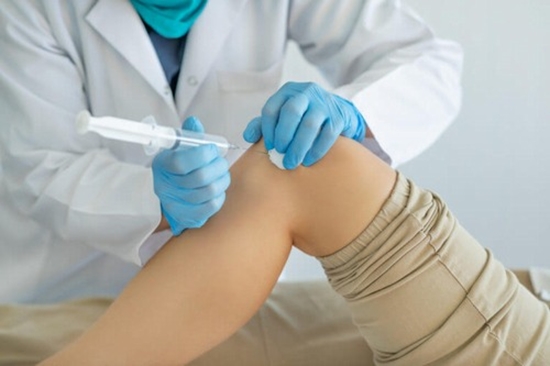
 ozone (O-2-O-3) injection in patients with knee osteoarthritis {faces}

Purpose: This study aimed to review and pool the current literature on intra-articular ozone injection in knee osteoarthritis (OA) patients

Methods: A systematic review of three big databases was performed to identify all English-language randomized clinical trials (RCTs) that evaluated the efficacy of intra-articular ozone injection vs a control injection for knee OA sufferers, using the following two measuring tools: pain VAS and Western Ontario and McMaster Universities Arthritis Index (WOMAC).

Results: A total of 428 patients in five RCTs were included, from which 53% (n=225) were in the ozone group and 47% in the control (hyaluronic acid [HA], dextrose, and air injection) group (n=203). The mean age of the patients in both groups was 64 years. Females were the majority. All studies had at least 2 months of follow-up (F/U). Mean difference (MD) between the groups for VAS in the first month was -0.23 with a P-value of 0.71 (negative value was in favor of ozone), whereas this difference in the third and sixth months reached 1.04 and 1.31, respectively, favoring the control group. These data demonstrated that control injection had a more prolonged pain relief period. A similar trend was seen regarding WOMAC scores; pooled results showed that ozone was slightly better than the control injections during the first month (MD =-7.84 [P=0.15]), but it declined to MD=2.55 and 8.23 at 2- to 3- and 4- to 6-month F/U, respectively, again in favor of control injections. Also, adverse events occurred homogeneously in both ozone (6/150 cases, 4%) and control groups (7/129 cases, 5.4%; P-value=0.31).

Conclusion: Based on the current meta-analysis, intra-articular ozone injection efficacy was significantly superior to placebo and slightly lower to other control injections with non-significant difference. Therefore, ozone could be recommended as an efficient non-surgical treatment, durable for at least 3-6 months, in mild or moderate knee OA management.

  • Article_DOI : 10.2147/JPR.S175441
  • Author(s) : seyed ahmad raeissadat,shahram rahimi-dehgolan
  • News Group : research,research article
  • News Code : 278390
مدیر سایت
Author:

مدیر سایت

Enter your desired term to search
Theme settings