Advanced Diagnostic & Interventional Radiology Research Center | Assessment of ultrasound features and BI RADS categories of malignant breast masses in Women ≤ 40

Advanced Diagnostic & Interventional Radiology Research Center | Assessment of ultrasound features and BI RADS categories of malignant breast masses in Women ≤ 40
| Dec 12 2025
logo

Advanced Diagnostic & Interventional Radiology Research Center

COVID-19 pandemic 

During the COVID-19 pandemic, the Radiology Research Center at Tehran University of Medical Sciences continued its research activities despite the challenges posed by the increased demand for CT scans of COVID-19 patients and the necessity of adhering to strict health protocols. This center played a crucial role in improving medical imaging techniques, optimizing diagnostic protocols, and advancing technologies related to CT scan image analysis.

Faculty members, researchers, and staff remained committed to ensuring the safety and well-being of healthcare professionals and patients while actively engaging in imaging data analysis, developing artificial intelligence algorithms for faster disease detection, publishing scientific articles, and presenting their findings at international conferences. These efforts aimed to enhance diagnostic accuracy, improve treatment processes, and alleviate pressure on healthcare systems.


Key achievements of the Radiology Research Center during the COVID-19 pandemic include:


✔️ Development and optimization of lung imaging protocols for faster and more accurate COVID-19 diagnosis
✔️ Implementation of artificial intelligence technologies for automated CT scan analysis and reduced diagnosis time
✔️ Publication of high-impact research articles on innovative imaging methods for COVID-19 patients
✔️ Participation in national and international projects focused on COVID-19 diagnosis and patient management

The center remains dedicated to advancing research in medical imaging and continues to contribute as a leading scientific institution in improving the quality of diagnostic and therapeutic services.


Some of the center's significant achievements during the pandemic include:


  • Release Date : Jul 10 2024 - 06:57
  • : 81
  • Study time : 1 minute(s)

Assessment of ultrasound features and BI RADS categories of malignant breast masses in Women ≤ 40
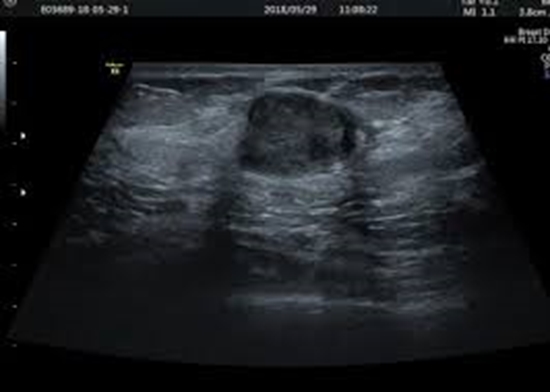
 ultrasound features and BI-RADS categories of inmalignant breast  {faces}

Background: To evaluate ultrasound (US) characteristics and BI-RADS (Breast imaging-reporting and data system) of malignant breast masses in women <40 years and to compare with older patients.

Methods: In a retrospective, descriptive-analytical study, we assessed the US images and BI-RADS category of 78 malignant masses with a final pathology of invasive ductal carcinoma (IDC, NOS type).

Results: Overall, the most frequent US descriptors of IDC were indistinct margin (45%), irregular shaped (63.5%), posterior shadowing (38.8%), heterogeneous internal echogenicity (56.3%) and non-parallel orientation (76.3%). In this study, most malignant masses of young patients were categorized as BI-RADS 4a while in the older patients (over 40), they were mostly BI-RADS 4b and 5 with P=0.03 and odds ratio (OR) of 2.57 (95% confidence interval (CI), 0.74-8.8). In addition, the mean dimension of the mass in young cases was greater (18.3 mm) compared with older patients (13.2 mm) with P value of 0.04 and OR of 3.8 (95% CI, 1.1-13.4).

Conclusion: Similar to previous studies, malignant masses were diagnosed in greater dimensions in younger cases which may be due to the delay in diagnosis, the rapid growth of the tumor and the absence of routine screening guidelines. Radiologists should be aware of the possibility of malignancy in palpable slightly suspicious masses (BI-RADS 4A) in young cases

  • Article_DOI : 10.34172/aim.2021.55
  • Author(s) : masoume gity
  • News Group : research,research article
  • News Code : 277997
مدیر سایت
Author:

مدیر سایت

Enter your desired term to search
Theme settings