Advanced Diagnostic & Interventional Radiology Research Center | Breast arterial calcifications on mammography and risk of stroke

Advanced Diagnostic & Interventional Radiology Research Center | Breast arterial calcifications on mammography and risk of stroke
| Aug 3 2026
logo

Advanced Diagnostic & Interventional Radiology Research Center

COVID-19 pandemic 

During the COVID-19 pandemic, the Radiology Research Center at Tehran University of Medical Sciences continued its research activities despite the challenges posed by the increased demand for CT scans of COVID-19 patients and the necessity of adhering to strict health protocols. This center played a crucial role in improving medical imaging techniques, optimizing diagnostic protocols, and advancing technologies related to CT scan image analysis.

Faculty members, researchers, and staff remained committed to ensuring the safety and well-being of healthcare professionals and patients while actively engaging in imaging data analysis, developing artificial intelligence algorithms for faster disease detection, publishing scientific articles, and presenting their findings at international conferences. These efforts aimed to enhance diagnostic accuracy, improve treatment processes, and alleviate pressure on healthcare systems.


Key achievements of the Radiology Research Center during the COVID-19 pandemic include:


✔️ Development and optimization of lung imaging protocols for faster and more accurate COVID-19 diagnosis
✔️ Implementation of artificial intelligence technologies for automated CT scan analysis and reduced diagnosis time
✔️ Publication of high-impact research articles on innovative imaging methods for COVID-19 patients
✔️ Participation in national and international projects focused on COVID-19 diagnosis and patient management

The center remains dedicated to advancing research in medical imaging and continues to contribute as a leading scientific institution in improving the quality of diagnostic and therapeutic services.


Some of the center's significant achievements during the pandemic include:


  • Release Date : Jun 16 2026 - 10:19
  • : 2
  • Study time : 1 minute(s)

Breast arterial calcifications on mammography and risk of stroke: a systematic review and meta-analysis
Breast arterial calcifications on mammography and risk of stroke {faces}

Background

Breast arterial calcifications (BAC) are commonly observed as an incidental finding on screening mammography and have been linked to cardiovascular disease. Whether BAC is independently associated with stroke risk remains uncertain.

Methods

We conducted a systematic review and meta-analysis in accordance with PRISMA 2020 guidelines. PubMed, Embase, and Scopus were searched from inception to May 2024 for cohort studies evaluating the association between BAC and stroke. Eligible studies included women undergoing mammography with documented BAC status and subsequent stroke outcomes. Data on patient characteristics and vascular risk factors were extracted. Study quality was appraised using the Joanna Briggs Institute (JBI) Critical Appraisal Checklist. Random-effects meta-analyses with restricted maximum likelihood (REML) estimation were performed to pool risk ratios (RRs) and mean differences (MDs). Heterogeneity was assessed with the I2 statistic, and publication bias with Egger’s test.

Results

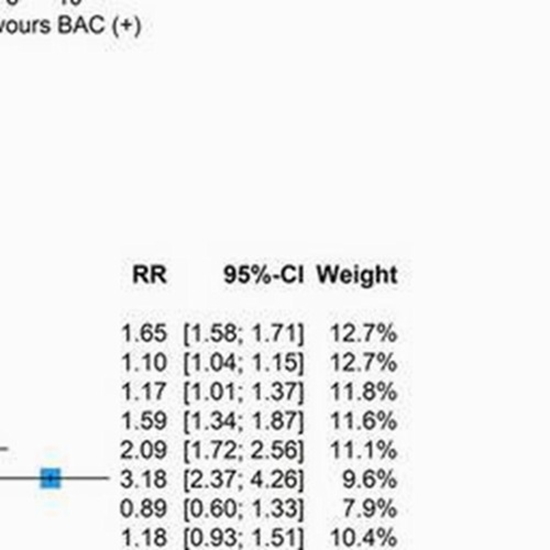
Ten cohort studies including 52,413 women were analyzed. The presence of BAC was associated with more than a twofold increased risk of stroke (RR 2.09, 95% CI 1.58–2.75; I2 = 64.4%). This association persisted after adjustment for age, diabetes, hyperlipidemia, and menopausal status. Compared with BAC-negative women, those with BAC were significantly older (MD 7.07 years, 95% CI 5.44–8.70) and more frequently hypertensive (RR 1.48, 95% CI 1.23–1.78), diabetic (RR 1.67, 95% CI 1.38–2.02), hyperlipidemic (RR 1.27, 95% CI 1.07–1.51), and postmenopausal (RR 1.26, 95% CI 1.00–1.59). Interestingly, BAC was less common among smokers (RR 0.62, 95% CI 0.45–0.86). Egger’s test showed no evidence of publication bias (p = 0.143).

Conclusion

BAC detected on screening mammography is independently associated with an increased risk of stroke, even after accounting for traditional risk factors. These findings support BAC as a promising, underutilized imaging biomarker of cerebrovascular risk in women and highlight the need for standardized reporting and prospective validation.

  • Article_DOI : 10.3389/fneur.2026.1716747
  • Author(s) : sherief ghozy
  • News Group : research,research article
  • News Code : 323631
نفیسه سادات قوامی
Author:

نفیسه سادات قوامی

0 Comments for this article

comment

Post your comment:

متن درون تصویر را در جعبه متن زیر وارد نمائید *
Enter your desired term to search
Theme settings