Advanced Diagnostic & Interventional Radiology Research Center | Computer-aided detection of breast lesions

Advanced Diagnostic & Interventional Radiology Research Center | Computer-aided detection of breast lesions
| Jan 2 2026
logo

Advanced Diagnostic & Interventional Radiology Research Center

COVID-19 pandemic 

During the COVID-19 pandemic, the Radiology Research Center at Tehran University of Medical Sciences continued its research activities despite the challenges posed by the increased demand for CT scans of COVID-19 patients and the necessity of adhering to strict health protocols. This center played a crucial role in improving medical imaging techniques, optimizing diagnostic protocols, and advancing technologies related to CT scan image analysis.

Faculty members, researchers, and staff remained committed to ensuring the safety and well-being of healthcare professionals and patients while actively engaging in imaging data analysis, developing artificial intelligence algorithms for faster disease detection, publishing scientific articles, and presenting their findings at international conferences. These efforts aimed to enhance diagnostic accuracy, improve treatment processes, and alleviate pressure on healthcare systems.


Key achievements of the Radiology Research Center during the COVID-19 pandemic include:


✔️ Development and optimization of lung imaging protocols for faster and more accurate COVID-19 diagnosis
✔️ Implementation of artificial intelligence technologies for automated CT scan analysis and reduced diagnosis time
✔️ Publication of high-impact research articles on innovative imaging methods for COVID-19 patients
✔️ Participation in national and international projects focused on COVID-19 diagnosis and patient management

The center remains dedicated to advancing research in medical imaging and continues to contribute as a leading scientific institution in improving the quality of diagnostic and therapeutic services.


Some of the center's significant achievements during the pandemic include:


  • Release Date : Mar 17 2024 - 13:18
  • : 20
  • Study time : 1 minute(s)

Computer-aided detection of breast lesions in DCE-MRI using region growing based on fuzzy C-means clustering and vesselness filter
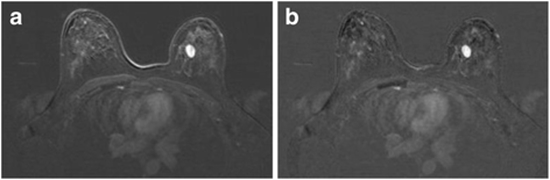
Computer-aided detection of breast lesions in DCE-MRI
 {faces}

A computer-aided detection (CAD) system is introduced in this paper for detection of breast lesions in dynamic contrast-enhanced magnetic resonance imaging (DCE-MRI). The proposed CAD system firstly compensates motion artifacts and segments the breast region. Then, the potential lesion voxels are detected and used as the initial seed points for the seeded region-growing algorithm. A new and robust region-growing algorithm incorporating with Fuzzy C-means (FCM) clustering and vesselness filter is proposed to segment any potential lesion regions. Subsequently, the false positive detections are reduced by applying a discrimination step. This is based on 3D morphological characteristics of the potential lesion regions and kinetic features which are fed to the support vector machine (SVM) classifier. The performance of the proposed CAD system is evaluated using the free-response operating characteristic (FROC) curve. We introduce our collected dataset that includes 76 DCE-MRI studies, 63 malignant and 107 benign lesions. The prepared dataset has been used to verify the accuracy of the proposed CADsystem. At 5.29 false positives per case, the CAD system accurately detects 94% of the breast lesions.

  • Article_DOI :
  • Author(s) :
  • News Group : research,research article
  • News Code : 278420
مدیر سایت
Author:

مدیر سایت

Enter your desired term to search
Theme settings