Advanced Diagnostic & Interventional Radiology Research Center | Design and Validation of Synchronous QCT Calibration Phantom

Advanced Diagnostic & Interventional Radiology Research Center | Design and Validation of Synchronous QCT Calibration Phantom
| Dec 12 2025
logo

Advanced Diagnostic & Interventional Radiology Research Center

COVID-19 pandemic 

During the COVID-19 pandemic, the Radiology Research Center at Tehran University of Medical Sciences continued its research activities despite the challenges posed by the increased demand for CT scans of COVID-19 patients and the necessity of adhering to strict health protocols. This center played a crucial role in improving medical imaging techniques, optimizing diagnostic protocols, and advancing technologies related to CT scan image analysis.

Faculty members, researchers, and staff remained committed to ensuring the safety and well-being of healthcare professionals and patients while actively engaging in imaging data analysis, developing artificial intelligence algorithms for faster disease detection, publishing scientific articles, and presenting their findings at international conferences. These efforts aimed to enhance diagnostic accuracy, improve treatment processes, and alleviate pressure on healthcare systems.


Key achievements of the Radiology Research Center during the COVID-19 pandemic include:


✔️ Development and optimization of lung imaging protocols for faster and more accurate COVID-19 diagnosis
✔️ Implementation of artificial intelligence technologies for automated CT scan analysis and reduced diagnosis time
✔️ Publication of high-impact research articles on innovative imaging methods for COVID-19 patients
✔️ Participation in national and international projects focused on COVID-19 diagnosis and patient management

The center remains dedicated to advancing research in medical imaging and continues to contribute as a leading scientific institution in improving the quality of diagnostic and therapeutic services.


Some of the center's significant achievements during the pandemic include:


  • Release Date : Apr 20 2024 - 11:31
  • : 31
  • Study time : 1 minute(s)

Design and Validation of Synchronous QCT Calibration Phantom: Practical Methodology
Design and Validation of Synchronous QCT Calibration Phantom {faces}

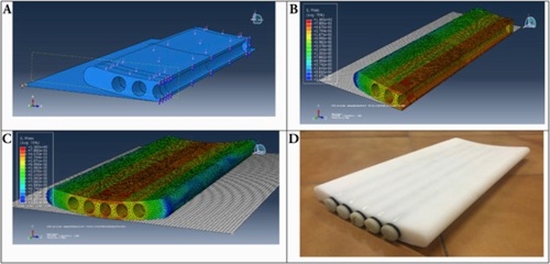
Introduction: Quantitative computed tomography (QCT) can supplement dual x-ray absorptiometry by enabling geometric and compartmental bone assessments. Whole-body spiral CT scanners are widely available and require a short scanning time of seconds, in contrast to peripheral QCT scanners, which require several minutes of scanning time. This study designed and evaluated the accuracy and precision of a homemade QCT calibration phantom using a whole-body spiral CT scanner.

Materials and methods: The QCT calibration phantom consisted of K2HPO4 solutions as reference. The reference material with various concentrations of 0, 50, 100, 200, 400, 1000, and 1200 mg/cc of K2HPO4 in water were used. For designing the phantom, we used the ABAQUS software.

Results: The phantoms were used for performance assessment of QCT method through measurement of accuracy and precision errors, which were generally less than 5.1% for different concentrations. The correlation between CT numbers and concentration were close to one (R2 = 0.99).

Discussion: Because whole-body spiral CT scanners allow central bone densitometry, evaluating the accuracy and precision for the easy to use calibration phantom may improve the QCT bone densitometry test.

Conclusion: This study provides practical directions for applying a homemade calibration phantom for bone mineral density quantification in QCT technique.

  • Article_DOI : doi.org/10.1016/j.jmir.2018.10.002
  • Author(s) : malakeh malekzadeh, hamidreza saligheh rad
  • News Group : research,research article
  • News Code : 278367
مدیر سایت
Author:

مدیر سایت

Enter your desired term to search
Theme settings