Advanced Diagnostic & Interventional Radiology Research Center | Diagnostic Ability of 384-Slice Computed Tomographic Angiography in Prediction of Myocardial Ischemia in Patients with Myocardial Bridging (MB) as Compared to SPECT-MPI Examination
Advanced Diagnostic & Interventional Radiology Research Center | Diagnostic Ability of 384-Slice Computed Tomographic Angiography in Prediction of Myocardial Ischemia in Patients with Myocardial Bridging (MB) as Compared to SPECT-MPI Examination
| Dec 13 2025
logo

Advanced Diagnostic & Interventional Radiology Research Center

COVID-19 pandemic 

During the COVID-19 pandemic, the Radiology Research Center at Tehran University of Medical Sciences continued its research activities despite the challenges posed by the increased demand for CT scans of COVID-19 patients and the necessity of adhering to strict health protocols. This center played a crucial role in improving medical imaging techniques, optimizing diagnostic protocols, and advancing technologies related to CT scan image analysis.

Faculty members, researchers, and staff remained committed to ensuring the safety and well-being of healthcare professionals and patients while actively engaging in imaging data analysis, developing artificial intelligence algorithms for faster disease detection, publishing scientific articles, and presenting their findings at international conferences. These efforts aimed to enhance diagnostic accuracy, improve treatment processes, and alleviate pressure on healthcare systems.


Key achievements of the Radiology Research Center during the COVID-19 pandemic include:


✔️ Development and optimization of lung imaging protocols for faster and more accurate COVID-19 diagnosis
✔️ Implementation of artificial intelligence technologies for automated CT scan analysis and reduced diagnosis time
✔️ Publication of high-impact research articles on innovative imaging methods for COVID-19 patients
✔️ Participation in national and international projects focused on COVID-19 diagnosis and patient management

The center remains dedicated to advancing research in medical imaging and continues to contribute as a leading scientific institution in improving the quality of diagnostic and therapeutic services.


Some of the center's significant achievements during the pandemic include:


  • Release Date : Apr 7 2024 - 14:22
  • : 75
  • Study time : 1 minute(s)

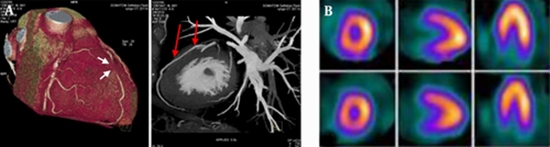
Diagnostic Ability of 384-Slice Computed Tomographic Angiography in Prediction of Myocardial Ischemia in Patients with Myocardial Bridging (MB) as Compared to SPECT-MPI Examination

384-Slice CTA in Prediction of Myocardial Ischemia in Myocardial Bridging {faces}

Background:

 During the past decade, coronary computed tomographic angiography (CCTA) has become the primary non-invasive imaging technique for the assessment of myocardial bridging (MB).

Objectivs:

 The aim of this study was to evaluate the ability of CCTA to predict myocardial ischemia in patients with MB.

Patients and Methods:

 A total of 32 MB patients (21 males and 11 females) participated in this study. Eleven MB parameters were measured to assess the ability of CCTA to predict MB patients with ischemia. In order to evaluate ischemia, all the patients underwent single positron emission computed tomography-myocardial perfusion imaging (SPECT-MPI) examination.

Results:

 Ischemia was observed in 17 patients (53.1%), while 15 patients (46.9%) did not show signs of ischemia. Out of the 32 patients, superficial MB was observed in 15 patients while deep MB was identified in 12, and borderline was observed in five patients. All MB examined parameters were found to be significantly different between ischemic and non-ischemic patients, except for the location and tunnel artery diameter in diastole. Moreover, a cut-off value of 0.65 mm was able to discriminate ischemia with a sensitivity of 100%, specificity of 93%, and yield area under the receiver operating characteristic (ROC) curve (AUC) of 0.996. Also, by considering the depth cut-off value of 1.75 mm, ischemia can be distinguished with sensitivity and specificity of 100%. MB length had a lower discrimination power, with a cut off value of 22.5 mm yield, 76% sensitivity, 67% specificity, and AUC = 0.810 in the diagnosis of ischemia.
 

Conclusion:

 CCTA was a reliable modality with high accuracy to depict MB, identify high risk MB, and prevent unnecessary SPECT-MPI examination


  • Article_DOI :
  • Author(s) : majid maleki,ali zahedmehr,bahar galeshi
  • News Group : research,articles,research article,AI,AI articles
  • News Code : 278381
مدیر سایت
Author:

مدیر سایت

Enter your desired term to search
Theme settings