Advanced Diagnostic & Interventional Radiology Research Center | Diagnostic Accuracy of Transvaginal Sonography for Deeply Infiltrating Endometriosis and Pouch of Douglas Obliteration in the Presence or Absence of Ovarian Endometrioma
Advanced Diagnostic & Interventional Radiology Research Center | Diagnostic Accuracy of Transvaginal Sonography for Deeply Infiltrating Endometriosis and Pouch of Douglas Obliteration in the Presence or Absence of Ovarian Endometrioma
| Dec 12 2025
logo

Advanced Diagnostic & Interventional Radiology Research Center

COVID-19 pandemic 

During the COVID-19 pandemic, the Radiology Research Center at Tehran University of Medical Sciences continued its research activities despite the challenges posed by the increased demand for CT scans of COVID-19 patients and the necessity of adhering to strict health protocols. This center played a crucial role in improving medical imaging techniques, optimizing diagnostic protocols, and advancing technologies related to CT scan image analysis.

Faculty members, researchers, and staff remained committed to ensuring the safety and well-being of healthcare professionals and patients while actively engaging in imaging data analysis, developing artificial intelligence algorithms for faster disease detection, publishing scientific articles, and presenting their findings at international conferences. These efforts aimed to enhance diagnostic accuracy, improve treatment processes, and alleviate pressure on healthcare systems.


Key achievements of the Radiology Research Center during the COVID-19 pandemic include:


✔️ Development and optimization of lung imaging protocols for faster and more accurate COVID-19 diagnosis
✔️ Implementation of artificial intelligence technologies for automated CT scan analysis and reduced diagnosis time
✔️ Publication of high-impact research articles on innovative imaging methods for COVID-19 patients
✔️ Participation in national and international projects focused on COVID-19 diagnosis and patient management

The center remains dedicated to advancing research in medical imaging and continues to contribute as a leading scientific institution in improving the quality of diagnostic and therapeutic services.


Some of the center's significant achievements during the pandemic include:


  • Release Date : Jul 21 2024 - 12:45
  • : 102
  • Study time : 1 minute(s)

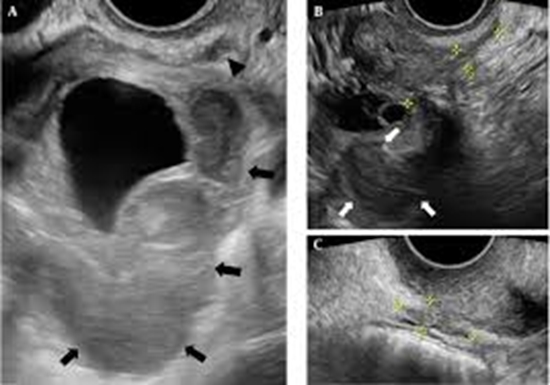
Diagnostic Accuracy of Transvaginal Sonography for Deeply Infiltrating Endometriosis and Pouch of Douglas Obliteration in the Presence or Absence of Ovarian Endometrioma

Transvaginal Sonography for Deeply Infiltrating Endometriosis {faces}

Background:

Endometriosis is one of the most common gynecological diseases worldwide. Significant attention has been drawn to this multiorgan and often painful disorder.

Objectives:

This study aimed to examine the accuracy of transvaginal sonography (TVS) in the diagnosis of deeply infiltrating endometriosis (DIE) with respect to the presence or absence of ovarian endometrioma (OE).

Patients and Methods:

This cross-sectional study was performed on all patients undergoing TVS before gynecological laparoscopy. With pathological confirmation as the standard reference, the diagnostic accuracy of TVS for DIE and pouch of Douglas (POD) obliteration was compared with that of laparoscopy in the anterior and posterior pelvic compartments with respect to the presence or absence of OE. Agreement between TVS and laparoscopy was evaluated for each case, and Cohen’s kappa statistic was measured for each site of involvement. Moreover, sensitivity, specificity, negative and positive predictive values, and likelihood ratios of TVS were calculated, with laparoscopy as the reference test.

Results:

A total of 110 patients, with a mean age of 37.20 ± 7.16 years, were recruited in this study. The accuracy, sensitivity, and negative predictive value of TVS for the diagnosis of DIE and POD obliteration were estimated at 89.5%, 58.3%, and 88.9% in the anterior pelvic compartment and 93.3%, 92%, and 70.6% in the posterior pelvic compartment, respectively. Nevertheless, TVS showed lower sensitivity for detecting pelvic adhesions and peritoneal cysts compared to laparoscopy. The presence of OE did not significantly increase the accuracy of TVS for the diagnosis of DIE or POD obliteration (P > 0.05).

Conclusion:

The present study showed that TVS is an adequately accurate and non-invasive diagnostic tool for the detection and mapping of DIE and POD obliteration, regardless of the presence of OE. TVS may waive the need for exploratory laparoscopy in DIE or at least facilitate precise pre-procedural DIE mapping.
  • Article_DOI : https://doi.org/10.5812/iranjradiol-127068
  • Author(s) : nahid sadighi,behnaz moradi
  • News Group : research,research article
  • News Code : 277948
مدیر سایت
Author:

مدیر سایت

0 Comments for this article

comment

Post your comment:

متن درون تصویر را در جعبه متن زیر وارد نمائید *
Enter your desired term to search
Theme settings