Advanced Diagnostic & Interventional Radiology Research Center | Diagnostic Accuracy of Ultrasound in Determining the Cause of Bi

Advanced Diagnostic & Interventional Radiology Research Center | Diagnostic Accuracy of Ultrasound in Determining the Cause of Bi
| Jan 1 2026
logo

Advanced Diagnostic & Interventional Radiology Research Center

COVID-19 pandemic 

During the COVID-19 pandemic, the Radiology Research Center at Tehran University of Medical Sciences continued its research activities despite the challenges posed by the increased demand for CT scans of COVID-19 patients and the necessity of adhering to strict health protocols. This center played a crucial role in improving medical imaging techniques, optimizing diagnostic protocols, and advancing technologies related to CT scan image analysis.

Faculty members, researchers, and staff remained committed to ensuring the safety and well-being of healthcare professionals and patients while actively engaging in imaging data analysis, developing artificial intelligence algorithms for faster disease detection, publishing scientific articles, and presenting their findings at international conferences. These efforts aimed to enhance diagnostic accuracy, improve treatment processes, and alleviate pressure on healthcare systems.


Key achievements of the Radiology Research Center during the COVID-19 pandemic include:


✔️ Development and optimization of lung imaging protocols for faster and more accurate COVID-19 diagnosis
✔️ Implementation of artificial intelligence technologies for automated CT scan analysis and reduced diagnosis time
✔️ Publication of high-impact research articles on innovative imaging methods for COVID-19 patients
✔️ Participation in national and international projects focused on COVID-19 diagnosis and patient management

The center remains dedicated to advancing research in medical imaging and continues to contribute as a leading scientific institution in improving the quality of diagnostic and therapeutic services.


Some of the center's significant achievements during the pandemic include:


  • Release Date : Dec 24 2023 - 11:02
  • : 21
  • Study time : 1 minute(s)

Diagnostic Accuracy of Ultrasound in Determining the Cause of Bilious Vomiting in Neonates

This study suggested that in cases in which US makes a certain diagnosis, its accuracy eliminates the need for further diagnostic tests, but if it is inconclusive, further radiological contrast studies should be tried to make the final diagnosis.
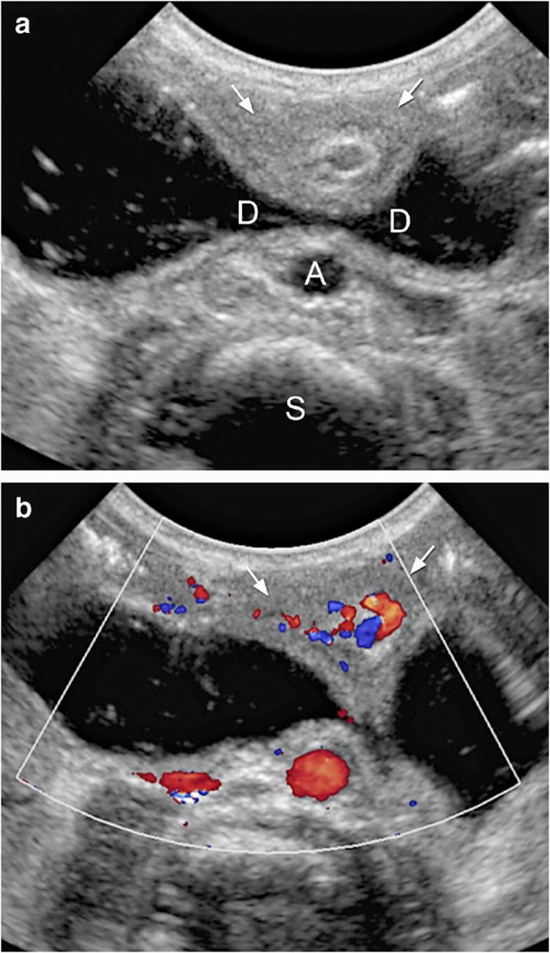
Diagnostic Accuracy of Ultrasound in Determining the Cause of Bilious Vomiting in Neonates {faces}

Background

Plain radiography and contrast radiologic studies are traditionally the main options in evaluating neonates presenting with bilious vomiting. While ultrasonography (US) is more available, its diagnostic accuracy is in question.

Objectives

The purpose of this study is to determine the diagnostic accuracy of US in evaluating these patients with bilious vomiting.

Patients and Methods

All neonates with bilious vomiting or bilious nasogastric tube drainage presented to a children’s hospital in a 1.5-year period were included. US were performed in all patients. The results were compared with clinical and radiological data and the final diagnosis. We used chi-square and Fisher’s exact tests for analysis.

Results

The cause of bilious vomiting for 18 of the 23 included patients was surgical. All patients labeled as surgical candidates by US ended in surgery [positive predictive value (PPV) = 100%], while only 50% of the patients with inconclusive US were operated [negative predictive value (NPV) = 50%, Confidence Interval (CI) 95%: 29%-71%]. The sensitivity and specificity of US in diagnosing intestinal atresia (n = 9) was 89% [CI 95%: (68% - 100%)] and 100%. In cases with malrotation (n = 4) and midgut volvulus (n = 2), sonographic diagnosis was in concordance with final surgical diagnosis.

Conclusion

This study suggested that in cases in which US makes a certain diagnosis, its accuracy eliminates the need for further diagnostic tests, but if it is inconclusive, further radiological contrast studies should be tried to make the final diagnosis.

  • Article_DOI : 10.5812/iranjradiol.8465
  • Author(s) : mehdi alehossein,payman salamati
  • News Group : research,research article
  • News Code : 278510
مدیر سایت
Author:

مدیر سایت

Enter your desired term to search
Theme settings