Advanced Diagnostic & Interventional Radiology Research Center | radiologic scoring system for evaluation of suspicious hirschspr

Advanced Diagnostic & Interventional Radiology Research Center | radiologic scoring system for evaluation of suspicious hirschspr
| Jan 1 2026
logo

Advanced Diagnostic & Interventional Radiology Research Center

COVID-19 pandemic 

During the COVID-19 pandemic, the Radiology Research Center at Tehran University of Medical Sciences continued its research activities despite the challenges posed by the increased demand for CT scans of COVID-19 patients and the necessity of adhering to strict health protocols. This center played a crucial role in improving medical imaging techniques, optimizing diagnostic protocols, and advancing technologies related to CT scan image analysis.

Faculty members, researchers, and staff remained committed to ensuring the safety and well-being of healthcare professionals and patients while actively engaging in imaging data analysis, developing artificial intelligence algorithms for faster disease detection, publishing scientific articles, and presenting their findings at international conferences. These efforts aimed to enhance diagnostic accuracy, improve treatment processes, and alleviate pressure on healthcare systems.


Key achievements of the Radiology Research Center during the COVID-19 pandemic include:


✔️ Development and optimization of lung imaging protocols for faster and more accurate COVID-19 diagnosis
✔️ Implementation of artificial intelligence technologies for automated CT scan analysis and reduced diagnosis time
✔️ Publication of high-impact research articles on innovative imaging methods for COVID-19 patients
✔️ Participation in national and international projects focused on COVID-19 diagnosis and patient management

The center remains dedicated to advancing research in medical imaging and continues to contribute as a leading scientific institution in improving the quality of diagnostic and therapeutic services.


Some of the center's significant achievements during the pandemic include:


  • Release Date : Mar 3 2024 - 13:45
  • : 46
  • Study time : 1 minute(s)

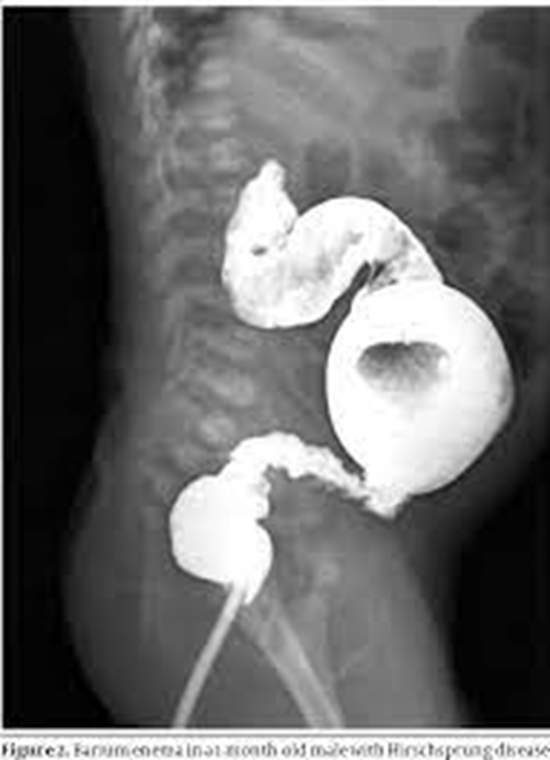
Diagnostic accuracy of radiologic scoring system for evaluation of suspicious hirschsprung disease in children

Our objective was to devise another scoring system that uses a checklist of radiologic and clinical signs to determine the probability of HD in suspicious patients
radiologic scoring system for evaluation of suspicious hirschsprung {faces}

Objectives:

Our objective was to devise another scoring system that uses a checklist of radiologic and clinical signs to determine the probability of HD in suspicious patients.

Patients and Methods:

In a diagnostic accuracy study, 55 children with clinical manifestations of HD that referred to a training hospital from 1998 to 2011 were assessed. A checklist was used to evaluate the items proposed by contrast enema (CE), based on six subscales, including transitional zone, rectosigmoid index (RSI), irregular contractions in aganglionic region, cobblestone appearance, filling defect due to fecaloid materials and lack of meconium defecation during the first 48 hours after birth. The patients were classified as high score and low score. Sensitivity, specificity, positive predictive value and negative predictive value of our scoring system were calculated for identifying HD, in comparison with pathologically proved or ruled out HD.

Results:

Of the 55 patients, 36 (65.4%) cases had HD and 19 (34.6%) cases were without HD. In the HD group, 32 patients showed high scores and four patients had low scores. The sensitivity and specificity of our diagnostic scoring system were 88.9% (95% CI: 78.6% - 99.1%) and 84.2% (95% CI: 68.7% - 100%), respectively. Moreover, positive predictive value (PPV) and negative predictive value (NPV) were 91.4% (95% CI: 82.1% - 100%) and 80% (95% CI: 62.5% - 97.5%), respectively.

Conclusions:

Our new scoring system of CE is a useful diagnostic method in HD. If a patient’s score is high, that patient is highly suspicious to HD and reversely, when one’s score is low, the patient presents a reduced probability to be diagnosed with HD.

  • Article_DOI : 10.5812/iranjradiol.12451
  • Author(s) : mehdi alehossein,payman salamati
  • News Group : research,research article
  • News Code : 278466
مدیر سایت
Author:

مدیر سایت

Enter your desired term to search
Theme settings