Advanced Diagnostic & Interventional Radiology Research Center | Secondary Ultrasound Exam in Blunt Abdominal Trauma

Advanced Diagnostic & Interventional Radiology Research Center | Secondary Ultrasound Exam in Blunt Abdominal Trauma
| Jan 1 2026
logo

Advanced Diagnostic & Interventional Radiology Research Center

COVID-19 pandemic 

During the COVID-19 pandemic, the Radiology Research Center at Tehran University of Medical Sciences continued its research activities despite the challenges posed by the increased demand for CT scans of COVID-19 patients and the necessity of adhering to strict health protocols. This center played a crucial role in improving medical imaging techniques, optimizing diagnostic protocols, and advancing technologies related to CT scan image analysis.

Faculty members, researchers, and staff remained committed to ensuring the safety and well-being of healthcare professionals and patients while actively engaging in imaging data analysis, developing artificial intelligence algorithms for faster disease detection, publishing scientific articles, and presenting their findings at international conferences. These efforts aimed to enhance diagnostic accuracy, improve treatment processes, and alleviate pressure on healthcare systems.


Key achievements of the Radiology Research Center during the COVID-19 pandemic include:


✔️ Development and optimization of lung imaging protocols for faster and more accurate COVID-19 diagnosis
✔️ Implementation of artificial intelligence technologies for automated CT scan analysis and reduced diagnosis time
✔️ Publication of high-impact research articles on innovative imaging methods for COVID-19 patients
✔️ Participation in national and international projects focused on COVID-19 diagnosis and patient management

The center remains dedicated to advancing research in medical imaging and continues to contribute as a leading scientific institution in improving the quality of diagnostic and therapeutic services.


Some of the center's significant achievements during the pandemic include:


  • Release Date : Feb 28 2024 - 12:36
  • : 54
  • Study time : 1 minute(s)

Diagnostic accuracy of secondary ultrasound exam in blunt abdominal trauma

To determine whether repeating ultrasound exam will increase the sensitivity of focused abdominal sonography for trauma (FAST) through revealing additional free intraperitoneal fluid in patients with blunt abdominal trauma
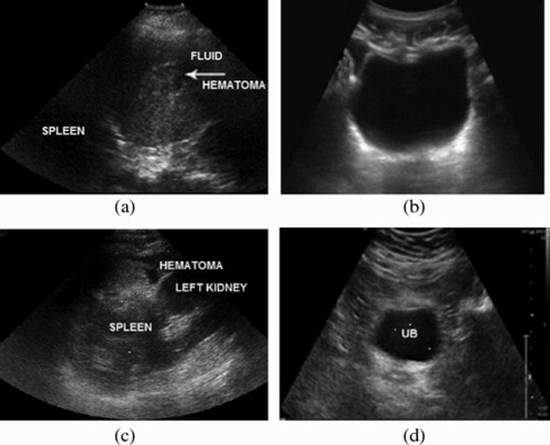
Secondary Ultrasound Exam in Blunt Abdominal Trauma {faces}

Background:

In stable patients with blunt abdominal trauma, accurate diagnosis of visceral injuries is crucial.

Objectives:

To determine whether repeating ultrasound exam will increase the sensitivity of focused abdominal sonography for trauma (FAST) through revealing additional free intraperitoneal fluid in patients with blunt abdominal trauma.

Patients and Methods:

We performed a prospective observational study by performing primary and secondary ultrasound exams in blunt abdominal trauma patients. All ultrasound exams were performed by four radiology residents who had the experience of more than 400 FAST exams. Five routine intraperitoneal spaces as well as the interloop space were examined by ultrasound in order to find free fluid. All patients who expired or were transferred to the operating room before the second exam were excluded from the study. All positive ultrasound results were compared with intra-operative and computed tomography (CT) findings and/or the clinical status of the patients.

Results:

Primary ultrasound was performed in 372 patients; 61 of them did not undergo secondary ultrasound exam; thus, were excluded from the study.Three hundred eleven patients underwent both primary and secondary ultrasound exams. One hundred and two of all patients were evaluated by contrast enhanced CT scan and 31 underwent laparotomy. The sensitivity of ultrasound exam in detecting intraperitoneal fluid significantly increased from 70.7% for the primary exam to 92.7% for the secondary exam. Examining the interloop space significantly improved the sensitivity of ultrasonography in both primary (from 36.6% to 70.7%) and secondary (from 65.9% to 92.7%) exams.

Conclusions:

Performing a secondary ultrasound exam in stable blunt abdominal trauma patients and adding interloop space scan to the routine FAST exam significantly increases the sensitivity of ultrasound in detecting intraperitoneal free fluid.

  • Article_DOI : 10.5812/iranjradiol.21010
  • Author(s) : babak shekarchi,alireza rajabzadeh kanafi
  • News Group : research article,research
  • News Code : 278479
مدیر سایت
Author:

مدیر سایت

Enter your desired term to search
Theme settings