Advanced Diagnostic & Interventional Radiology Research Center | Diagnostic investigation of breast magnetic resonance imaging

Advanced Diagnostic & Interventional Radiology Research Center | Diagnostic investigation of breast magnetic resonance imaging
| Jan 1 2026
logo

Advanced Diagnostic & Interventional Radiology Research Center

COVID-19 pandemic 

During the COVID-19 pandemic, the Radiology Research Center at Tehran University of Medical Sciences continued its research activities despite the challenges posed by the increased demand for CT scans of COVID-19 patients and the necessity of adhering to strict health protocols. This center played a crucial role in improving medical imaging techniques, optimizing diagnostic protocols, and advancing technologies related to CT scan image analysis.

Faculty members, researchers, and staff remained committed to ensuring the safety and well-being of healthcare professionals and patients while actively engaging in imaging data analysis, developing artificial intelligence algorithms for faster disease detection, publishing scientific articles, and presenting their findings at international conferences. These efforts aimed to enhance diagnostic accuracy, improve treatment processes, and alleviate pressure on healthcare systems.


Key achievements of the Radiology Research Center during the COVID-19 pandemic include:


✔️ Development and optimization of lung imaging protocols for faster and more accurate COVID-19 diagnosis
✔️ Implementation of artificial intelligence technologies for automated CT scan analysis and reduced diagnosis time
✔️ Publication of high-impact research articles on innovative imaging methods for COVID-19 patients
✔️ Participation in national and international projects focused on COVID-19 diagnosis and patient management

The center remains dedicated to advancing research in medical imaging and continues to contribute as a leading scientific institution in improving the quality of diagnostic and therapeutic services.


Some of the center's significant achievements during the pandemic include:


  • Release Date : Mar 16 2024 - 13:25
  • : 42
  • Study time : 1 minute(s)

Diagnostic investigation of breast magnetic resonance imaging in malignant and benign mass lesions

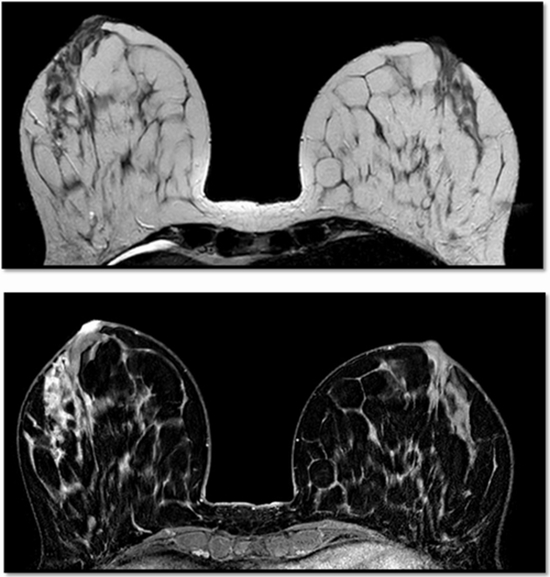
Breast magnetic resonance imaging (BMRI) has been identified as a valuable modality in the diagnosis of breast cancer and monitoring the response to chemotherapy. The aim of this study was to evaluate the relative importance of different descriptors of breast masses in contrast-enhanced breast MRI
of breast magnetic resonance imaging in malignant and benign mass lesions {faces}

Introduction: Breast magnetic resonance imaging (BMRI) has been identified as a valuable modality in the diagnosis of breast cancer and monitoring the response to chemotherapy. The aim of this study was to evaluate the relative importance of different descriptors of breast masses in contrast-enhanced breast MRI.

Material and methods: In a database of pathologically proven breast lesions, in total 433 masses in 312 patients detected by contrast-enhanced breast MRI were selected. All images were assessed according to the MRI BI-RADS lexicon and those with significant positive MRI findings (BI-RADS categories 3, 4, 5) were enrolled in the study.

Results: Mean age of patients was 45.09 ±10.5 years. The most frequent BI-RADS score was 4 (60.7%), followed by 3 (27%). Among the morphologic descriptors of the enhancing masses, the findings most strongly associated with malignancy included spiculated margin (60.6%) and irregular shape (38%). Considering the dynamic descriptors, a wash-out pattern in the time-intensity curve was the most powerful finding associated with malignancy (27.9%). Among all breast MRI descriptors, the best odds ratio (OR) in association with malignancy was noted for speculated margin (OR = 10.2) followed by wash-out or plateau curves (OR = 6.1), size greater than 1 cm (OR = 4.3) and irregular shape (OR = 3.1).

Conclusions: It seems that morphologic descriptors of MRI BI-RADS for enhancing masses are quite specific, while dynamic descriptors of the masses are highly sensitive. Appropriate consideration and combination of different BI-RADS findings could help in better characterization of enhancing masses on breast MRI, lowering the rate of false positive reports and avoiding unnecessary biopsies.

  • Article_DOI : 10.5114/aoms.2016.62281
  • Author(s) : masoumeh gity , elham taheri
  • News Group : research,research article
  • News Code : 278431
مدیر سیستم
Author:

مدیر سیستم

Enter your desired term to search
Theme settings