Advanced Diagnostic & Interventional Radiology Research Center | Diagnostic models for detection of intrauterine growth restriction and placental insufficiency severity, based on magnetic resonance imaging of placenta
Advanced Diagnostic & Interventional Radiology Research Center | Diagnostic models for detection of intrauterine growth restriction and placental insufficiency severity, based on magnetic resonance imaging of placenta
| Dec 12 2025
logo

Advanced Diagnostic & Interventional Radiology Research Center

COVID-19 pandemic 

During the COVID-19 pandemic, the Radiology Research Center at Tehran University of Medical Sciences continued its research activities despite the challenges posed by the increased demand for CT scans of COVID-19 patients and the necessity of adhering to strict health protocols. This center played a crucial role in improving medical imaging techniques, optimizing diagnostic protocols, and advancing technologies related to CT scan image analysis.

Faculty members, researchers, and staff remained committed to ensuring the safety and well-being of healthcare professionals and patients while actively engaging in imaging data analysis, developing artificial intelligence algorithms for faster disease detection, publishing scientific articles, and presenting their findings at international conferences. These efforts aimed to enhance diagnostic accuracy, improve treatment processes, and alleviate pressure on healthcare systems.


Key achievements of the Radiology Research Center during the COVID-19 pandemic include:


✔️ Development and optimization of lung imaging protocols for faster and more accurate COVID-19 diagnosis
✔️ Implementation of artificial intelligence technologies for automated CT scan analysis and reduced diagnosis time
✔️ Publication of high-impact research articles on innovative imaging methods for COVID-19 patients
✔️ Participation in national and international projects focused on COVID-19 diagnosis and patient management

The center remains dedicated to advancing research in medical imaging and continues to contribute as a leading scientific institution in improving the quality of diagnostic and therapeutic services.


Some of the center's significant achievements during the pandemic include:


  • Release Date : Jul 13 2024 - 12:31
  • : 138
  • Study time : 1 minute(s)

Diagnostic models for detection of intrauterine growth restriction and placental insufficiency severity, based on magnetic resonance imaging of placenta

intrauterine growth restriction and placental insufficiency severity, based on mri of placenta {faces}

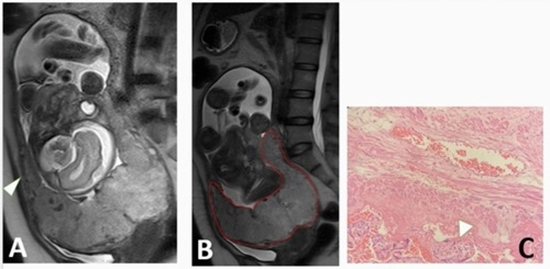
Purpose: We aimed to provide diagnostic models based on different parameters of placental magnetic resonance imaging (MRI) to detect intrauterine growth restriction (IUGR), as well as the severity of placental insufficiency.

Material and methods: We included 44 foetuses with appropriate weight for gestational age (AGA) and 46 foetuses with documented IUGR, defined as the estimated foetal weight (EFW) below the 10th centile. Using Doppler ultrasound, IUGR cases were divided into 2 groups: 1) IUGR with severity signs: EFW < 3rd centile, or cerebroplacental ratio < 5th centile, or abnormal umbilical/uterine artery pulsatility index; and 2) non-severe IUGR without any of this criterion. For all these participants, placental MRI was performed in the third gestational trimester, and its parameters were compared between AGA and IUGR, as well as between the severe and non-severe IUGR groups. Two diagnostic models consisting of significant predictors were developed, and their performance was investigated with accuracy metrics.

Results: The severity signs were detected in 25 (54.3%) IUGR cases. The diagnostic model for the differentiation of IUGR from AGA revealed an acceptable performance (area under the curve [AUC] of 0.749) and consisted of 2 variables: 1) the largest size of infarct ≥ 25 mm (odds ratio [OR] = 5.01, p = 0.001), and 2) thickness : volume ratio ≥ 0.043 (OR = 3.76, p = 0.027); while, the logistic regression model for detection of the severity signs was even better, with AUC = 0.862, and comprised of 2 predictors: 1) placental infarct percent ≥ 10% (OR = 26.73, p = 0.004), and 2) placental globular shape (OR = 5.40, p = 0.034).

Conclusions: Placental MRI parameters can differentiate IUGR from AGA, and more precisely, assess the severity of placental insufficiency in IUGR foetuses.


  • Article_DOI : 10.5114/pjr.2023.126224
  • Author(s) : behnaz moradi ,mohammad ali kazemi,mahboobeh shirazi,elnaz tabibian,mohammadreza chavoshi,sina rashedi
  • News Group : research,research article
  • News Code : 277978
مدیر سایت
Author:

مدیر سایت

Enter your desired term to search
Theme settings