Advanced Diagnostic & Interventional Radiology Research Center | Dynamic Comparison of Segmentary Scapulohumeral Rhythm

Advanced Diagnostic & Interventional Radiology Research Center | Dynamic Comparison of Segmentary Scapulohumeral Rhythm
| Feb 4 2026
logo

Advanced Diagnostic & Interventional Radiology Research Center

COVID-19 pandemic 

During the COVID-19 pandemic, the Radiology Research Center at Tehran University of Medical Sciences continued its research activities despite the challenges posed by the increased demand for CT scans of COVID-19 patients and the necessity of adhering to strict health protocols. This center played a crucial role in improving medical imaging techniques, optimizing diagnostic protocols, and advancing technologies related to CT scan image analysis.

Faculty members, researchers, and staff remained committed to ensuring the safety and well-being of healthcare professionals and patients while actively engaging in imaging data analysis, developing artificial intelligence algorithms for faster disease detection, publishing scientific articles, and presenting their findings at international conferences. These efforts aimed to enhance diagnostic accuracy, improve treatment processes, and alleviate pressure on healthcare systems.


Key achievements of the Radiology Research Center during the COVID-19 pandemic include:


✔️ Development and optimization of lung imaging protocols for faster and more accurate COVID-19 diagnosis
✔️ Implementation of artificial intelligence technologies for automated CT scan analysis and reduced diagnosis time
✔️ Publication of high-impact research articles on innovative imaging methods for COVID-19 patients
✔️ Participation in national and international projects focused on COVID-19 diagnosis and patient management

The center remains dedicated to advancing research in medical imaging and continues to contribute as a leading scientific institution in improving the quality of diagnostic and therapeutic services.


Some of the center's significant achievements during the pandemic include:


  • Release Date : Feb 28 2024 - 12:10
  • : 50
  • Study time : 1 minute(s)

Dynamic Comparison of Segmentary Scapulohumeral Rhythm Between Athletes With and Without Impingement Syndrome

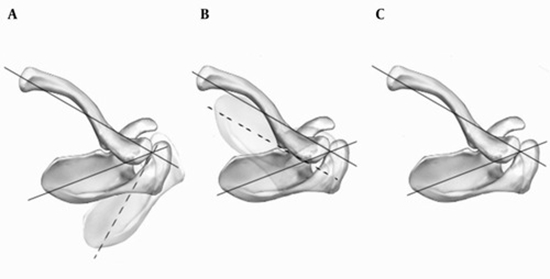
The main purpose of this study was to measure and compare the segmentary scapulohumeral rhythm (SSHR) during scapular arm elevation at a steady rotational speed in athletes with and without impingement syndrome
Dynamic Comparison of Segmentary Scapulohumeral Rhythm {faces}

Background:

Patients who have shoulder pain usually have compensatory or contributory deviation of shoulder motion during arm elevation. In the traditional scapulohumeral rhythm, the share of the acromioclavicular (AC) and the sternoclavicular (SC) joint movements and also the role of AC internal rotation angle are unknown.

Objectives:

The main purpose of this study was to measure and compare the segmentary scapulohumeral rhythm (SSHR) during scapular arm elevation at a steady rotational speed in athletes with and without impingement syndrome.

Patients and Methods:

Using a speedometer, the maximum speed of arm elevation was measured in 21 men in each of the involved and uninvolved groups. Using fluoroscopy on the dominant side, SSHR during scapular arm elevation at a rotational speed equal to 1/30 of maximum speed was compared between the two groups. The ratio of glenohumeral (GH) elevation angle to AC rotation angle in the scapular plane was considered as SSHR.

Results:

The maximum speed of arm elevation between the two groups was significantly different (P < 0.001). The rhythm of the involved group significantly exceeded the rhythm of the uninvolved group in a part of the first quarter range of the arm elevation. SSHR during arm elevation in the uninvolved group did not change significantly (P = 0.845); however, it decreased significantly in the involved group (P = 0.024).

Conclusions:

Speed differences between the two groups were probably due to the pain in some ranges of arm elevation. SSHR in the involved group probably changed in order to compensate downward rotation of the scapula in the resting position. Study of the AC upward rotation range can be misleading; therefore, the study of scapulohumeral rhythm is recommended.

Dynamic Comparison of Segmentary Scapulohumeral Rhythm Between Athletes With and Without Impingement Syndrome

  • Article_DOI : 10.5812/iranjradiol.14821
  • Author(s) : cyrus taghizadeh delkhoush,nader maroufi
  • News Group : research article,research
  • News Code : 278481
مدیر سایت
Author:

مدیر سایت

Enter your desired term to search
Theme settings