Advanced Diagnostic & Interventional Radiology Research Center | the role of MDCT characteristics in predicting the presence

Advanced Diagnostic & Interventional Radiology Research Center | the role of MDCT characteristics in predicting the presence
| Dec 12 2025
logo

Advanced Diagnostic & Interventional Radiology Research Center

COVID-19 pandemic 

During the COVID-19 pandemic, the Radiology Research Center at Tehran University of Medical Sciences continued its research activities despite the challenges posed by the increased demand for CT scans of COVID-19 patients and the necessity of adhering to strict health protocols. This center played a crucial role in improving medical imaging techniques, optimizing diagnostic protocols, and advancing technologies related to CT scan image analysis.

Faculty members, researchers, and staff remained committed to ensuring the safety and well-being of healthcare professionals and patients while actively engaging in imaging data analysis, developing artificial intelligence algorithms for faster disease detection, publishing scientific articles, and presenting their findings at international conferences. These efforts aimed to enhance diagnostic accuracy, improve treatment processes, and alleviate pressure on healthcare systems.


Key achievements of the Radiology Research Center during the COVID-19 pandemic include:


✔️ Development and optimization of lung imaging protocols for faster and more accurate COVID-19 diagnosis
✔️ Implementation of artificial intelligence technologies for automated CT scan analysis and reduced diagnosis time
✔️ Publication of high-impact research articles on innovative imaging methods for COVID-19 patients
✔️ Participation in national and international projects focused on COVID-19 diagnosis and patient management

The center remains dedicated to advancing research in medical imaging and continues to contribute as a leading scientific institution in improving the quality of diagnostic and therapeutic services.


Some of the center's significant achievements during the pandemic include:


  • Release Date : Jun 16 2024 - 11:48
  • : 34
  • Study time : 1 minute(s)

Esophageal variceal hemorrhage: the role of MDCT characteristics in predicting the presence of varices and bleeding risk
Esophageal variceal hemorrhage MDCT characteristics in predicting {faces}

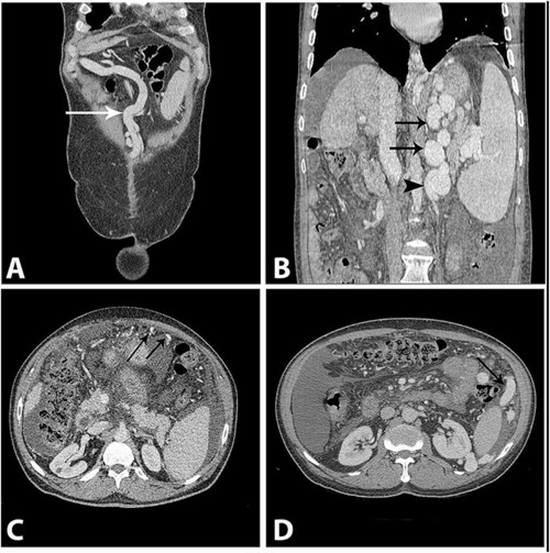
Purpose: To investigate the associated Multi-Detector Computed Tomography (MDCT) features for esophageal varices (EVs) and esophageal variceal hemorrhage (EVH), with particular emphasis on different collateral veins.

Materials and methods: All cirrhotic patients who had undergone both Upper Gastrointestinal Tract (UGIT) endoscopy and contrast-enhanced MDCT within 6 months from 2013 to 2019 were included in the study. MDCT of 124 patients, 76 males and 48 females, aged between 21 and 73 years old were evaluated for presence of EV and presence and size of different collaterals. The presence and size of collaterals in patients with high-risk EVs or EVH were compared with others.

Results: Findings of EV in MDCT analysis were the best predictor of EV or EVH, and presence (and/or size) of following collaterals showed a significant relationship with both EV and EVH: coronary (p = 0.006, 0.002), short gastric (SGC) (p = 0.02, < 0.001), and paraesophageal (p = 0.04, 0.01). Those presenting each aforementioned collaterals or with higher collateral size were more likely to develop the EV or EVH. Yet, other collaterals indicated no similar association: para-umbilical, omental, perisplenic, and splenorenal. Main coronary vein (p = 0.02, 0.03) and fundus (p = 0.006, 0.001) varices' sizes were also significantly higher in patients with EV or EVH. Finally, we suggested an imaging-based model (presence of SGC, SGC size > 2.5 mm, presence of EV, and coronary vein size > 3.5 mm) with 75.86% sensitivity, 76.92% specificity, and 76.36% accuracy to predict the presence of EVs according to UGIT endoscopy. Furthermore, we presented another model (presence of SGC, SGC size > 2.5 mm, presence of EV, and MELD score > 11.5 mm) to predict the occurrence of EVH with 75.86% sensitivity, 76.92% specificity, and 76.36% accuracy.

Conclusion: We suggested imaging characteristics for predicting EV and EVH with especial emphasis on the presence and size of various collaterals; then, we recommended reliable imaging criteria with high specificity and accuracy for predicting the EV and EVH.

  • Article_DOI : 10.1007/s00261-020-02585-5
  • Author(s) : niloofar ayoobi yazdi,faeze salahshour,mohssen nassiri toosi
  • News Group : research,research article
  • News Code : 278300
مدیر سایت
Author:

مدیر سایت

Enter your desired term to search
Theme settings