Advanced Diagnostic & Interventional Radiology Research Center | Identification of Two Novel Mutations in PKHD1 Gene

Advanced Diagnostic & Interventional Radiology Research Center | Identification of Two Novel Mutations in PKHD1 Gene
| Dec 15 2025
logo

Advanced Diagnostic & Interventional Radiology Research Center

COVID-19 pandemic 

During the COVID-19 pandemic, the Radiology Research Center at Tehran University of Medical Sciences continued its research activities despite the challenges posed by the increased demand for CT scans of COVID-19 patients and the necessity of adhering to strict health protocols. This center played a crucial role in improving medical imaging techniques, optimizing diagnostic protocols, and advancing technologies related to CT scan image analysis.

Faculty members, researchers, and staff remained committed to ensuring the safety and well-being of healthcare professionals and patients while actively engaging in imaging data analysis, developing artificial intelligence algorithms for faster disease detection, publishing scientific articles, and presenting their findings at international conferences. These efforts aimed to enhance diagnostic accuracy, improve treatment processes, and alleviate pressure on healthcare systems.


Key achievements of the Radiology Research Center during the COVID-19 pandemic include:


✔️ Development and optimization of lung imaging protocols for faster and more accurate COVID-19 diagnosis
✔️ Implementation of artificial intelligence technologies for automated CT scan analysis and reduced diagnosis time
✔️ Publication of high-impact research articles on innovative imaging methods for COVID-19 patients
✔️ Participation in national and international projects focused on COVID-19 diagnosis and patient management

The center remains dedicated to advancing research in medical imaging and continues to contribute as a leading scientific institution in improving the quality of diagnostic and therapeutic services.


Some of the center's significant achievements during the pandemic include:


  • Release Date : Jul 8 2024 - 08:23
  • : 44
  • Study time : 1 minute(s)

Identification of Two Novel Mutations in PKHD1 Gene from Two Families with Polycystic Kidney Disease by Whole Exome Sequencing
Identification of Two Novel Mutations in PKHD1 Gene {faces}

Background

Polycystic kidney disease (PKD) is an autosomal recessive disorder resulting from mutations in the PKHD1 gene on chromosome 6 (6p12), a large gene spanning 470 kb of genomic DNA.

Objective

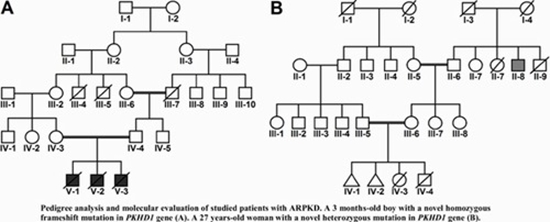
The aim of the present study was to report newly identified mutations in the PKHD1 gene in two Iranian families with PKD.

Materials and Methods

Genetic alterations of a 3-month-old boy and a 27-year-old girl with PKD were evaluated using whole-exome sequencing. The PCR direct sequencing was performed to analyse the co-segregation of the variants with the disease in the family. Finally, the molecular function of the identified novel mutations was evaluated by in silico study.

Results

In the 3 month-old boy, a novel homozygous frameshift mutation was detected in the PKHD1 gene, which can cause PKD. Moreover, we identified three novel heterozygous missense mutations in ATICVPS13B, and TP53RK genes. In the 27-year-old woman, with two recurrent abortions history and two infant mortalities at early weeks due to metabolic and/or renal disease, we detected a novel missense mutation on PKHD1 gene and a novel mutation in ETFDH gene.

Conclusion

In general, we have identified two novel mutations in the PKHD1 gene. These molecular findings can help accurately correlate genotype and phenotype in families with such disease in order to reduce patient births through preoperative genetic diagnosis or better management of disorders.

  • Article_DOI : DOI: 10.2174/1389202922666210219111810
  • Author(s) : masoud heidari , mansour heidari
  • News Group : research,research article
  • News Code : 278261
مدیر سایت
Author:

مدیر سایت

Enter your desired term to search
Theme settings