Advanced Diagnostic & Interventional Radiology Research Center | discontinuation of cholesterol-rich diet for advanced atheroscle

Advanced Diagnostic & Interventional Radiology Research Center | discontinuation of cholesterol-rich diet for advanced atheroscle
| Jan 4 2026
logo

Advanced Diagnostic & Interventional Radiology Research Center

COVID-19 pandemic 

During the COVID-19 pandemic, the Radiology Research Center at Tehran University of Medical Sciences continued its research activities despite the challenges posed by the increased demand for CT scans of COVID-19 patients and the necessity of adhering to strict health protocols. This center played a crucial role in improving medical imaging techniques, optimizing diagnostic protocols, and advancing technologies related to CT scan image analysis.

Faculty members, researchers, and staff remained committed to ensuring the safety and well-being of healthcare professionals and patients while actively engaging in imaging data analysis, developing artificial intelligence algorithms for faster disease detection, publishing scientific articles, and presenting their findings at international conferences. These efforts aimed to enhance diagnostic accuracy, improve treatment processes, and alleviate pressure on healthcare systems.


Key achievements of the Radiology Research Center during the COVID-19 pandemic include:


✔️ Development and optimization of lung imaging protocols for faster and more accurate COVID-19 diagnosis
✔️ Implementation of artificial intelligence technologies for automated CT scan analysis and reduced diagnosis time
✔️ Publication of high-impact research articles on innovative imaging methods for COVID-19 patients
✔️ Participation in national and international projects focused on COVID-19 diagnosis and patient management

The center remains dedicated to advancing research in medical imaging and continues to contribute as a leading scientific institution in improving the quality of diagnostic and therapeutic services.


Some of the center's significant achievements during the pandemic include:


  • Release Date : Mar 17 2024 - 13:50
  • : 21
  • Study time : 1 minute(s)

Inertial cavitation bubbles-induced by combined high and low frequency ultrasound accompanied by discontinuation of cholesterol-rich diet for advanced atherosclerosis regression
bubbles-induced by ultrasound & cholesterol-rich diet for atherosclerosis  {faces}
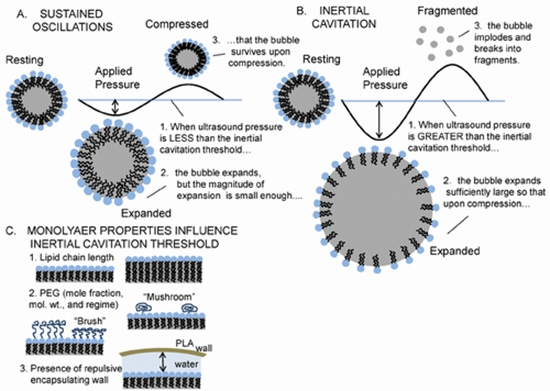
Aim: Most cases of chest pain and almost all heart attacks are caused by atherosclerosis, a narrowing and hardening of the arteries that results from the accumulation of fatty deposits known as atheromas or plaques. The plaques typically comprise cholesterol- containing low- density lipoproteins (LDLs), smooth muscle cells, fibrous tissue, occasionally calcium and finally neovessels in advanced cases. The present study aimed to investigate the influence of cavitation effect of bubbles- induced by extracorporeal low- level combined high and low frequency unfocused ultrasound on advanced atherosclerotic plaque regression.
Methods: In this experimental study, the rabbits’ common carotid arteries were injured perivascularly by liquid nitrogen, followed by a 1.5% cholesterol-rich diet for eight weeks. Histology results showed severe stenosis (>70%) and neovascularization in the rabbits’ arteries. Then, the lesion region treated using extracorporeal low- level combined high (1MHz, 2 W/cm2) and low (150 KHz, 0.2 W/cm2) frequency unfocused ultrasound accompanied by discontinuation of cholesterol- rich diet in treatment group. Intraplaque contents were evaluated in the treatment group compared with the control group using B-mode ultrasonography and histology.
Results: B-mode ultrasonography and histopathology results showed a significant reduction in the mean value for intraplaque contents in treatment group compared with the other groups (P<0.05).

Conclusions: Enhanced cavitation effect of high- frequency ultrasound bubbles- induced by low- frequency ultrasound in intraplaque neovessels, accompanied by discontinuation of cholesterol- rich diet can cause to destroy of neovessels, cholesterol efflux from the lipid-laden macrophages, macrophages egress from plaque, dilate the luminal cross- sectional area and finally, significantly plaque regression

  • Article_DOI : 10.1016/j.atherosclerosis.2017.06.491
  • Author(s) : hossein mehrad
  • News Group : research,research article
  • News Code : 278417
مدیر سایت
Author:

مدیر سایت

Enter your desired term to search
Theme settings