Advanced Diagnostic & Interventional Radiology Research Center | Interpretation of Hematological, Biochemical, and Immunological Findings of COVID 19 Disease: Biomarkers Associated with Severity and Mortality
Advanced Diagnostic & Interventional Radiology Research Center | Interpretation of Hematological, Biochemical, and Immunological Findings of COVID 19 Disease: Biomarkers Associated with Severity and Mortality
| Dec 12 2025
logo

Advanced Diagnostic & Interventional Radiology Research Center

COVID-19 pandemic 

During the COVID-19 pandemic, the Radiology Research Center at Tehran University of Medical Sciences continued its research activities despite the challenges posed by the increased demand for CT scans of COVID-19 patients and the necessity of adhering to strict health protocols. This center played a crucial role in improving medical imaging techniques, optimizing diagnostic protocols, and advancing technologies related to CT scan image analysis.

Faculty members, researchers, and staff remained committed to ensuring the safety and well-being of healthcare professionals and patients while actively engaging in imaging data analysis, developing artificial intelligence algorithms for faster disease detection, publishing scientific articles, and presenting their findings at international conferences. These efforts aimed to enhance diagnostic accuracy, improve treatment processes, and alleviate pressure on healthcare systems.


Key achievements of the Radiology Research Center during the COVID-19 pandemic include:


✔️ Development and optimization of lung imaging protocols for faster and more accurate COVID-19 diagnosis
✔️ Implementation of artificial intelligence technologies for automated CT scan analysis and reduced diagnosis time
✔️ Publication of high-impact research articles on innovative imaging methods for COVID-19 patients
✔️ Participation in national and international projects focused on COVID-19 diagnosis and patient management

The center remains dedicated to advancing research in medical imaging and continues to contribute as a leading scientific institution in improving the quality of diagnostic and therapeutic services.


Some of the center's significant achievements during the pandemic include:


  • Release Date : Jul 10 2024 - 09:07
  • : 106
  • Study time : 1 minute(s)

Interpretation of Hematological, Biochemical, and Immunological Findings of COVID 19 Disease: Biomarkers Associated with Severity and Mortality

Interpretation of Hematological, Biochemical, and Immunological Findings of COVID-19 Disease {faces}

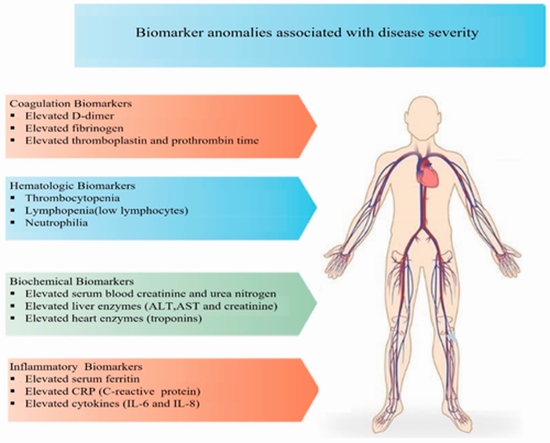
The severe acute respiratory syndrome-coronavirus 2 (SARS-CoV-2) spread rapidly all over the world in late 2019 and caused critical illness and death in some infected patients. This study aimed at examining several laboratory factors, especially inflammatory and immunological mediators, to identify severity and mortality associated biomarkers. Ninety-three hospitalized patients with confirmed coronavirus disease 2019 (COVID-19) were classified based on disease severity. The levels of biochemical, hematological, immunological, and inflammatory mediators were assessed, and their association with severity and mortality were evaluated. Hospitalized patients were mostly men (77.4%) with an average (standard deviation) age of 59.14 (14.81) years. The mortality rate was significantly higher in critical patients (85.7%). Increased serum levels of blood sugar, urea, creatinine, uric acid, phosphorus, total bilirubin, serum glutamic-oxaloacetic transaminase, serum glutamic-oxaloacetic transaminase, lactic dehydrogenase, C-reactive protein, ferritin, and procalcitonin were significantly prevalent (p=0.002, p<0.001, p<0.001, p=0.014, p=0.047, p=0.003, p<0.001, p<0.001, p<0.001, p<0.001, P<0.001, and p<0.001, respectively) in COVID-19 patients. Decreased red blood cell, hemoglobin, and hematocrit were significantly prevalent among COVID-19 patients than healthy control subjects (p<0.001 for all). Troponin-I, interleukin-6, neutrophil/lymphocyte ratio (NLR), procalcitonin, and D-dimer showed a significant association with the mortality of patients with specificity and sensitivity more than 60%. Age, sex, underlying diseases, blood oxygen pressure, complete blood count along with C-reactive protein, lactic dehydrogenase, procalcitonin, D-dimer, and interleukin-6 evaluation help to predict the severity and required management for COVID-19 patients. Further investigations are highly recommended in a larger cohort study for validation of the present findings

  • Article_DOI : 10.18502/ijaai.v20i1.5412
  • Author(s) :
  • News Group : research,covid,research article,covid 19
  • News Code : 277992
مدیر سایت
Author:

مدیر سایت

Enter your desired term to search
Theme settings