Advanced Diagnostic & Interventional Radiology Research Center | Intractable parastomal bleeding in a portal hypertensive patient

Advanced Diagnostic & Interventional Radiology Research Center | Intractable parastomal bleeding in a portal hypertensive patient
| Dec 12 2025
logo

Advanced Diagnostic & Interventional Radiology Research Center

COVID-19 pandemic 

During the COVID-19 pandemic, the Radiology Research Center at Tehran University of Medical Sciences continued its research activities despite the challenges posed by the increased demand for CT scans of COVID-19 patients and the necessity of adhering to strict health protocols. This center played a crucial role in improving medical imaging techniques, optimizing diagnostic protocols, and advancing technologies related to CT scan image analysis.

Faculty members, researchers, and staff remained committed to ensuring the safety and well-being of healthcare professionals and patients while actively engaging in imaging data analysis, developing artificial intelligence algorithms for faster disease detection, publishing scientific articles, and presenting their findings at international conferences. These efforts aimed to enhance diagnostic accuracy, improve treatment processes, and alleviate pressure on healthcare systems.


Key achievements of the Radiology Research Center during the COVID-19 pandemic include:


✔️ Development and optimization of lung imaging protocols for faster and more accurate COVID-19 diagnosis
✔️ Implementation of artificial intelligence technologies for automated CT scan analysis and reduced diagnosis time
✔️ Publication of high-impact research articles on innovative imaging methods for COVID-19 patients
✔️ Participation in national and international projects focused on COVID-19 diagnosis and patient management

The center remains dedicated to advancing research in medical imaging and continues to contribute as a leading scientific institution in improving the quality of diagnostic and therapeutic services.


Some of the center's significant achievements during the pandemic include:


  • Release Date : Jun 24 2024 - 10:50
  • : 46
  • Study time : Less than one minute

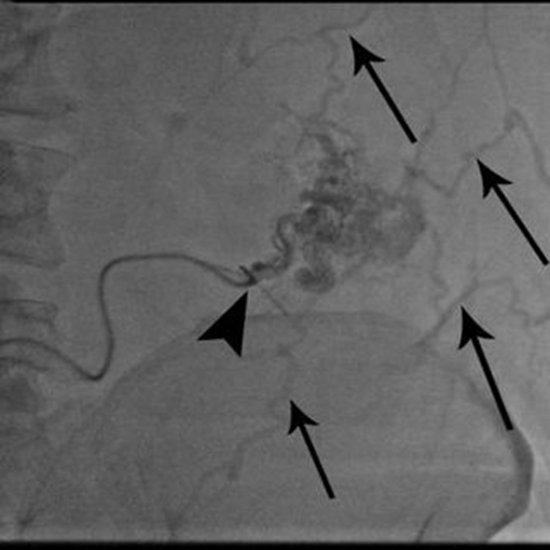
Intractable parastomal bleeding in a portal hypertensive patient managed by direct sclerotherapy: A case report
Intractable parastomal bleeding in a portal hypertensive patient {faces}

Patients with a stoma have 5% chance of developing parastomal varices, which tend to repetitive massive and life-threatening hemorrhages. Treatment of choice in parastomal varices have not been established, while Transjugular Intrahepatic Portosystemic Shunt (TIPS) has been revealed as the most successful measure. We report a hemodynamically unstable patient with a history of Ulcerative Colitis (UC) and Primary Sclerosing Cholangitis (PSC) with colostomy, because of colon cancer who presented with massive parastomal bleeding. Non-operative treatments and TIPS failed to control the symptoms. Color Doppler ultrasound showed a hepato-fugal flow. The direct antegrade technique, using Sodium Tetradecyl Sulfate (STS 1%) and glue-Lipiodol, was applied under ultrasonography guidance, and complete stoppage of bleeding was achieved. No immediate or late complication or follow-up recurrence were noted after 8 months. In case of hepatofugal flow, direct percutaneous mesenteric parastomal venous access and sclerotherapy is a rapid and relatively safe procedure for parastomal variceal bleeding

  • Article_DOI :
  • Author(s) : niloofar ayoobi yazdi,hadi rokni yazdi
  • News Group : research,research article
  • News Code : 278276
مدیر سایت
Author:

مدیر سایت

Enter your desired term to search
Theme settings