Advanced Diagnostic & Interventional Radiology Research Center | Investigating Injuries to the Anterolateral Corner of the Knee

Advanced Diagnostic & Interventional Radiology Research Center | Investigating Injuries to the Anterolateral Corner of the Knee
| Dec 10 2025
logo

Advanced Diagnostic & Interventional Radiology Research Center

COVID-19 pandemic 

During the COVID-19 pandemic, the Radiology Research Center at Tehran University of Medical Sciences continued its research activities despite the challenges posed by the increased demand for CT scans of COVID-19 patients and the necessity of adhering to strict health protocols. This center played a crucial role in improving medical imaging techniques, optimizing diagnostic protocols, and advancing technologies related to CT scan image analysis.

Faculty members, researchers, and staff remained committed to ensuring the safety and well-being of healthcare professionals and patients while actively engaging in imaging data analysis, developing artificial intelligence algorithms for faster disease detection, publishing scientific articles, and presenting their findings at international conferences. These efforts aimed to enhance diagnostic accuracy, improve treatment processes, and alleviate pressure on healthcare systems.


Key achievements of the Radiology Research Center during the COVID-19 pandemic include:


✔️ Development and optimization of lung imaging protocols for faster and more accurate COVID-19 diagnosis
✔️ Implementation of artificial intelligence technologies for automated CT scan analysis and reduced diagnosis time
✔️ Publication of high-impact research articles on innovative imaging methods for COVID-19 patients
✔️ Participation in national and international projects focused on COVID-19 diagnosis and patient management

The center remains dedicated to advancing research in medical imaging and continues to contribute as a leading scientific institution in improving the quality of diagnostic and therapeutic services.


Some of the center's significant achievements during the pandemic include:


  • Release Date : Jun 18 2025 - 08:27
  • : 65
  • Study time : 2 minute(s)

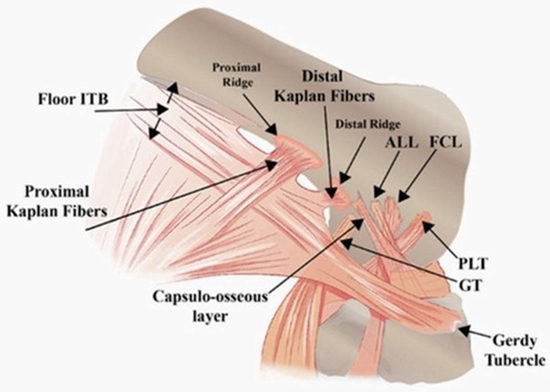
Investigating Injuries to the Anterolateral Corner of the Knee: Imaging Insights Into Kaplan Fibers and the Anterolateral Ligament in Anterior Cruciate Ligament Tears
 {faces}

Background: The intricate relationship between anterolateral ligament (ALL) and Kaplan fibers (KF) injuries in acute traumatic anterior cruciate ligament (ACL) tears presents a diagnostic challenge. Understanding these associations is crucial for enhancing therapeutic strategies and patient outcomes.

Purpose: To elucidate the prevalence of ALL and KF injuries among patients with acute ACL tears and examine their correlations with other imaging findings.

Study design: Cross-sectional study; Level of evidence, 3.

Methods: A retrospective review of magnetic resonance imaging (MRI) was performed for patients with knee pain or instability, leading to an MRI evaluation between April and August 2022. The inclusion criteria were primary ACL tears diagnosed via MRI within 6 weeks after injury, excluding cases with concurrent posterior cruciate ligament, medial collateral ligament, or lateral collateral ligament injuries. Out of the initial cohort, 51 patients met the inclusion criteria, all with recent trauma and timely imaging.

Results: Our results highlighted that 21.6% of these patients had ALL injuries, whereas a notably higher proportion (33.3%) exhibited KF injuries. We observed bone contusions on the medial and lateral femoral condyles in 3.9% and 41.2% of patients, respectively. Similarly, the medial and lateral tibial condyles presented contusions in 31.4% and 49% of the cases, respectively, with a subset of 29.4% demonstrating both tibial condyle involvement.Contusions on the lateral femoral and tibial condyles were used as indicators of pivot-shift injuries, identified in 41.2% of cases (n = 21). Subgroup analysis revealed a significant association between these injuries and KF damage, present in 71.4% of cases (odds ratio, 33.8 [95% CI, 6.04-188.53; P < .001), compared with a lower incidence of ALL injuries at 28.6% (P = .31). This suggests a stronger link between KF injuries and pivot-shift mechanisms, emphasizing the role of KF in knee trauma. In addition, KF injuries were more common in patients with lateral meniscal injuries, although this finding was not statistically significant (P = .10).

Conclusion: Surgeons should focus more on detecting KF injuries than ALL injuries when ACL tears are accompanied by lateral femoral and tibial condyle contusions, as these may play a crucial role in the injury mechanism.

  • Article_DOI : 10.1177/23259671251319504
  • Author(s) : shahriar kolahi,mohammad ayati firoozabadi
  • News Group : research,research article
  • News Code : 299810
نفیسه سادات قوامی
Author:

نفیسه سادات قوامی

0 Comments for this article

comment

Post your comment:

متن درون تصویر را در جعبه متن زیر وارد نمائید *
Enter your desired term to search
Theme settings