Advanced Diagnostic & Interventional Radiology Research Center | Diffusion-Weighted Imaging and Histopathologic Findings of Menin

Advanced Diagnostic & Interventional Radiology Research Center | Diffusion-Weighted Imaging and Histopathologic Findings of Menin
| Jun 9 2026
logo

Advanced Diagnostic & Interventional Radiology Research Center

COVID-19 pandemic 

During the COVID-19 pandemic, the Radiology Research Center at Tehran University of Medical Sciences continued its research activities despite the challenges posed by the increased demand for CT scans of COVID-19 patients and the necessity of adhering to strict health protocols. This center played a crucial role in improving medical imaging techniques, optimizing diagnostic protocols, and advancing technologies related to CT scan image analysis.

Faculty members, researchers, and staff remained committed to ensuring the safety and well-being of healthcare professionals and patients while actively engaging in imaging data analysis, developing artificial intelligence algorithms for faster disease detection, publishing scientific articles, and presenting their findings at international conferences. These efforts aimed to enhance diagnostic accuracy, improve treatment processes, and alleviate pressure on healthcare systems.


Key achievements of the Radiology Research Center during the COVID-19 pandemic include:


✔️ Development and optimization of lung imaging protocols for faster and more accurate COVID-19 diagnosis
✔️ Implementation of artificial intelligence technologies for automated CT scan analysis and reduced diagnosis time
✔️ Publication of high-impact research articles on innovative imaging methods for COVID-19 patients
✔️ Participation in national and international projects focused on COVID-19 diagnosis and patient management

The center remains dedicated to advancing research in medical imaging and continues to contribute as a leading scientific institution in improving the quality of diagnostic and therapeutic services.


Some of the center's significant achievements during the pandemic include:


  • Release Date : Feb 24 2026 - 12:59
  • : 34
  • Study time : 1 minute(s)

Is There Any Correlation Between Diffusion-Weighted Imaging and Histopathologic Findings of Meningioma? A Retrospective Study
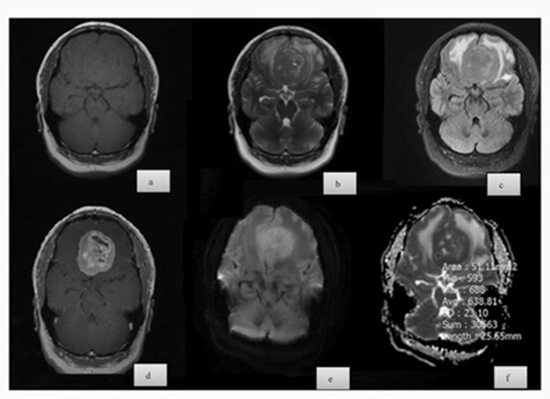
Diffusion-Weighted Imaging and Histopathologic Findings of Meningioma {faces}

Background and aims: Meningiomas are common CNS tumors, with grading critical for treatment. This study aimed to determine if diffusion-weighted imaging (DWI) correlates with histopathologic findings in meningioma, focusing on tumor grade, subtype, and Ki-67 index.

Methods: This retrospective study included 68 patients with meningioma who underwent preoperative MRI with DWI. Tumor grade was determined using the WHO classification. DWI intensity was categorized as hyperintense, isointense, or hypointense relative to normal brain tissue. ADC values were measured, and diffusion restriction was defined as high signal intensity on DWI with low signal intensity on the ADC map. Histopathologic analysis assessed the Ki-67 proliferation index. Statistical analysis used ANOVA, Chi-square, univariable linear regression (β), and odds ratios (OR) via SPSS 17.0, with p < 0.05 as significant.

Results: The study included 68 patients with a mean age of 52.1 ± 15.6 years, mostly females (67.65%). Most tumors were grade 1 (73.5%) with male patients having higher tumor grades than females. Meningothelial was the most common subtype. DWI intensity correlated with tumor grade, with higher grades more likely to be hypointense. ADC values varied with tumor grades, being significantly higher in grade 1 tumors. Diffusion restriction was more common in higher-grade tumors. Ki-67 was higher in males (p = 0.01) and inversely linked to ADC (p < 0.001).

Conclusion: Both qualitative DWI features and quantitative ADC values reflect meningioma grade and proliferative activity, with notable sex and subtype differences, underscoring the clinical utility of preoperative DWI

  • Article_DOI : 10.1002/hsr2.71025
  • Author(s) : fahimeh zeinalkhani,mahrokh sadat vaziri
  • News Group : research,research article
  • News Code : 316325
نفیسه سادات قوامی
Author:

نفیسه سادات قوامی

0 Comments for this article

comment

Post your comment:

متن درون تصویر را در جعبه متن زیر وارد نمائید *
Enter your desired term to search
Theme settings