Advanced Diagnostic & Interventional Radiology Research Center | Mapping age- and sex-specific HIV prevalence

Advanced Diagnostic & Interventional Radiology Research Center | Mapping age- and sex-specific HIV prevalence
| Dec 19 2025
logo

Advanced Diagnostic & Interventional Radiology Research Center

COVID-19 pandemic 

During the COVID-19 pandemic, the Radiology Research Center at Tehran University of Medical Sciences continued its research activities despite the challenges posed by the increased demand for CT scans of COVID-19 patients and the necessity of adhering to strict health protocols. This center played a crucial role in improving medical imaging techniques, optimizing diagnostic protocols, and advancing technologies related to CT scan image analysis.

Faculty members, researchers, and staff remained committed to ensuring the safety and well-being of healthcare professionals and patients while actively engaging in imaging data analysis, developing artificial intelligence algorithms for faster disease detection, publishing scientific articles, and presenting their findings at international conferences. These efforts aimed to enhance diagnostic accuracy, improve treatment processes, and alleviate pressure on healthcare systems.


Key achievements of the Radiology Research Center during the COVID-19 pandemic include:


✔️ Development and optimization of lung imaging protocols for faster and more accurate COVID-19 diagnosis
✔️ Implementation of artificial intelligence technologies for automated CT scan analysis and reduced diagnosis time
✔️ Publication of high-impact research articles on innovative imaging methods for COVID-19 patients
✔️ Participation in national and international projects focused on COVID-19 diagnosis and patient management

The center remains dedicated to advancing research in medical imaging and continues to contribute as a leading scientific institution in improving the quality of diagnostic and therapeutic services.


Some of the center's significant achievements during the pandemic include:


  • Release Date : Feb 16 2025 - 10:10
  • : 118
  • Study time : 2 minute(s)

Mapping age and sex specific HIV prevalence in adults in sub Saharan Africa, 2000/2018
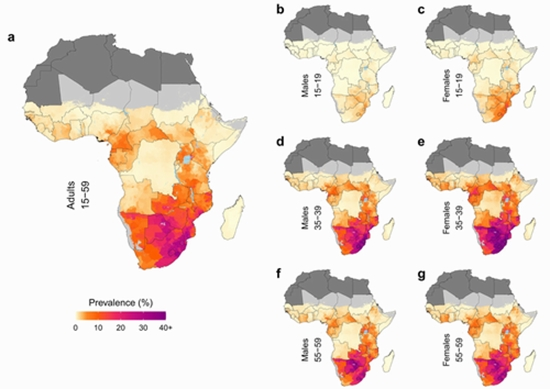
ex specific HIV prevalence in adults in sub Saharan Africa {faces}

Background

Human immunodeficiency virus and acquired immune deficiency syndrome (HIV/AIDS) is still among the leading causes of disease burden and mortality in sub-Saharan Africa (SSA), and the world is not on track to meet targets set for ending the epidemic by the Joint United Nations Programme on HIV/AIDS (UNAIDS) and the United Nations Sustainable Development Goals (SDGs). Precise HIV burden information is critical for effective geographic and epidemiological targeting of prevention and treatment interventions. Age- and sex-specific HIV prevalence estimates are widely available at the national level, and region-wide local estimates were recently published for adults overall. We add further dimensionality to previous analyses by estimating HIV prevalence at local scales, stratified into sex-specific 5-year age groups for adults ages 15–59 years across SSA.

Methods

We analyzed data from 91 seroprevalence surveys and sentinel surveillance among antenatal care clinic (ANC) attendees using model-based geostatistical methods to produce estimates of HIV prevalence across 43 countries in SSA, from years 2000 to 2018, at a 5 × 5-km resolution and presented among second administrative level (typically districts or counties) units.

Results

We found substantial variation in HIV prevalence across localities, ages, and sexes that have been masked in earlier analyses. Within-country variation in prevalence in 2018 was a median 3.5 times greater across ages and sexes, compared to for all adults combined. We note large within-district prevalence differences between age groups: for men, 50% of districts displayed at least a 14-fold difference between age groups with the highest and lowest prevalence, and at least a 9-fold difference for women. Prevalence trends also varied over time; between 2000 and 2018, 70% of all districts saw a reduction in prevalence greater than five percentage points in at least one sex and age group. Meanwhile, over 30% of all districts saw at least a five percentage point prevalence increase in one or more sex and age group.

Conclusions

As the HIV epidemic persists and evolves in SSA, geographic and demographic shifts in prevention and treatment efforts are necessary. These estimates offer epidemiologically informative detail to better guide more targeted interventions, vital for combating HIV in SSA

  • Article_DOI : 10.1186/s12916-022-02639-z
  • Author(s) : hedayat abbastabar,emily haeuser
  • News Group : research,research article
  • News Code : 293454
مدیر سیستم
Author:

مدیر سیستم

0 Comments for this article

comment

Post your comment:

متن درون تصویر را در جعبه متن زیر وارد نمائید *
Enter your desired term to search
Theme settings