Advanced Diagnostic & Interventional Radiology Research Center | Pipeline Embolization of Unruptured Intracranial Aneurysms

Advanced Diagnostic & Interventional Radiology Research Center | Pipeline Embolization of Unruptured Intracranial Aneurysms
| Dec 13 2025
logo

Advanced Diagnostic & Interventional Radiology Research Center

COVID-19 pandemic 

During the COVID-19 pandemic, the Radiology Research Center at Tehran University of Medical Sciences continued its research activities despite the challenges posed by the increased demand for CT scans of COVID-19 patients and the necessity of adhering to strict health protocols. This center played a crucial role in improving medical imaging techniques, optimizing diagnostic protocols, and advancing technologies related to CT scan image analysis.

Faculty members, researchers, and staff remained committed to ensuring the safety and well-being of healthcare professionals and patients while actively engaging in imaging data analysis, developing artificial intelligence algorithms for faster disease detection, publishing scientific articles, and presenting their findings at international conferences. These efforts aimed to enhance diagnostic accuracy, improve treatment processes, and alleviate pressure on healthcare systems.


Key achievements of the Radiology Research Center during the COVID-19 pandemic include:


✔️ Development and optimization of lung imaging protocols for faster and more accurate COVID-19 diagnosis
✔️ Implementation of artificial intelligence technologies for automated CT scan analysis and reduced diagnosis time
✔️ Publication of high-impact research articles on innovative imaging methods for COVID-19 patients
✔️ Participation in national and international projects focused on COVID-19 diagnosis and patient management

The center remains dedicated to advancing research in medical imaging and continues to contribute as a leading scientific institution in improving the quality of diagnostic and therapeutic services.


Some of the center's significant achievements during the pandemic include:


  • Release Date : Apr 6 2024 - 12:05
  • : 29
  • Study time : 1 minute(s)

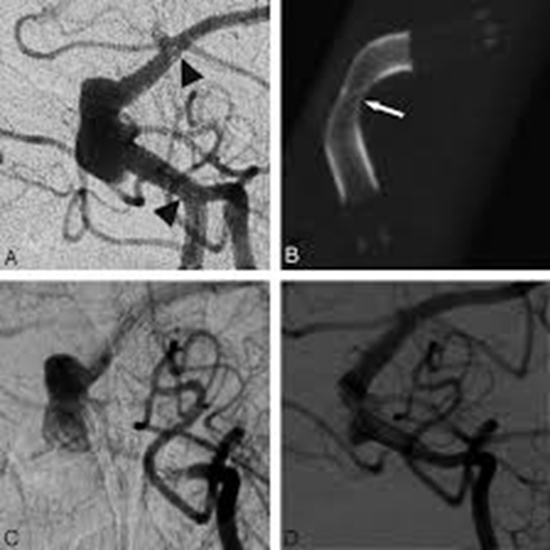
Mid-Term Outcome Following Pipeline Embolization of Unruptured Intracranial Aneurysms
Pipeline Embolization of Unruptured Intracranial Aneurysms {faces}


Background: As an advanced generation of flow diverters (FD), pipeline embolization device (PED) is introduced for endovascular aneurysm occlusion. In the present study, we aimed to present the mid-term results after endovascular treatment of unruptured intracranial aneurysms using PED.
Patients and Methods: A total of 20 patients with 20 intracranial wide neck aneurysms were treated with PED between July and October 2010. Patients were followed up 4 to 8 months after the procedure. Digital subtraction angiography (DSA) was carried out to assess stent integrity, displacement, and the presence of residual aneurysm.
Results: Out of 20 participants, PED deployment was successful in 19; whereas, intervention failed in one patient due to technical factors in device deployment. No severe acute complications were observed. One patient died after three months as a result of subarachnoid hemorrhage (SAH). Out of the remaining patients, DSA showed complete occlusion of aneurysms in 14 individuals (77.8%), while in four patients (22.2%), residual aneurysm was noted. Stent migration was not observed in any patients. Intra-stent stenosis (25% - 50%) was visualized in only one patient (5.5%).
Conclusion: This study showed promising mid-term results for the pipeline embolization device in the treatment of unruptured intracranial aneurysms. Larger studies with longer follow-up duration are warranted.

  • Article_DOI : doi.org/10.5812/iranjradiol.59703
  • Author(s) : hossein ghanaati,kavous firouznia
  • News Group : research,research article,aneurysm
  • News Code : 278392
مدیر سایت
Author:

مدیر سایت

Enter your desired term to search
Theme settings