Advanced Diagnostic & Interventional Radiology Research Center | Multi-organ infarction following percutaneous transhepatic esophageal variceal obliteration with glue injection: a case report

Advanced Diagnostic & Interventional Radiology Research Center | Multi-organ infarction following percutaneous transhepatic esophageal variceal obliteration with glue injection: a case report
| Dec 12 2025
logo

Advanced Diagnostic & Interventional Radiology Research Center

COVID-19 pandemic 

During the COVID-19 pandemic, the Radiology Research Center at Tehran University of Medical Sciences continued its research activities despite the challenges posed by the increased demand for CT scans of COVID-19 patients and the necessity of adhering to strict health protocols. This center played a crucial role in improving medical imaging techniques, optimizing diagnostic protocols, and advancing technologies related to CT scan image analysis.

Faculty members, researchers, and staff remained committed to ensuring the safety and well-being of healthcare professionals and patients while actively engaging in imaging data analysis, developing artificial intelligence algorithms for faster disease detection, publishing scientific articles, and presenting their findings at international conferences. These efforts aimed to enhance diagnostic accuracy, improve treatment processes, and alleviate pressure on healthcare systems.


Key achievements of the Radiology Research Center during the COVID-19 pandemic include:


✔️ Development and optimization of lung imaging protocols for faster and more accurate COVID-19 diagnosis
✔️ Implementation of artificial intelligence technologies for automated CT scan analysis and reduced diagnosis time
✔️ Publication of high-impact research articles on innovative imaging methods for COVID-19 patients
✔️ Participation in national and international projects focused on COVID-19 diagnosis and patient management

The center remains dedicated to advancing research in medical imaging and continues to contribute as a leading scientific institution in improving the quality of diagnostic and therapeutic services.


Some of the center's significant achievements during the pandemic include:


  • Release Date : Jul 10 2024 - 07:37
  • : 77
  • Study time : 1 minute(s)

Multi-organ infarction following percutaneous transhepatic esophageal variceal obliteration with glue injection: a case report

 {faces}

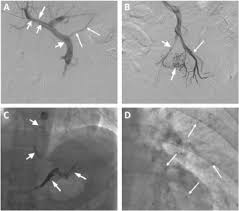
Percutaneous transhepatic variceal obliteration (PTVO) is currently one of the best treatment options for controlling acute recurrent bleeding in cirrhotic patients. Nevertheless, this procedure is associated with major and minor complications such as fever, pain, fatal intraperitoneal hemorrhage, and rarely, embolization of embolic agents to the systemic circulation. Only one study has reported systemic emboli following the use of glue-lipiodal mixture for percutaneous transhepatic embolization of esophageal varices and here we report another case of this complication. Here, we report a 44-year-old man presenting with multi-organ infarction following PTVO with glue-Lipiodol mixture. He was a known case of liver cirrhosis who was admitted for recurrent bleeding from esophageal varices. The patient became a candidate for transjugular intrahepatic portosystemic shunt surgery; however, he did not provide consent for this procedure. the patient eventually decided to undergo PTVO as an alternative option. Twelve hours after the procedure, the patient developed neurological symptoms such as left side weakness, dysarthria, and fecal incontinence. Further investigation showed glue particles in brain, liver, spleen and both lungs. Contrast echocardiography and splenoportography did not show any evidence of right-to-left shunt. Thus, conservative management was initiated for the patient, which resulted in the gradual improvement after three weeks. Prior evaluation with splenoportography and contrast echocardiography before performing PTVO may help in the early detection of any connection with systemic circulation. Also, based on the desired procedure, the most appropriate glue/Lipiodol ratio and injection technique should be selected to minimize the risk of adverse events

  • Article_DOI : 10.1016/j.radcr.2021.04.032
  • Author(s) : alireza abrishami,mahsa alborzi avanaki,nastaran khalili
  • News Group : research,covid,case report,covid 19
  • News Code : 277995
مدیر سایت
Author:

مدیر سایت

Images

 percutaneous transhepatic esophageal variceal
Enter your desired term to search
Theme settings