Advanced Diagnostic & Interventional Radiology Research Center | Post-Molar Stage I Low-Risk Gestational Trophoblastic Neoplasia

Advanced Diagnostic & Interventional Radiology Research Center | Post-Molar Stage I Low-Risk Gestational Trophoblastic Neoplasia
| Dec 12 2025
logo

Advanced Diagnostic & Interventional Radiology Research Center

COVID-19 pandemic 

During the COVID-19 pandemic, the Radiology Research Center at Tehran University of Medical Sciences continued its research activities despite the challenges posed by the increased demand for CT scans of COVID-19 patients and the necessity of adhering to strict health protocols. This center played a crucial role in improving medical imaging techniques, optimizing diagnostic protocols, and advancing technologies related to CT scan image analysis.

Faculty members, researchers, and staff remained committed to ensuring the safety and well-being of healthcare professionals and patients while actively engaging in imaging data analysis, developing artificial intelligence algorithms for faster disease detection, publishing scientific articles, and presenting their findings at international conferences. These efforts aimed to enhance diagnostic accuracy, improve treatment processes, and alleviate pressure on healthcare systems.


Key achievements of the Radiology Research Center during the COVID-19 pandemic include:


✔️ Development and optimization of lung imaging protocols for faster and more accurate COVID-19 diagnosis
✔️ Implementation of artificial intelligence technologies for automated CT scan analysis and reduced diagnosis time
✔️ Publication of high-impact research articles on innovative imaging methods for COVID-19 patients
✔️ Participation in national and international projects focused on COVID-19 diagnosis and patient management

The center remains dedicated to advancing research in medical imaging and continues to contribute as a leading scientific institution in improving the quality of diagnostic and therapeutic services.


Some of the center's significant achievements during the pandemic include:


  • Release Date : Jun 24 2024 - 11:41
  • : 35
  • Study time : 1 minute(s)

Post Molar Stage I Low Risk Gestational Trophoblastic Neoplasia: Transvaginal Ultrasound Findings and Their Correlation with Chemotherapy Response
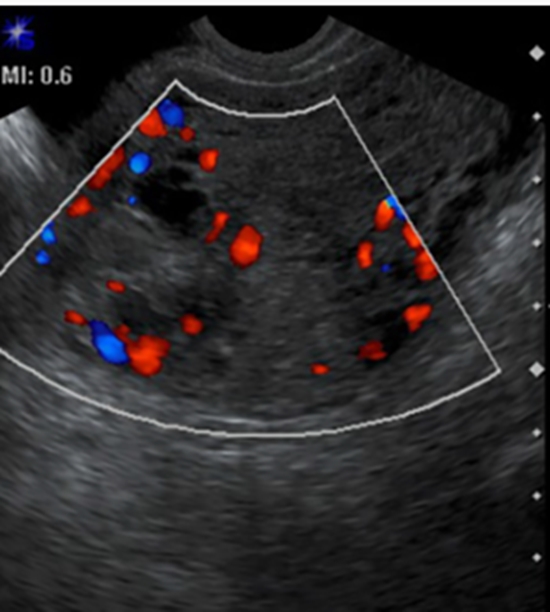
Post-Molar Stage I Low-Risk Gestational Trophoblastic Neoplasia {faces}

Background:

 Early diagnosis of gestational trophoblastic neoplasia and its complications are pivotal for prompt and efficacious treatment. Transvaginal pelvic ultrasound could detect myometrial invasion and endometrial thickening following dilation and evacuation of hydatiform mole and also in the assessment of response to chemotherapy.

Objectives:

 In this study we aimed to investigate transvaginal ultrasound findings of stage I low-risk gestational trophoblastic neoplasia (GTN) and whether there is an association between ultrasound findings and chemotherapy response.

Patients and Methods:

 This study included 31 consecutive patients with postmolar stage I low-risk GTN. We recorded International Federation of Gynecology and Obstetrics (FIGO) score, and transvaginal ultrasound findings including color and pulsed Doppler interrogation at the time of beta human chorionic gonadotropin (β-hCG) rise. The number of Act-D cycles that each patient needed to achieve complete remission was also recorded.

Results:

 Of the 31 patients with post-evacuation trans-vaginal ultrasound evaluation, 2 (6.5%) patients had no detectable finding, 4 (12.9%) had lesions limited to the endometrium, 12 (38.7%) had lesions with < 50% invasion into myometrium, 7 (22.6%) had lesions with > 50% invasion into myometrium, 4 (12.9%) had lesions that reached uterine serosal surface and 2 (6.5%) had arteriovenous malformation (AVM)-like myometrial lesions. The number of Act-D cycles patients needed to achieve remission was 6 cycles in patients with no finding, lesion limited to endometrium and less than 50% myometrial invasion and was 8 cycles in patients with > 50% invasion ± involvement of serosal surface. One patient in first group and two in second group need multi-agent chemotherapy. But these differences were not significant (P = 0.172).

Conclusion:

 There was a non-significant increase in treatment duration and need of multiagent chemotherapy with more extensive ultrasound findings among patients with stage I low risk GTN
  • Article_DOI : doi.org/10.5812/iranjradiol.92005
  • Author(s) : behnaz moradi ,ali borhani
  • News Group : research,research article
  • News Code : 278269
مدیر سایت
Author:

مدیر سایت

Enter your desired term to search
Theme settings