Advanced Diagnostic & Interventional Radiology Research Center | Predicting factors for relapse in patients with granulomatosis with polyangiitis: results from a long term cohort
Advanced Diagnostic & Interventional Radiology Research Center | Predicting factors for relapse in patients with granulomatosis with polyangiitis: results from a long term cohort
| Dec 10 2025
logo

Advanced Diagnostic & Interventional Radiology Research Center

COVID-19 pandemic 

During the COVID-19 pandemic, the Radiology Research Center at Tehran University of Medical Sciences continued its research activities despite the challenges posed by the increased demand for CT scans of COVID-19 patients and the necessity of adhering to strict health protocols. This center played a crucial role in improving medical imaging techniques, optimizing diagnostic protocols, and advancing technologies related to CT scan image analysis.

Faculty members, researchers, and staff remained committed to ensuring the safety and well-being of healthcare professionals and patients while actively engaging in imaging data analysis, developing artificial intelligence algorithms for faster disease detection, publishing scientific articles, and presenting their findings at international conferences. These efforts aimed to enhance diagnostic accuracy, improve treatment processes, and alleviate pressure on healthcare systems.


Key achievements of the Radiology Research Center during the COVID-19 pandemic include:


✔️ Development and optimization of lung imaging protocols for faster and more accurate COVID-19 diagnosis
✔️ Implementation of artificial intelligence technologies for automated CT scan analysis and reduced diagnosis time
✔️ Publication of high-impact research articles on innovative imaging methods for COVID-19 patients
✔️ Participation in national and international projects focused on COVID-19 diagnosis and patient management

The center remains dedicated to advancing research in medical imaging and continues to contribute as a leading scientific institution in improving the quality of diagnostic and therapeutic services.


Some of the center's significant achievements during the pandemic include:


  • Release Date : Jul 23 2024 - 08:33
  • : 111
  • Study time : 1 minute(s)

Predicting factors for relapse in patients with granulomatosis with polyangiitis: results from a long term cohort

Predicting factors for relapse in patients with granulomatosis with polyangiitis {faces}

Objective: To investigate the predictive factors and the best predictive model for relapse in granulomatosis with polyangiitis (GPA) patients.

Methods: All patients referred to our tertiary university hospital with confirmed diagnosis of GPA based on 1990-ACR criteria and/or revised Chapel Hill nomenclature, who were followed more than 24 months between 2012 and 2021 were included. Patients were classified into relapsing and non-relapsing groups. Disease activity was assessed based on Birmingham Vasculitis Activity Score (BVAS) and BVAS for GPA (BVAS-GPA). All demographic, clinical, laboratory, and radiologic parameters were compared between two groups.

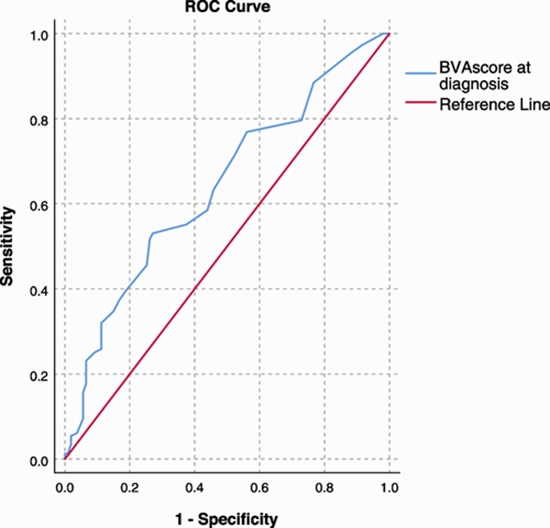
Results: Data of 133 patients (male = 52 (39.1%); mean age = 46.5 ± 14.5 years) with a mean follow-up period of 49.4 ± 24.1 months were evaluated. Of those, 91 (68.4%) experienced at least one relapse episode. The mean duration of relapse-free-survival (RFS) was 12.5 months with 1-year, 3-year, and 5-year RFS rates of 46.6%, 34.6%, and 31.6%, respectively. The risk of relapse was higher if patients had higher BVAS or BVAS-GPA score (P-values < 0.001), constitutional syndrome (P-value = 0.01), neutrophil-to-lymphocyte ratio (NLR) (P-value = 0.01), C-reactive-protein (P-value = 0.03), alanine transaminase > 40 units/L (P-value = 0.04), and microscopic hematuria (P-value = 0.001). In backward logistic regression analysis, baseline BVAS score ≥ 12 (Ex(B) = 4.21, P-value = 0.03), and NLR > 2.5 (Ex(B) = 12.00, P-value = 0.007) remained statistically significant at the last step of the model with 75.8% sensitivity, 76.9% specificity, and 76.3% accuracy in predicting the relapsing patients. The frequency of relapse episodes was significantly lower in treatment group of rituximab-rituximab (0.3 ± 0.6) compared to cyclophosphamide-methotrexate (1.2 ± 1.3) and cyclophosphamide-azathioprine (1.8 ± 1.5) treatment protocols (P-value = 0.002).

Conclusion: High-risk patients according to proposed model should be prioritized for more intensive care, more aggressive treatment, and closer follow-ups

  • Article_DOI : 10.1007/s10067-022-06159-2
  • Author(s) : mohammad-mehdi mehrabi nejad,niloofar ayoobi yazdi,samira alesaeidi,seyed behnam jazayeri,arefeh afshar
  • News Group : research,research article
  • News Code : 277944
مدیر سایت
Author:

مدیر سایت

0 Comments for this article

comment

Post your comment:

متن درون تصویر را در جعبه متن زیر وارد نمائید *
Enter your desired term to search
Theme settings