Advanced Diagnostic & Interventional Radiology Research Center | Pregnancy After uterine artery Embolization fibroms

Advanced Diagnostic & Interventional Radiology Research Center | Pregnancy After uterine artery Embolization fibroms
| Dec 10 2025
logo

Advanced Diagnostic & Interventional Radiology Research Center

COVID-19 pandemic 

During the COVID-19 pandemic, the Radiology Research Center at Tehran University of Medical Sciences continued its research activities despite the challenges posed by the increased demand for CT scans of COVID-19 patients and the necessity of adhering to strict health protocols. This center played a crucial role in improving medical imaging techniques, optimizing diagnostic protocols, and advancing technologies related to CT scan image analysis.

Faculty members, researchers, and staff remained committed to ensuring the safety and well-being of healthcare professionals and patients while actively engaging in imaging data analysis, developing artificial intelligence algorithms for faster disease detection, publishing scientific articles, and presenting their findings at international conferences. These efforts aimed to enhance diagnostic accuracy, improve treatment processes, and alleviate pressure on healthcare systems.


Key achievements of the Radiology Research Center during the COVID-19 pandemic include:


✔️ Development and optimization of lung imaging protocols for faster and more accurate COVID-19 diagnosis
✔️ Implementation of artificial intelligence technologies for automated CT scan analysis and reduced diagnosis time
✔️ Publication of high-impact research articles on innovative imaging methods for COVID-19 patients
✔️ Participation in national and international projects focused on COVID-19 diagnosis and patient management

The center remains dedicated to advancing research in medical imaging and continues to contribute as a leading scientific institution in improving the quality of diagnostic and therapeutic services.


Some of the center's significant achievements during the pandemic include:


  • Release Date : Feb 22 2025 - 12:54
  • : 100
  • Study time : 1 minute(s)

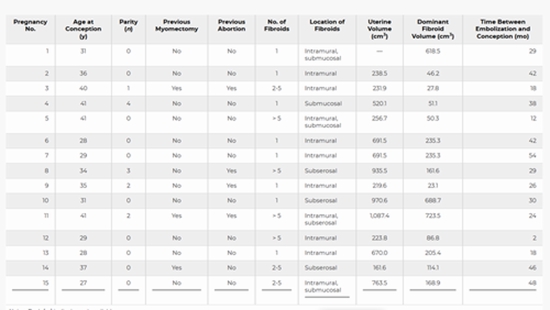
Pregnancy After uterine artery Embolization for symptomatic fibroids: A series of 15 pregnancies
Pregnancy After uterine artery Embolization for symptomatic fibroids {faces}

Objective: The purpose of this study was to report on pregnancies and their outcome after uterine artery embolization for uterine fibroids.

Subjects and methods: From 2001 to 2004, 102 patients (mean age, [+/- SD] 35.7 +/- 6.4 years; range, 20-48 years) with symptomatic uterine fibroids underwent uterine artery embolization with 500- to 710-microm polyvinyl alcohol particles. The mean uterine volume was 552 +/- 649 cm(3) (range, 94-4,656 cm(3)), and the dominant fibroid size was 228 +/- 359 cm(3) (range, 14-2,618 cm(3)) before the procedure. During the 2-year follow-up period, the patients were asked whether they were trying to achieve pregnancy and whether they were successful. We obtained pregnancy and obstetric records of the pregnant women from physicians' offices and hospitals.

Results: Among 102 women who underwent bilateral uterine artery embolization, 23 (22.5%) were seeking to become pregnant, and 14 of the 23 (61%) became pregnant, nine having been nulliparous. One patient had two pregnancies. Fourteen pregnancies were spontaneous, and one was achieved by zygote intrafallopian transfer. Two miscarriages occurred, one in the 12th and one in the 16th week of gestation. The other 13 pregnancies went to term, were uncomplicated, and ended in elective cesarean delivery. All of the neonates were healthy with Apgar scores greater than 8. The mean weight of the neonates was 3,274 +/- 514.4 g (range, 2,100-3,950 g). One neonate was small for gestational age (2,100 g).

Conclusion: Uterine artery embolization can serve as a substitute for invasive operations such as hysterectomy and myomectomy. Additional studies, including prospective, randomized comparisons with myomectomy, should be performed to ascertain whether uterine artery embolization is a safe procedure for women who want to preserve their fertility.

  • Article_DOI : 10.2214/AJR.07.3904
  • Author(s) : hossein ghanaati,kavous firouznia
  • News Group : research,research article
  • News Code : 293420
مدیر سایت
Author:

مدیر سایت

0 Comments for this article

comment

Post your comment:

متن درون تصویر را در جعبه متن زیر وارد نمائید *
Enter your desired term to search
Theme settings