Advanced Diagnostic & Interventional Radiology Research Center | Congenital Coronary Artery Anomalies and Variants Row Coronary C

Advanced Diagnostic & Interventional Radiology Research Center | Congenital Coronary Artery Anomalies and Variants Row Coronary C
| Jan 1 2026
logo

Advanced Diagnostic & Interventional Radiology Research Center

COVID-19 pandemic 

During the COVID-19 pandemic, the Radiology Research Center at Tehran University of Medical Sciences continued its research activities despite the challenges posed by the increased demand for CT scans of COVID-19 patients and the necessity of adhering to strict health protocols. This center played a crucial role in improving medical imaging techniques, optimizing diagnostic protocols, and advancing technologies related to CT scan image analysis.

Faculty members, researchers, and staff remained committed to ensuring the safety and well-being of healthcare professionals and patients while actively engaging in imaging data analysis, developing artificial intelligence algorithms for faster disease detection, publishing scientific articles, and presenting their findings at international conferences. These efforts aimed to enhance diagnostic accuracy, improve treatment processes, and alleviate pressure on healthcare systems.


Key achievements of the Radiology Research Center during the COVID-19 pandemic include:


✔️ Development and optimization of lung imaging protocols for faster and more accurate COVID-19 diagnosis
✔️ Implementation of artificial intelligence technologies for automated CT scan analysis and reduced diagnosis time
✔️ Publication of high-impact research articles on innovative imaging methods for COVID-19 patients
✔️ Participation in national and international projects focused on COVID-19 diagnosis and patient management

The center remains dedicated to advancing research in medical imaging and continues to contribute as a leading scientific institution in improving the quality of diagnostic and therapeutic services.


Some of the center's significant achievements during the pandemic include:


  • Release Date : Dec 23 2023 - 14:20
  • : 23
  • Study time : 1 minute(s)

Prevalence of Congenital Coronary Artery Anomalies and Variants in 2697 Consecutive Patients Using 64-Detector Row Coronary CTAngiography

Based on the fact that coronary CT-angiography using MDCT can display different coronary anomalies, this study shows similar results to other reports on the subject
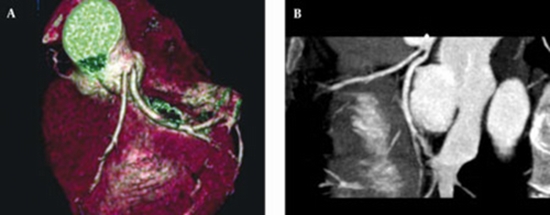
Prevalence of Congenital Coronary Artery Anomalies {faces}

Background: Coronary artery anomalies are not common, but could be very serious.

Objectives: This study determines the frequency of coronary anomalies and normal variants by multi-detector-row computed tomography (MDCT).

Patients and methods: The results of cardiac MDCT study in 2697 consecutive patients were analyzed retrospectively. Acquisition was performed by a 64-detector row CT machine. Imaging results were assessed by experienced radiologists.

Results: Myocardial bridging was by far the most frequent coronary variant (n = 576, 21.3%). Eighty-three subjects (3.1%) showed other coronary anomalies and variants. Anomalies of origination and course of the left main coronary artery (LMCA) were detected in 1.09% of the subjects. The frequency of these anomalies in the right coronary artery (RCA), left circumflex artery (LCx), left anterior descending artery (LAD), posterior descending artery (PDA) and obtuse marginal (OM) artery were 1.24%, 0.33%, 0.1%, 0.07% and 0.03%, respectively. The single coronary pattern was seen in 0.18% and coronary fistulas in 0.07%.

Conclusion: Based on the fact that coronary CT-angiography using MDCT can display different coronary anomalies, this study shows similar results to other reports on the subject. Future advances in the performance of CT machines will further improve the quality of CT-based cardiac imaging.


  • Article_DOI :
  • Author(s) :
  • News Group : research,research article
  • News Code : 278518
مدیر سایت
Author:

مدیر سایت

Enter your desired term to search
Theme settings