Advanced Diagnostic & Interventional Radiology Research Center | Prognostic value of inflammatory biomarkers for predicting the extent of lung involvement and final clinical outcome in patients with COVID 19
Advanced Diagnostic & Interventional Radiology Research Center | Prognostic value of inflammatory biomarkers for predicting the extent of lung involvement and final clinical outcome in patients with COVID 19
| Dec 11 2025
logo

Advanced Diagnostic & Interventional Radiology Research Center

COVID-19 pandemic 

During the COVID-19 pandemic, the Radiology Research Center at Tehran University of Medical Sciences continued its research activities despite the challenges posed by the increased demand for CT scans of COVID-19 patients and the necessity of adhering to strict health protocols. This center played a crucial role in improving medical imaging techniques, optimizing diagnostic protocols, and advancing technologies related to CT scan image analysis.

Faculty members, researchers, and staff remained committed to ensuring the safety and well-being of healthcare professionals and patients while actively engaging in imaging data analysis, developing artificial intelligence algorithms for faster disease detection, publishing scientific articles, and presenting their findings at international conferences. These efforts aimed to enhance diagnostic accuracy, improve treatment processes, and alleviate pressure on healthcare systems.


Key achievements of the Radiology Research Center during the COVID-19 pandemic include:


✔️ Development and optimization of lung imaging protocols for faster and more accurate COVID-19 diagnosis
✔️ Implementation of artificial intelligence technologies for automated CT scan analysis and reduced diagnosis time
✔️ Publication of high-impact research articles on innovative imaging methods for COVID-19 patients
✔️ Participation in national and international projects focused on COVID-19 diagnosis and patient management

The center remains dedicated to advancing research in medical imaging and continues to contribute as a leading scientific institution in improving the quality of diagnostic and therapeutic services.


Some of the center's significant achievements during the pandemic include:


  • Release Date : Jul 17 2024 - 07:47
  • : 101
  • Study time : 1 minute(s)

Prognostic value of inflammatory biomarkers for predicting the extent of lung involvement and final clinical outcome in patients with COVID 19

 {faces}

Background:

Inflammation plays a major role in coronavirus disease (COVID-19). Factors that convey information about the status of inflammation could predict disease severity and help identify patients prone to clinical deterioration. Here, we aimed to evaluate the predictive value of inflammatory markers on the extent of lung involvement and survival of patients with COVID-19.

Materials and Methods:

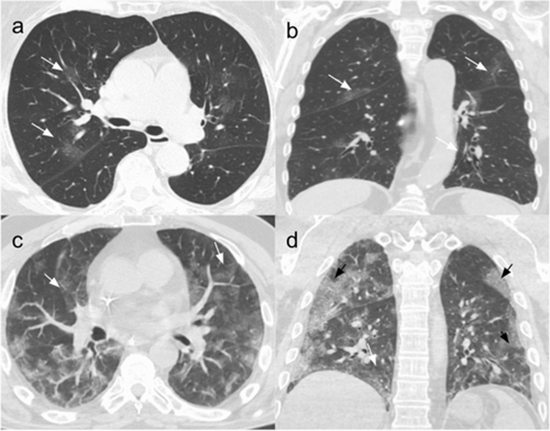
Eighty patients with confirmed COVID-19 were enrolled. Demographic, clinical, and laboratory data were collected at admission. All patients underwent chest computed tomography (CT); the extent of lung involvement was assessed by a scoring system. Patients were followed up until death or discharge occurred. Logistic regression analysis was performed to evaluate the association of investigated variables with COVID-19-related death. The association between different variables and CT score was assessed using linear regression model. Receiver operator characteristic curve analysis was applied to identify the predictive value of inflammatory markers and CT score on survival.

Results:

The mean age of patients was 54.2 ± 15.2 years; 65% were male. Increased neutrophil-to-lymphocyte ratio (β =0.69, odds ratio [OR] =1.50), platelet-to-lymphocyte ratio (β =0.019, OR = 1.01), and decreased lymphocyte to C-reactive protein ratio (LCR) (β = −0.35, OR = 0.62) were significantly associated with a higher CT score and increased odds of death (P < 0.05). Lactate dehydrogenase level was also positively related with extensive lung involvement and death (β =1.15, OR = 1.52, P < 0.05). The LCR threshold for identifying survivors from nonsurvivors was 0.53 (area under curve [AUC] =0.82, 78% sensitivity and 74% specificity). Lung involvement ≥50% on chest CT was an excellent predictor of death (AUC = 0.83, 81% sensitivity and 79% specificity).

Conclusion:

Daily-performed laboratory tests that represent inflammation have great value for predicting the amount of disease burden and risk of mortality. Moreover, their cost-effectiveness and feasibility turn them into ideal prognostic markers

  • Article_DOI : 10.4103/jrms.JRMS_1160_20
  • Author(s) : alireza abrishami,vahid eslami,mehran arab-ahmadi,sam alahyari,arash azhideh,morteza sanei-taheri
  • News Group : research,covid,research article,covid 19
  • News Code : 277965
مدیر سایت
Author:

مدیر سایت

Enter your desired term to search
Theme settings