Advanced Diagnostic & Interventional Radiology Research Center | Reliability of determination of bony landmarks of the distal femur on mr images and mri-based 3d models
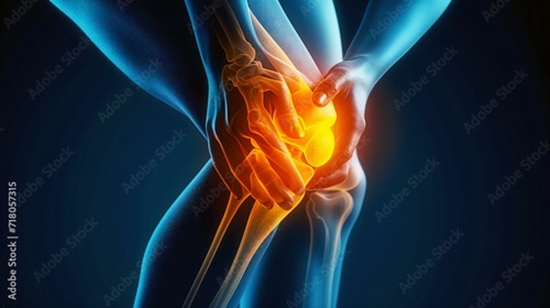
Advanced Diagnostic & Interventional Radiology Research Center | Reliability of determination of bony landmarks of the distal femur on mr images and mri-based 3d models
| Jan 3 2026
logo

Advanced Diagnostic & Interventional Radiology Research Center

COVID-19 pandemic 

During the COVID-19 pandemic, the Radiology Research Center at Tehran University of Medical Sciences continued its research activities despite the challenges posed by the increased demand for CT scans of COVID-19 patients and the necessity of adhering to strict health protocols. This center played a crucial role in improving medical imaging techniques, optimizing diagnostic protocols, and advancing technologies related to CT scan image analysis.

Faculty members, researchers, and staff remained committed to ensuring the safety and well-being of healthcare professionals and patients while actively engaging in imaging data analysis, developing artificial intelligence algorithms for faster disease detection, publishing scientific articles, and presenting their findings at international conferences. These efforts aimed to enhance diagnostic accuracy, improve treatment processes, and alleviate pressure on healthcare systems.


Key achievements of the Radiology Research Center during the COVID-19 pandemic include:


✔️ Development and optimization of lung imaging protocols for faster and more accurate COVID-19 diagnosis
✔️ Implementation of artificial intelligence technologies for automated CT scan analysis and reduced diagnosis time
✔️ Publication of high-impact research articles on innovative imaging methods for COVID-19 patients
✔️ Participation in national and international projects focused on COVID-19 diagnosis and patient management

The center remains dedicated to advancing research in medical imaging and continues to contribute as a leading scientific institution in improving the quality of diagnostic and therapeutic services.


Some of the center's significant achievements during the pandemic include:


  • Release Date : Sep 15 2024 - 08:56
  • : 75
  • Study time : 1 minute(s)

Reliability of determination of bony landmarks of the distal femur on mr images and mri-based 3d models

 {faces}

Background/Objective: Consistent determination of the anatomical landmarks on image or
image-based three dimensional (3D) models is a basic requirement for reliable analysis of the
human joint kinematics using imaging techniques. We examined the intra- and inter-observer
reliability of determination of the medial and lateral epicondyle landmarks on 2D MR images
and 3D MRI-based models of the knee.
Materials and Methods: Sixteen coronal plane MRI recordings were taken from 18 healthy
knees using a knee coil with T2-weighted fast spin-echo sequence and 512×512 pixel size.
They were then processed by the Mimics software to provide the coronal and axial plane
views and to create a 3D image-based model of the femur. Each image was reviewed twice,
at least one-day apart. The interclass correlation coefficient, standard error of measurement,
and coefficient of variation were calculated to assess the intra- and inter-observer reliability
of the landmark determination by six experienced radiologists. A mixed model analysis of
variance (ANOVA) with two days of observation as the within-subject factor, and observers
(six radiologists) and methods (2D vs. 3D) as between-subject factors were used to test the
effect of observer, two days of observation and method of evaluation on landmark determination.
Results: The results indicated that the interclass correlation coefficients for the intraobserver
and inter-observer determination of landmarks on images and image-based 3D
models were above 0.97. The standard error of measurement ranged between 0.41 and 0.78
mm for x; 1.35 and 3.43 mm for y; and 1.03 and 4.71 mm for z coordinates. Furthermore, the
results showed no significant difference for within and between-subject comparisons of each
coordinate of the lateral epicondyle as well as x and z coordinates of the medial epicondyle.
For the y coordinate of the medial epicondyle, the p value of within-subject comparison was
borderlinely significant (p=0.049).
Conclusion: It was concluded that the intra- and inter-observer reliability of the bony landmark
determination on both image and image-based 3D models were excellent

  • Article_DOI :
  • Author(s) :
  • News Group : research,articles
  • News Code : 277480
نفیسه سادات قوامی
Author:

نفیسه سادات قوامی

0 Comments for this article

comment

Post your comment:

متن درون تصویر را در جعبه متن زیر وارد نمائید *
Enter your desired term to search
Theme settings