Advanced Diagnostic & Interventional Radiology Research Center | Safety and efficacy study of allogeneic human menstrual blood stromal cells secretome to treat severe COVID 19 patients: clinical trial phase I & II
Advanced Diagnostic & Interventional Radiology Research Center | Safety and efficacy study of allogeneic human menstrual blood stromal cells secretome to treat severe COVID 19 patients: clinical trial phase I & II
| Dec 10 2025
logo

Advanced Diagnostic & Interventional Radiology Research Center

COVID-19 pandemic 

During the COVID-19 pandemic, the Radiology Research Center at Tehran University of Medical Sciences continued its research activities despite the challenges posed by the increased demand for CT scans of COVID-19 patients and the necessity of adhering to strict health protocols. This center played a crucial role in improving medical imaging techniques, optimizing diagnostic protocols, and advancing technologies related to CT scan image analysis.

Faculty members, researchers, and staff remained committed to ensuring the safety and well-being of healthcare professionals and patients while actively engaging in imaging data analysis, developing artificial intelligence algorithms for faster disease detection, publishing scientific articles, and presenting their findings at international conferences. These efforts aimed to enhance diagnostic accuracy, improve treatment processes, and alleviate pressure on healthcare systems.


Key achievements of the Radiology Research Center during the COVID-19 pandemic include:


✔️ Development and optimization of lung imaging protocols for faster and more accurate COVID-19 diagnosis
✔️ Implementation of artificial intelligence technologies for automated CT scan analysis and reduced diagnosis time
✔️ Publication of high-impact research articles on innovative imaging methods for COVID-19 patients
✔️ Participation in national and international projects focused on COVID-19 diagnosis and patient management

The center remains dedicated to advancing research in medical imaging and continues to contribute as a leading scientific institution in improving the quality of diagnostic and therapeutic services.


Some of the center's significant achievements during the pandemic include:


  • Release Date : Jul 24 2024 - 08:57
  • : 154
  • Study time : 2 minute(s)

Safety and efficacy study of allogeneic human menstrual blood stromal cells secretome to treat severe COVID 19 patients: clinical trial phase I & II

allogeneic human menstrual blood stromal cells secretome to treat severe COVID-19  {faces}

Background: Cell-free Mesenchymal stromal cells (MSCs) have been considered due to their capacity to modulate the immune system and suppress cytokine storms caused by SARS-CoV-2. This prospective randomized double-blind placebo-controlled clinical trial aimed to assess the safety and efficacy of secretome derived from allogeneic menstrual blood stromal cells (MenSCs) as a treatment in patients with severe COVID-19.

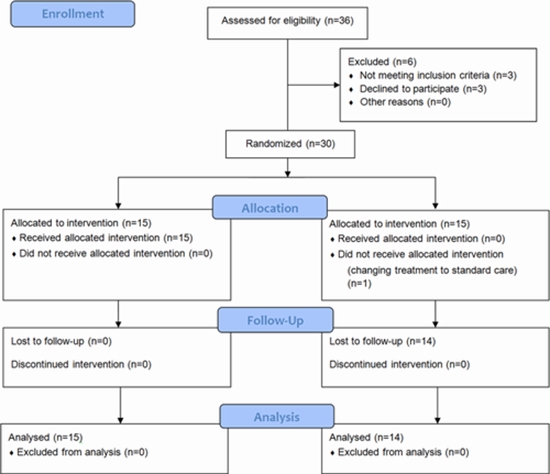
Methods: Patients with severe COVID-19 were randomized (1:1) to either MenSC-derived secretome treatment or the control group. Subjects received five intravenous infusions of 5 mL secretome or the same volume of placebo for five days and were monitored for safety and efficacy for 28 days after treatment. Adverse events, laboratory parameters, duration of hospitalization, clinical symptom improvement, dynamic of O2 saturation, lymphocyte number, and serial chest imaging were analyzed.

Results: All safety endpoints were observed without adverse events after 72 h of secretome injection. Within 28 days after enrollment, 7 patients (50%) were intubated in the treated group versus 12 patients (80%) in the control group. Overall, 64% of patients had improved oxygen levels within 5 days of starting treatment (P < 0.0001) and there was a survival rate of 57% in the treatment group compared to 28% in the control group was (P < 0.0001). Laboratory values revealed that significant acute phase reactants declined, with mean C-reactive protein, ferritin, and D-dimer reduction of 77% (P < 0.001), 43% (P < 0.001), and 42% (P < 0.05), respectively. Significant improvement in lymphopenia was associated with an increase in mean CD4+ and CD8+ lymphocyte counts of 20% (P = 0.06) and 15% (P < 0.05), respectively. Following treatment, percentage of pulmonary involvement showed a significant improvement in the secretome group (P < 0.0001). This improvement differed significantly between survivors and those who were dying (P < 0.005).

Conclusions: For the first time, this study demonstrated that in hospitalized patients with severe COVID-19, therapy with MenSCs-derived secretome leads to reversal of hypoxia, immune reconstitution, and downregulation of cytokine storm, with no adverse effects attributable to the treatment. Given these outcomes, it may be possible to use this type of treatment for serious inflammatory lung disease with a mechanism similar to COVID-19 in the future. However, it is necessary to evaluate the safety and efficacy of MenSCs-derived secretome therapy in clinical trials on a larger population of patients.

  • Article_DOI : 10.1186/s13287-022-02771-w
  • Author(s) : mina fathi-kazerooni ,samrand fattah-ghazi, maryam darzi, jalil makarem,reza nasiri, faeze salahshour, seyed ali dehghan-manshadi , somaieh kazemnejad
  • News Group : research,articles,research article
  • News Code : 277927
مدیر سایت
Author:

مدیر سایت

0 Comments for this article

comment

Post your comment:

متن درون تصویر را در جعبه متن زیر وارد نمائید *
Enter your desired term to search
Theme settings