Advanced Diagnostic & Interventional Radiology Research Center | Cortical Brain Mapping Using fmri

Advanced Diagnostic & Interventional Radiology Research Center | Cortical Brain Mapping Using fmri
| Jan 2 2026
logo

Advanced Diagnostic & Interventional Radiology Research Center

COVID-19 pandemic 

During the COVID-19 pandemic, the Radiology Research Center at Tehran University of Medical Sciences continued its research activities despite the challenges posed by the increased demand for CT scans of COVID-19 patients and the necessity of adhering to strict health protocols. This center played a crucial role in improving medical imaging techniques, optimizing diagnostic protocols, and advancing technologies related to CT scan image analysis.

Faculty members, researchers, and staff remained committed to ensuring the safety and well-being of healthcare professionals and patients while actively engaging in imaging data analysis, developing artificial intelligence algorithms for faster disease detection, publishing scientific articles, and presenting their findings at international conferences. These efforts aimed to enhance diagnostic accuracy, improve treatment processes, and alleviate pressure on healthcare systems.


Key achievements of the Radiology Research Center during the COVID-19 pandemic include:


✔️ Development and optimization of lung imaging protocols for faster and more accurate COVID-19 diagnosis
✔️ Implementation of artificial intelligence technologies for automated CT scan analysis and reduced diagnosis time
✔️ Publication of high-impact research articles on innovative imaging methods for COVID-19 patients
✔️ Participation in national and international projects focused on COVID-19 diagnosis and patient management

The center remains dedicated to advancing research in medical imaging and continues to contribute as a leading scientific institution in improving the quality of diagnostic and therapeutic services.


Some of the center's significant achievements during the pandemic include:


  • Release Date : Mar 17 2024 - 11:34
  • : 51
  • Study time : 1 minute(s)

The Human Olfactory System: Cortical Brain Mapping Using fmri
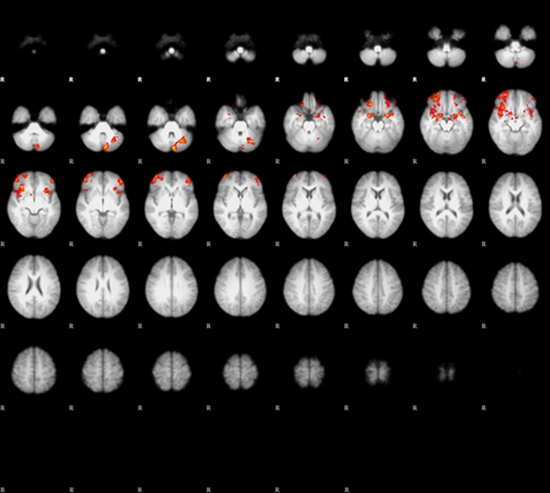
Cortical Brain Mapping Using fmri {faces}

Background:

Functional magnetic resonance imaging (fMRI) is a non-invasive and convenient method of mapping brain activity associated with the human sensory systems. Among these systems there is a lack of data from olfactory studies, which could be attributed to technical difficulties in odor delivery during scanning. The current study took advantage of an olfactometer to evaluate brain activity during the odor-smelling process

Objectives:

This study aimed to investigate the brain regions of the human olfactory system via fMRI brain imaging. A speculative survey was used to highlight the differences between studies conducted in healthy populations using olfactory tasks, as well as conducting literature survey in terms of the technical principles applying through these tasks in fMRI studies.

Subjects and Methods:

A functional map of the olfactory system that used a block design, alternating between odor and non-odor phases, was examined in 15 healthy volunteers. The general linear model was used to identify statistically significant voxels that showed activation during the activation blocks.

Results:

Primary and secondary olfactory regions, including the piriformis, insula, amygdala, parahippocampal gyrus, caudate nucleus, inferior frontal gyrus, middle frontal gyrus, superior temporal gyrus, and cerebellum, demonstrated significant activation in response to odor stimulation.

Conclusion:

Activation of the aforementioned brain areas, and the pattern of activation, is largely in accordance with previous published olfactory studies carried out in healthy individuals.
  • Article_DOI : doi.org/10.5812/iranjradiol.16250
  • Author(s) : mohammad ali oghabian,faezeh vedaei
  • News Group : research,research article
  • News Code : 278424
مدیر سایت
Author:

مدیر سایت

Enter your desired term to search
Theme settings