


Ultrasonographic analysis versus histopathologic evaluation of carotid advanced atherosclerotic stenosis in an experimental rabbit model
The aim of this study was to generate an easily reproducible and inexpensive experimental rabbit carotid model of advanced atherosclerosis with morphological similarities to the human disease and the subsequent assessment of the reliability of B-mode ultrasound technology in the study of lumen area stenosis in this model
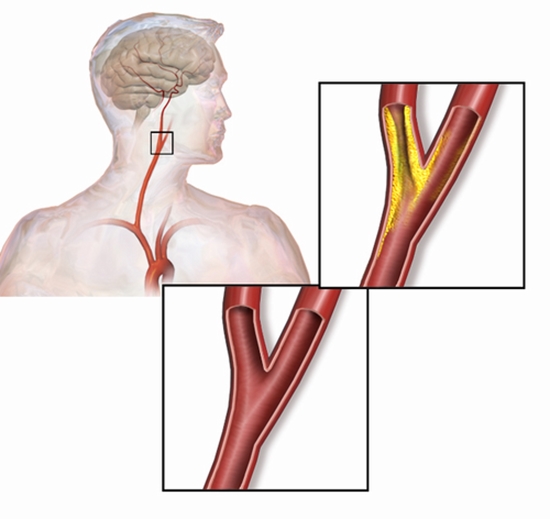
Advanced carotid atherosclerosis with severe stenosis (>70%) is a major clinical risk factor for ischemic stroke. Our ability to test new protocols for the treatment of atherosclerotic stenosis in humans is limited for obvious ethical reasons; therefore, a suitable animal model is required. The aim of this study was to generate an easily reproducible and inexpensive experimental rabbit carotid model of advanced atherosclerosis with morphological similarities to the human disease and the subsequent assessment of the reliability of B-mode ultrasound technology in the study of lumen area stenosis in this model. Briefly, New Zealand white rabbits underwent primary perivascular cold injury at the right common carotid artery followed by a 1.5% cholesterol-rich diet injury for eight weeks. All of the rabbits' arteries were imaged by B-mode ultrasound weekly, after which the rabbits were sacrificed, and their vessels were processed for histopathology. Ultrasound longitudinal view images from three cardiac cycles were processed by a new computerized analyzing method based on dynamic programming and maximum gradient algorithm for measurement of instantaneous changes in arterial wall thickness and lumen diameter in sequential ultrasound images. Histopathology results showed progressive changes, from the lipid-laden cells and fibrous connective tissue proliferation in neointimal layer, up to the fibro-lipid plaque formation, resulting in vessel wall thickening, remodeling and lumen stenosis. The B-mode ultrasound images and the histologic measurements showed an increase in the mean wall thickness and the lumen area stenosis within eight weeks. Quantitative and morphometric analysis of the mean wall thickness and the lumen area stenosis percentage showed a significant correlation between the B-mode ultrasound and the histological measurements at each time point (R = 0.989 and R = 0.995, p < 0.05, respectively). In conclusion, we successfully produced advanced atherosclerosis in the rabbit carotid artery that is similar to the condition seen in patients. This condition in rabbits can be properly assessed by B-mode ultrasound image processing.


Send to friends