


Evaluation of hydrogen peroxide- enhanced endoanal ultrasound in detecting the internal orifice and type of fistula-in-ano
Hydrogen peroxide-enhanced EUS is a suitable method for detecting the internal orifice of anal fistulas. It can be used for detecting trans-sphincteric fistulas, which are the most common type
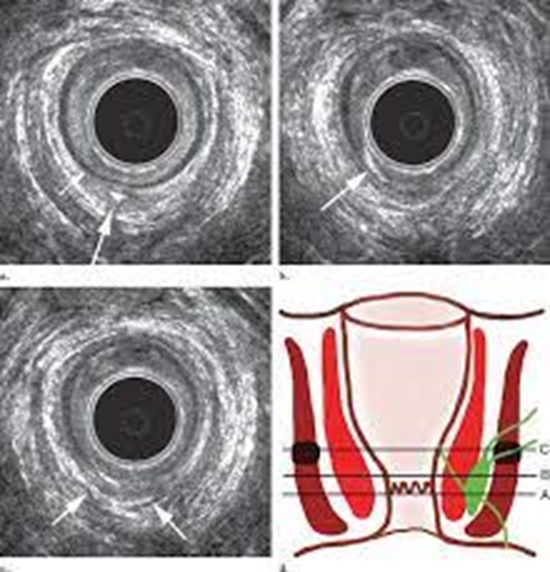
Background/Objective: Accurate delineation of the fistula tract anatomy is necessary for surgical management of anal fistulas. Among different ways to do this, endoanal ultrasound (EUS) is being increasingly used to evaluate patients with anal fistula. In this study we assessed the accuracy of hydrogen peroxide-enhanced EUS in detecting the internal orifice and the type of the fistula. Patients and Methods: Patients with history and physical examination compatible with fistula-in-ano underwent an injection of 1 ml hydrogen peroxide into the external orifice and then EUS with a 7.5 MHz probe was carried out prior to surgery. The location of the internal orifice, presence of the abscess and the type of the fistula were examined and the results were compared with surgical findings. Results: Thirty-two patients entered the study. The fistula type could be identified in 29 patients (90.6%). Twenty-two (75.8%) of these patients had trans-sphincteric and seven (24.2%) had inter-sphincteric fistulas. In 11 (34.3%) patients, an abscess was found uring EUS. The fistula type was identified surgically in 29 patients, in which 26 were trans-sphincteric (89.8%), two were inter-sphincteric (6.8%), and one was extra-sphincteric (3.4%). There was a difference between detected sites of internal orifices during EUS and surgery (p value<0.001). Hydrogen peroxide-enhanced EUS had an appropriate agreement in detecting transsphincteric fistulas with surgery. Conclusion: Hydrogen peroxide-enhanced EUS is a suitable method for detecting the internal orifice of anal fistulas. It can be used for detecting trans-sphincteric fistulas, which are the most common type.


comment