
Advanced Diagnostic & Interventional Radiology Research Center | Patient with High Flow Carotid-Cavernous Fistula

Advanced Diagnostic & Interventional Radiology Research Center | Patient with High Flow Carotid-Cavernous Fistula
| Dec 16 2025
logo

Advanced Diagnostic & Interventional Radiology Research Center

scientific researches

  • Release Date : Jul 26 2023 - 12:15
  • : 8
  • Study time : 1 minute(s)

Unilateral Blindness as the Only Finding in a Patient with High Flow Carotid-Cavernous Fistula

The authors reported a patient with unilateral blindness of the left eye after trauma. Apart from paralysis of the 4th cranial nerve and mild optic nerve edema, there was no structural problem during the ophthalmologic examination. Brain CT scan, CT angiography and MRI demonstrated aneurysm in the left pericavernous region. The patient underwent angiography for coiling of the aneurysm, which detected large carotid cavernous fistula (CCF) mainly draining into the petrous sinus. Therapeutic embolization was performed with balloon and the CCF vanished completely. The most important points of this case are the blindness without exophthalmia as the only presentation of CCF which has not been reported as the only symptom and failure of CT-angiography and MRI evaluation for the diagnosis of CCF
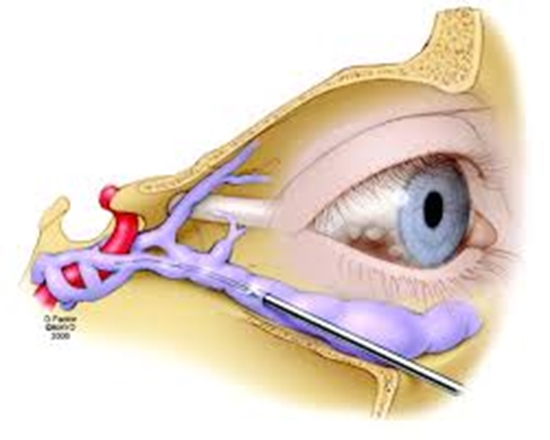
 High Flow Carotid-Cavernous Fistula {faces}
Carotid-cavernous fistula (CCF) is an abnormal communication between thearterial and venous system which occurs within the cavernous sinus an categorized according to pathological, hemodynamic or angiographic criteria.1,2 Th rare condition mostly occurs after head trauma.1,2 In angiography, lesions that directly receive their flow from the internal carotid artery (ICA) (direct type of CCF) are high-flow, and those that receive their flow from dural branches of the internal or external carotid system (indirect type) are usually
low-flow fistulae.1 The size, duration, location, venous drainage pattern and collateral vascular anatomy are very important factors for the clinical manifestations. Venous drainage from the anterior region into the ophthalmic veins or posterior into the petrosal sinuses causes different symptoms in patients.1 In cases that fistula drainage takes place into the inferior petrosal sinus, the orbital sign and symptoms are less severe.3-6 The clinical manifestations are usually unilateral and ipsilateral and are often vague at the onset of occurrence.7-9 Clinical manifestations are proptosis, exophthalmia, bruit, frontal headache and orbital pain, chemosis, extraocular palsy and diplopia, loss of visual acuity, 5th cranial nerve involvement and epistaxis.10,11 The 'gold standard' method for the diagnosis of CCF is cerebral angiography which is useful in identifying the fistula, evaluating venous drainage and assessing collateral circulation.12,13 To our knowledge, there is no report of blindness without exophthalmia as the presentation of CCF in the literature or the failure of CT- angiography and MRI evaluation for the diagnosis of CCF. We report a very rar case of CCF that presented with unilateral blindnes


download link

  • Article_DOI :
  • Author(s) :
  • News Group : research,research article
  • News Code : 278548
مدیر سایت
Author:

مدیر سایت

0 Comments for this article

comment

Post your comment:

متن درون تصویر را در جعبه متن زیر وارد نمائید *
Enter your desired term to search
Theme settings